

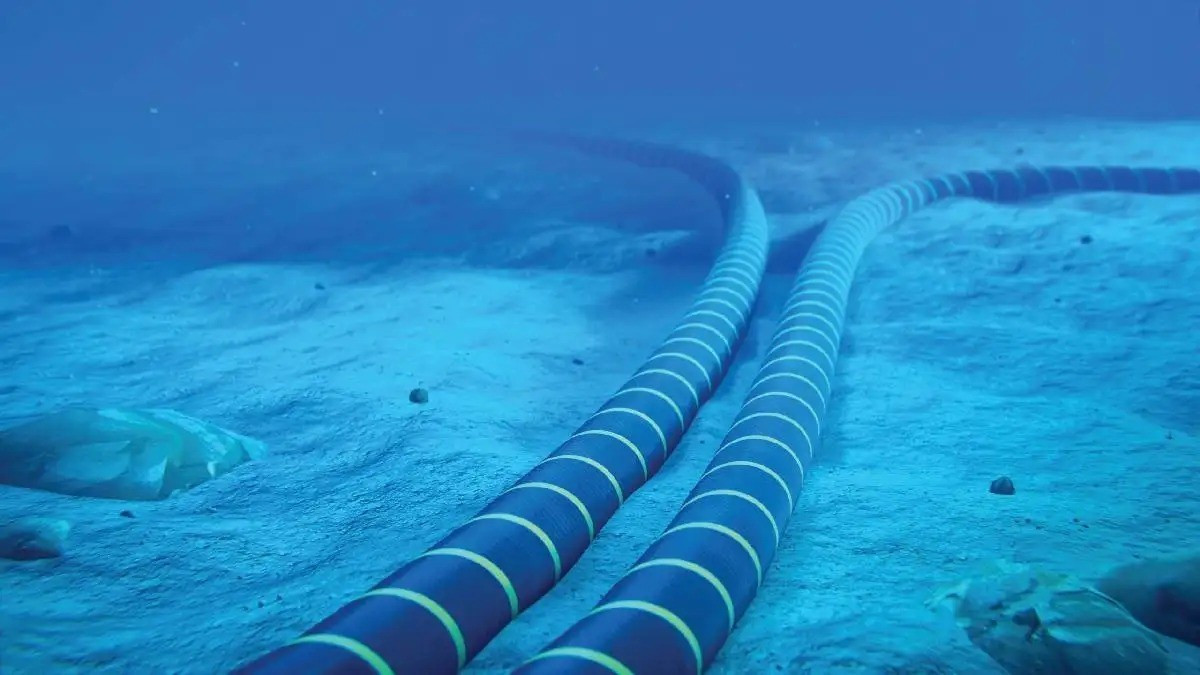
The historic TAT-8 submarine fiber-optic cable, the first transoceanic fiber-optic system that once carried international communications between the United States, United Kingdom, and France, is being removed from the ocean floor and recycled after nearly 38 years under the sea; this decommissioning highlights both how physical infrastructure made the modern global internet possible and how nearly all intercontinental data traffic still depends on an extensive network of undersea cables that face ongoing maintenance, technological evolution, and vulnerability challenges.
Sources
https://www.wired.com/story/say-goodbye-to-the-undersea-cable-that-made-the-global-internet-possible/
https://en.wikipedia.org/wiki/TAT-8
https://www.subseacables.net/infrastructure-news/venezuela-phases-out-historic-submarine-cable/
Key Takeaways
- TAT-8, the first major transatlantic fiber-optic cable that helped usher in modern global connectivity, is now being decommissioned and recovered from the ocean.
- Undersea fiber-optic cables remain critical to global internet traffic, with virtually all intercontinental communication still relying on these physical infrastructures.
- Other historic submarine cables, such as Venezuela’s Américas I, have also been retired as bandwidth demands and tech evolve.
In-Depth
The physical underpinnings of the internet are far from ethereal; they are tangible strands of glass and metal lying across the ocean floor, and the story of TAT-8’s removal is a vivid reminder of that reality. TAT-8, short for Trans-Atlantic Telephone-8, was a groundbreaking engineering project when it first went into service in 1988. It was the first fiber-optic system to span the Atlantic, connecting the United States with the United Kingdom and France and dramatically increasing the speed and volume of transcontinental communications. Engineers, technicians, and telecommunications companies saw the cable as a leap forward — replacing older copper systems with fiber that could carry far more data at the speed of light.
For decades, subsea cables like TAT-8 formed the backbone of the global communications network. Unlike satellites or terrestrial lines, which have their own advantages and limitations, undersea fiber-optic cables are capable of moving vast amounts of data across continents with minimal latency. Their capacity and reliability made modern services like video streaming, cloud computing, and international financial transactions possible in ways that earlier generations of infrastructure could not support. The fact that nearly all intercontinental internet traffic still flows through these cables underscores how essential they remain. This wasn’t just a piece of old hardware being scrapped — it was a symbol of how global connectivity was physically woven into the world’s oceans.
The process of removing TAT-8 involved specialized ships and crews tasked with grappling the cable on the seabed, bringing it aboard, and then preparing it for recycling. While it may now be obsolete compared to today’s high-capacity systems, its recovery is part of a broader practice within the industry to clear older infrastructure and reuse valuable materials like copper and steel. At the same time, the decommissioning of cables like TAT-8 and others such as Venezuela’s Américas I cable reflects the rapid pace of change in telecommunications technology, where bandwidth demands have grown exponentially and older systems simply can’t keep up with modern needs.
Yet, this milestone also serves as a reminder that the network of undersea cables — now numbering in the hundreds — remains vulnerable and in constant need of investment. Damage from natural events, geopolitical tensions, and even routine wear and tear can disrupt communications across regions, as seen in separate incidents where Red Sea and other subsea cables were cut, temporarily impacting connectivity. The global internet may seem like a cloud service to end users, but its lifeblood lies in these physical connections, whose maintenance and evolution will continue to shape how economies, societies, and technologies communicate on a worldwide scale.