

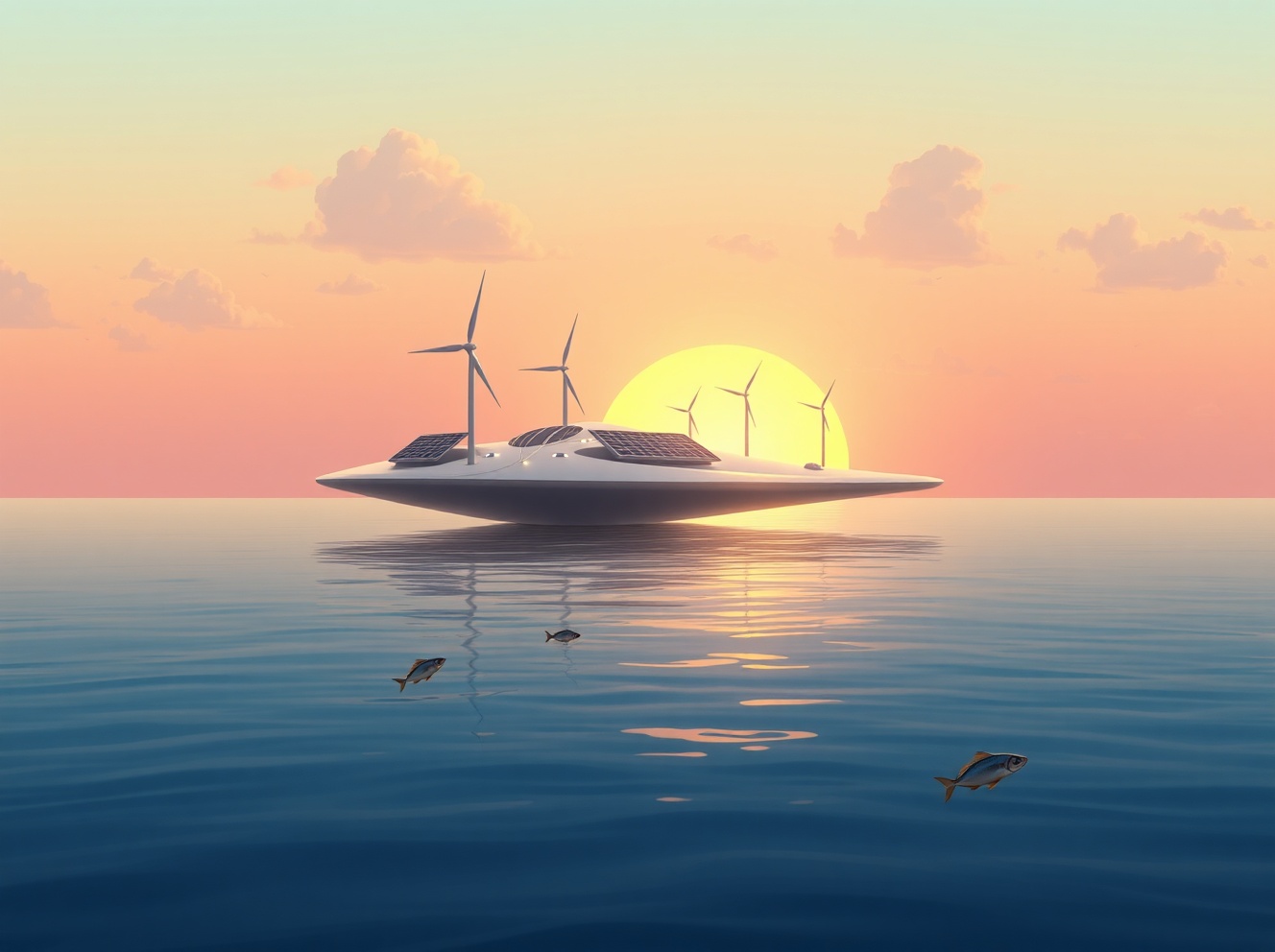
A new wave of infrastructure innovation suggests that the future of computing may lie not in orbit but in the ocean. As the artificial-intelligence boom drives unprecedented demand for processing power and electricity, some technologists have floated the idea of launching data centers into space to tap constant solar energy. Yet a more practical alternative is emerging: placing computing infrastructure offshore. One company, Aikido, plans to test a submerged 100-kilowatt data center attached to a floating offshore wind turbine off the coast of Norway, positioning servers directly beneath a renewable energy source. By pairing compute capacity with offshore wind generation and cooling systems that use surrounding seawater, proponents argue the concept could reduce energy costs, bypass land-use disputes, and avoid the regulatory complications that come with orbital infrastructure. The experiment reflects the growing pressure on the tech industry to find new ways to power AI systems without overwhelming electrical grids or triggering political backlash from communities opposed to massive land-based data centers. If successful, offshore deployments could offer a scalable path forward for compute infrastructure while sidestepping some of the logistical and economic hurdles associated with building server farms in space.
Sources
https://techcrunch.com/2026/03/04/who-needs-data-centers-in-space-when-they-can-float-offshore/
https://mezha.net/eng/bukvy/offshore-data-centers-run-underwater-to-power-ai/
https://cryptorank.io/news/feed/4e391-offshore-floating-data-centers-solution
Key Takeaways
- The rapid expansion of artificial intelligence computing is creating massive electricity demands, forcing technology firms to explore unconventional infrastructure such as offshore or orbital data centers.
- Offshore computing platforms could integrate directly with renewable power sources like wind turbines while using seawater for efficient cooling, potentially lowering operational costs and environmental strain.
- Floating data centers may also avoid local political opposition that often blocks land-based server farms, a growing issue as communities push back against energy-intensive AI infrastructure.
In-Depth
The technology sector’s relentless pursuit of artificial intelligence dominance is pushing computing infrastructure into unfamiliar territory. For years, the debate around the future of large-scale computing revolved around bigger and more powerful land-based data centers. But the explosive demand generated by AI training models has changed the equation. These facilities require extraordinary amounts of electricity and cooling, sometimes drawing hundreds of megawatts of power—levels comparable to small cities. As a result, engineers and investors are beginning to explore ideas that would have sounded like science fiction only a few years ago.
One such concept involves building data centers in space. Advocates of orbital infrastructure argue that servers placed in orbit could draw constant solar power and operate without the terrestrial constraints of land, zoning, or local electricity grids. While intriguing, the logistical and financial obstacles are formidable. Launching thousands of tons of hardware into orbit remains extraordinarily expensive, and maintaining such systems would require an entirely new class of infrastructure.
That reality has led some innovators to consider a more grounded alternative: the ocean. Floating or submerged data centers would be placed offshore, often directly alongside renewable energy installations such as wind turbines. In one early example, offshore wind developer Aikido plans to deploy a small demonstration facility beneath a floating turbine off Norway’s coast. The pilot installation is designed to test whether compute infrastructure can operate efficiently in submerged capsules while drawing electricity directly from wind power.
The technical logic is straightforward. Offshore wind farms often generate large amounts of power far from population centers, and transmitting that electricity back to land can be costly. Placing data centers near the turbines allows the computing systems to consume that energy directly. At the same time, the surrounding seawater provides a natural cooling resource, reducing the enormous cooling loads that typically plague conventional server facilities.
Another advantage is political. Large data centers have increasingly become controversial because of their energy consumption, water usage, and land footprint. Communities have begun pushing back against these projects, particularly as AI development accelerates. Offshore facilities could sidestep much of that local opposition by locating the infrastructure far from residential areas while still remaining close enough to connect to internet backbones.
The concept is still experimental, and major questions remain about reliability, maintenance, and long-term economics. But as AI continues to reshape the global technology race, it is clear that computing infrastructure itself is entering a period of radical experimentation. Whether the future lies in orbit or beneath the waves, one thing is certain: the next generation of data centers may look nothing like the warehouse-sized server farms that defined the first era of the cloud.