

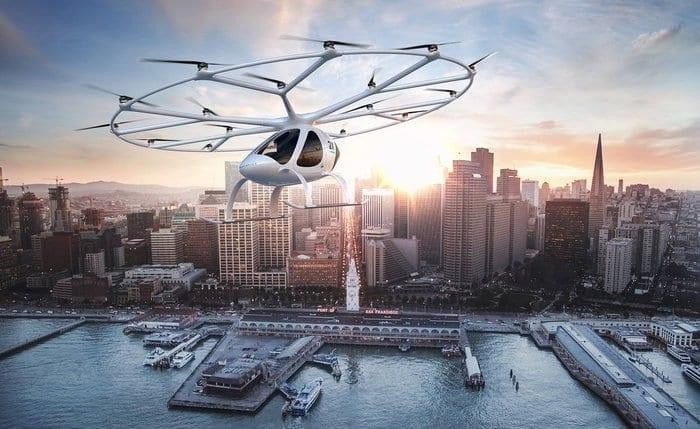
The emirate of Abu Dhabi has formally approved commercial operations of driverless ride-hailing services and laid out one of the first regulatory frameworks for autonomous flying taxis and delivery drones in the Middle East. According to the report from Semafor, the decision allows licensing of robotaxi operations through Chinese firms WeRide (partnering with Uber and local operator Tawasul) and AutoGo‑K2 (in collaboration with ApolloGo/Baidu) after extensive pilot testing (~800,000 km for WeRide, ~100,000 km on Yas Island for AutoGo-K2) in Abu Dhabi. Meanwhile, authorities have designated three zones—Yas Island, Zayed Port and Abu Dhabi International Airport—for autonomous flying-taxi and drone trials, and are working with the General Civil Aviation Authority (GCAA), the Technology Innovation Institute (TII) and ASPIRE to create a layered air-space and manage unmanned traffic systems.
Sources: National News, Arabian Business
Key Takeaways
– Abu Dhabi is positioning itself as a global leader in autonomous mobility by granting first-in-region commercial licences for fully driverless robotaxis and launching air-mobility frameworks.
– The regulatory design covers both ground and aerial domains: rigorous road-testing of AVs plus vertical air-corridor zoning and drone/flying-taxi integration.
– The involvement of Chinese autonomous-vehicle firms underscores a competitive dynamic where China-backed technology is playing a prominent role in Gulf innovation ecosystems.
In-Depth
The announcement from Abu Dhabi marks a significant milestone in the evolution of mobility—not just for the Gulf region, but potentially for the global autonomous-transportation industry. For years, autonomous vehicles (AVs) and flying taxis have lived predominantly in the realm of pilots, concept demonstrations, and speculative press releases. Now, at least in one major metropolitan region, they are transitioning into operational reality.
On the ground level, Abu Dhabi has given operating permits to WeRide and AutoGo-K2 to deploy driverless ride-hailing services in designated zones of the emirate. WeRide, working through its partnership with Uber and the local service Tawasul, has already logged some 800,000 km of robotaxi testing within Abu Dhabi’s urban zone, while AutoGo-K2 and ApolloGo have completed over 100,000 km of fully unmanned trials on Yas Island. The licensing follows multi-stage testing including safety officer supervised operations and full unmanned runs—a hallmark of rigorous regulatory process. One local test ride reported a smooth, pedal-and-steering-wheel-free experience, with the vehicle managing lane-changes, signalling and speed regulation automatically, the interior equipped with a touchscreen for passengers and an interlock preventing doors from unlocking until seat-belts were fastened. This level-4 autonomy (defined as high automation, driver optional) is now permitted commercially in this region.
Meanwhile, in the skies, authorities are not just dreaming but planning. The UAE through the TII, ASPIRE and the GCAA has launched simulation-driven regulatory modelling, air-corridor zoning and testing zones for autonomous aerial mobility. The pilot zones—Yas Island, Zayed Port and Abu Dhabi International Airport—are intended to support flying taxis and drone delivery in shared airspace. Vertical zoning is early but ambitious: drones below about 500 ft, air taxis between 1,000–3,000 ft, and conventional aircraft above. The interplay between unmanned traffic management (UTM) systems and traditional air traffic management (ATM) must be harmonised and is being addressed proactively. The announcement positions Abu Dhabi not merely as a testbed—but as a regulatory pioneer.
From a conservative viewpoint, the significance of this move lies in its operational realism and economic implications. Rather than relying purely on subsidies or speculative tech, Abu Dhabi is leveraging real-world testing, regulatory discipline and public-private partnerships to create lanes for commercial service. This suggests that autonomous mobility (ground and air) is entering a phase where regulation and economics—not just hype—will drive outcomes. For investors, operators, and policymakers, the question shifts from “when will driverless cars arrive?” to “how effectively will regulation manage risk, security, and public acceptance?” For citizens and consumers, the value proposition is clear: potentially lower-cost rides, less labour-intensive transport, reduced traffic burdens—and for the government, the mobility shift supports diversification away from oil, toward tech-enabled infrastructure and services.
Of course, challenges remain. Autonomous systems must demonstrate consistent safety in complex urban environments. Cybersecurity risks, system-failures, liability questions and public acceptance all loom. On the aerial side, regulatory frameworks are still nascent—vertiport placement, noise, air-space integration, and passenger trust will all need time. Yet Abu Dhabi’s move suggests that the era of robotaxis and flying cars may no longer be distant science-fiction—but the next frontier of how cities move people and goods. For those with eyes on infrastructure investment, transport policy or tech innovation, the emirate’s fast-track approach merits close attention.