

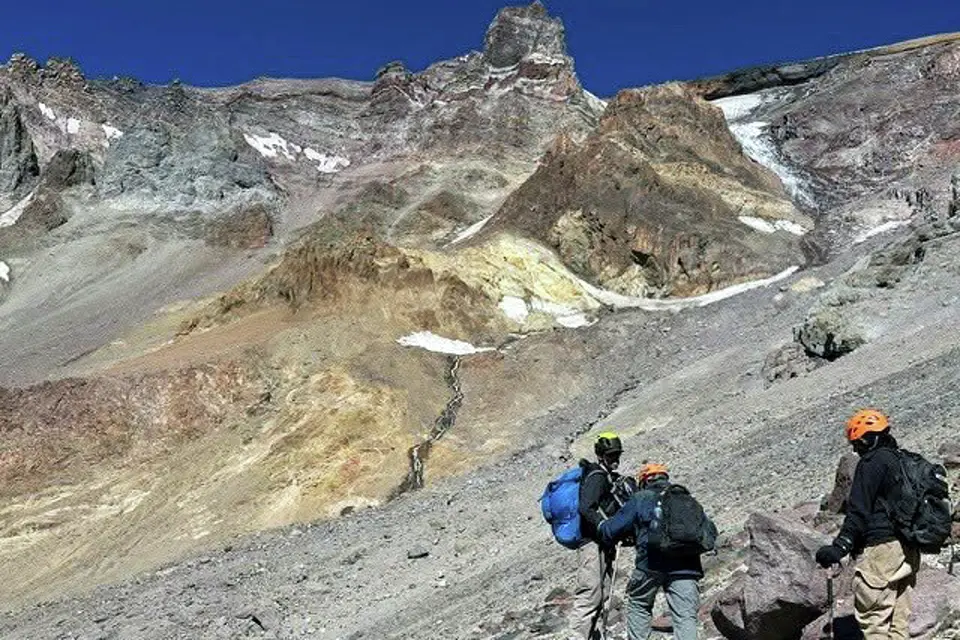
Three novice climbers from Roseville, California, required a rescue from Mount Shasta after relying heavily on Google‘s Gemini artificial-intelligence system, along with YouTube and AllTrails, to plan a summit attempt that quickly exceeded their preparation and experience. The climbers reportedly expected an eight-hour ascent but needed roughly 16 hours to reach the summit, arriving around 7 p.m. despite established guidance to turn around much earlier. Their nighttime descent deteriorated after their navigation phone died, a backup charger failed, and the group wandered into the rugged Mud Creek Canyon drainage, where one climber injured his knee. They ultimately spent the night near 11,000 feet without adequate food, water, clothing or emergency shelter before Forest Service climbing rangers and county search-and-rescue personnel reached them. Authorities said the group had received inadequate AI-generated guidance regarding provisions and called their heavy reliance on Gemini a “critical misstep.” The incident offers a timely warning about confusing artificial intelligence with expertise: AI can be a useful research assistant, but when physical safety is involved, algorithmic recommendations should be checked against experienced professionals, authoritative local information and common sense.
Key Takeaways
- Three inexperienced climbers planned significant portions of their Mount Shasta expedition with Gemini, YouTube and AllTrails, including route logistics and provisions, but their expected eight-hour climb took roughly 16 hours just to reach the summit.
- The group continued well beyond the recommended turnaround time, reached the summit around 7 p.m., descended in darkness, lost electronic navigation, wandered into Mud Creek Canyon and spent an unexpected night around 11,000 feet after one climber injured his knee.
- The episode demonstrates the limits of outsourcing judgment to AI. Authorities stressed that climbers should consult local rangers and established wilderness resources, carry redundant navigation and emergency equipment, and recognize that AI-generated information cannot substitute for experience and individual responsibility.
In-Depth
Artificial intelligence can process enormous quantities of information, but Mount Shasta just supplied a vivid demonstration of what it cannot provide: judgment earned through experience.
Three novice climbers from Roseville set out from the Clear Creek Trailhead after using Gemini, YouTube and AllTrails to help prepare their expedition. Their plan called for an approximately eight-hour climb, and their food and water preparations reflected that expectation. Instead, after departing around 3 a.m., the climbers did not reach Mount Shasta’s summit until approximately 7 p.m. The ascent alone had consumed roughly 16 hours.
That should have been avoided. Authorities advise climbers who have not reached the summit by noon to turn around, providing adequate daylight for descent and allowing a margin for unexpected problems. The group nevertheless continued upward, despite reportedly receiving advice from other climbers to turn back.
The consequences accumulated rapidly. During the nighttime descent, the phone being used for navigation lost power. The backup power source failed to connect properly. The climbers wandered off course and into Mud Creek Canyon. One member of the group injured his knee, and the men eventually stopped near 11,000 feet, spending the night inadequately equipped for the conditions.
Climbing rangers reached them the following morning, providing food, water and medical assistance. Strong winds complicated helicopter assistance, leaving rescuers to help the group descend on foot.
The larger lesson is not that artificial intelligence is inherently dangerous. It is that technology becomes dangerous when people surrender independent judgment to it. Gemini did not force these climbers beyond their turnaround time, prevent them from carrying emergency supplies or compel them to depend upon a single electronic navigation system.
The climbers themselves ultimately identified the fundamental problem: they had relied too heavily on AI instead of their own critical thinking. That distinction matters. Artificial intelligence is an extraordinary tool, but it remains a tool. When consequences involve survival rather than convenience, verified information, preparation, redundancy, experience and personal responsibility still matter more than an algorithm’s confident answer.