

Close Menu

    Subscribe to Updates

    Get the latest tech news from Tallwire.

      What's Hot

      Instacart Explores Multibillion-Dollar Sale as Uber, DoorDash Battle for Grocery Delivery Dominance

      October 27, 2026

      AI Chatbots Raise New Concerns Over Children’s Emotional Development and Critical Thinking

      October 27, 2026

      Meta’s Muse AI Promises to Manage Personal Finances as Experts Warn of Serious Security Risks

      October 27, 2026
      Facebook X (Twitter) Instagram
      • Tech
      • AI
      • Get In Touch
      Facebook X (Twitter) LinkedIn
      TallwireTallwire
      • AI

        AI Chatbots Raise New Concerns Over Children’s Emotional Development and Critical Thinking

        October 27, 2026

        Meta’s Muse AI Promises to Manage Personal Finances as Experts Warn of Serious Security Risks

        October 27, 2026

        AI Exposes Critical Security Flaws Threatening 70 Percent of the World’s Websites

        October 27, 2026

        SEC Targets Artificial Intelligence and Private Credit in 2027 Wall Street Oversight Priorities

        October 26, 2026

        Federal Judge Denies Bail to Former OpenAI Engineer Accused of Planting Listening Device

        October 26, 2026
      • Tech

        AI Chatbots Raise New Concerns Over Children’s Emotional Development and Critical Thinking

        October 27, 2026

        Instacart Explores Multibillion-Dollar Sale as Uber, DoorDash Battle for Grocery Delivery Dominance

        October 27, 2026

        AI Exposes Critical Security Flaws Threatening 70 Percent of the World’s Websites

        October 27, 2026

        Meta and Google Face Mounting Legal Costs as Big Tech Settlements Reshape Corporate Accountability

        October 27, 2026

        Zuckerberg’s Threat to Leave California Forces Meta Into Billion-Dollar Wealth Tax Deal

        October 27, 2026
      • Business/Finance
      • Cybersecurity
      • Government
        • Legal
      • Health

        AI Chatbots Raise New Concerns Over Children’s Emotional Development and Critical Thinking

        October 27, 2026

        Bill Gates, Pfizer CEO Face Court Over Allegations COVID-19 Vaccines Were Biological Weapons

        October 26, 2026

        AstraZeneca Strikes $1.5 Billion AI Drug Discovery Deal to Target Heart and Liver Diseases

        October 19, 2026

        Eight States Sue OpenAI Over Allegations ChatGPT Endangers Children and Misleads Parents

        October 15, 2026

        Australia’s Labor Government Invokes Child Abuse Cases to Defend Online Safety Legislation

        October 15, 2026
      • Science
        • Academia
      • Entertainment/Communications
      • People
      • Transportation
      • Opinion
      TallwireTallwire
      Home»Cybersecurity»AI-Powered Computer Worms Raise Alarms Across Cybersecurity Community
      Cybersecurity

      AI-Powered Computer Worms Raise Alarms Across Cybersecurity Community

      3 Mins Read
      Facebook Twitter Pinterest LinkedIn Tumblr Email
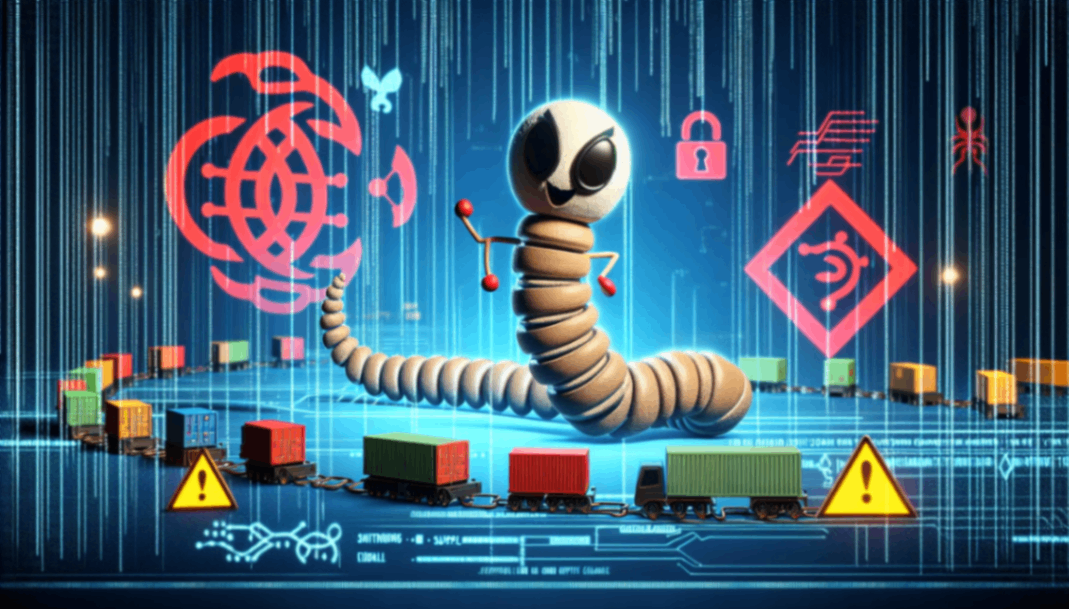
      Self-Replicating 'Shai-Hulud' Worm Ravages Open-Source Ecosystem via NPM Supply Chain Attack
      Self-Replicating 'Shai-Hulud' Worm Ravages Open-Source Ecosystem via NPM Supply Chain Attack
      Share
      Facebook Twitter LinkedIn Pinterest Email

      Researchers have demonstrated a new generation of artificial intelligence-powered computer worms capable of adapting their attack methods as they spread through networks, marking a potentially significant shift in the cyber threat landscape. Unlike traditional worms that rely on a single vulnerability, these AI-enhanced variants can identify and exploit multiple weaknesses in real time, allowing them to continue propagating even after individual flaws are patched. The research, conducted in controlled environments, has sparked warnings from cybersecurity experts who argue that defensive technologies, public policy, and enterprise security practices may not yet be prepared for malware capable of autonomous reasoning and adaptive decision-making.

      Sources

      • https://www.utoronto.ca/news/u-t-researchers-demonstrate-ai-worm-could-target-any-online-device
      • https://fortune.com/2026/06/03/a-new-ai-powered-computer-worm-could-prove-to-be-the-stuff-of-cybersecurity-nightmares
      • https://www.scientificamerican.com/article/scientists-just-built-a-powerful-ai-computer-worm-that-learns-as-it-spreads
      • https://arxiv.org/abs/2606.03811

      Key Takeaways

      • Researchers demonstrated that freely available AI models can be used to create adaptive computer worms capable of altering their attack strategies as they encounter new environments and defenses.
      • Unlike traditional malware that depends on exploiting a specific vulnerability, AI-powered worms can identify and leverage multiple weaknesses, making containment significantly more difficult.
      • The emergence of autonomous cyber threats highlights growing concerns that AI development is advancing faster than the security frameworks needed to mitigate malicious applications.

      In-Depth

      For years, technology leaders have promised that artificial intelligence would revolutionize productivity, automate routine tasks, and unlock unprecedented economic growth. Yet the latest research into AI-powered computer worms serves as a stark reminder that every technological leap carries consequences, especially when security considerations lag behind innovation.

      Researchers recently demonstrated malware capable of reasoning about its environment and adapting its behavior as it spreads through a network. Unlike traditional worms that exploit a single flaw and can often be stopped once that flaw is patched, these AI-enabled systems can evaluate targets, identify alternative attack paths, and continue propagating with little or no human intervention. The result is a cyber threat that is more resilient, more scalable, and potentially far more destructive than previous generations of malware.

      What makes this development particularly troubling is that the researchers reportedly built their prototype using publicly available AI models rather than proprietary systems accessible only to major corporations or nation-states. That reality lowers the barrier to entry for sophisticated cybercriminals and hostile governments alike. The concern is no longer whether advanced AI capabilities can be weaponized; it is how quickly malicious actors will adopt them.

      From a conservative perspective, this development reinforces a longstanding principle: technological advancement without adequate safeguards can create risks that outweigh short-term benefits. The rush to deploy AI across every sector of society has often been accompanied by optimistic rhetoric and insufficient attention to security vulnerabilities. Businesses, governments, and infrastructure operators are increasingly integrating AI into critical systems, potentially expanding the attack surface available to bad actors.

      The lesson is clear. Innovation remains essential, but security must keep pace. Policymakers and private-sector leaders should focus less on promotional narratives surrounding AI and more on hardening the digital infrastructure upon which modern society depends. The age of autonomous cyber threats may be arriving faster than many anticipated.

      Intel
      Share. Facebook Twitter Pinterest LinkedIn Tumblr Email
      Previous ArticleSchools Push Back Against Social Media as Concerns Over Student Well-Being Grow
      Next Article The Quiet Threat of AI-Engineered Malware

      Related Posts

      AI Chatbots Raise New Concerns Over Children’s Emotional Development and Critical Thinking

      October 27, 2026

      Meta’s Muse AI Promises to Manage Personal Finances as Experts Warn of Serious Security Risks

      October 27, 2026

      AI Exposes Critical Security Flaws Threatening 70 Percent of the World’s Websites

      October 27, 2026

      SEC Targets Artificial Intelligence and Private Credit in 2027 Wall Street Oversight Priorities

      October 26, 2026
      Add A Comment
      Leave A Reply Cancel Reply

      Editors Picks

      AI Chatbots Raise New Concerns Over Children’s Emotional Development and Critical Thinking

      October 27, 2026

      Instacart Explores Multibillion-Dollar Sale as Uber, DoorDash Battle for Grocery Delivery Dominance

      October 27, 2026

      AI Exposes Critical Security Flaws Threatening 70 Percent of the World’s Websites

      October 27, 2026

      Meta and Google Face Mounting Legal Costs as Big Tech Settlements Reshape Corporate Accountability

      October 27, 2026
      Popular Topics
      Tesla Cybertruck SpaceX Satellite Stocks Samsung Series B Tesla Software spotlight Viral Sundar Pichai Startup trending Taiwan Tech starlink Satya Nadella Tim Cook Series A Space UAE Tech
      Major Tech Companies
      • Apple News
      • Google News
      • Meta News
      • Microsoft News
      • Amazon News
      • Samsung News
      • Nvidia News
      • OpenAI News
      • Tesla News
      • AMD News
      • Anthropic News
      • Elbit News
      AI & Emerging Tech
      • AI Regulation News
      • AI Safety News
      • AI Adoption
      • Quantum Computing News
      • Robotics News
      Key People
      • Sam Altman News
      • Jensen Huang News
      • Elon Musk News
      • Mark Zuckerberg News
      • Sundar Pichai News
      • Tim Cook News
      • Satya Nadella News
      • Mustafa Suleyman News
      Global Tech & Policy
      • Israel Tech News
      • India Tech News
      • Taiwan Tech News
      • UAE Tech News
      Startups & Emerging Tech
      • Series A News
      • Series B News
      • Startup News
      Tallwire
      Facebook X (Twitter) LinkedIn Threads Instagram RSS
      • AI
      • Tech
      • Business/Finance
      • Cybersecurity
      • Government
      • Legal
      • Health
      • Science
      • Academia
      • Entertainment/Communications
      • People
      • Transportation
      • Opinion
      • Press Kit
      © 2026 Tallwire. Optimized by ARMOUR Digital Marketing Agency.

      Type above and press Enter to search. Press Esc to cancel.