

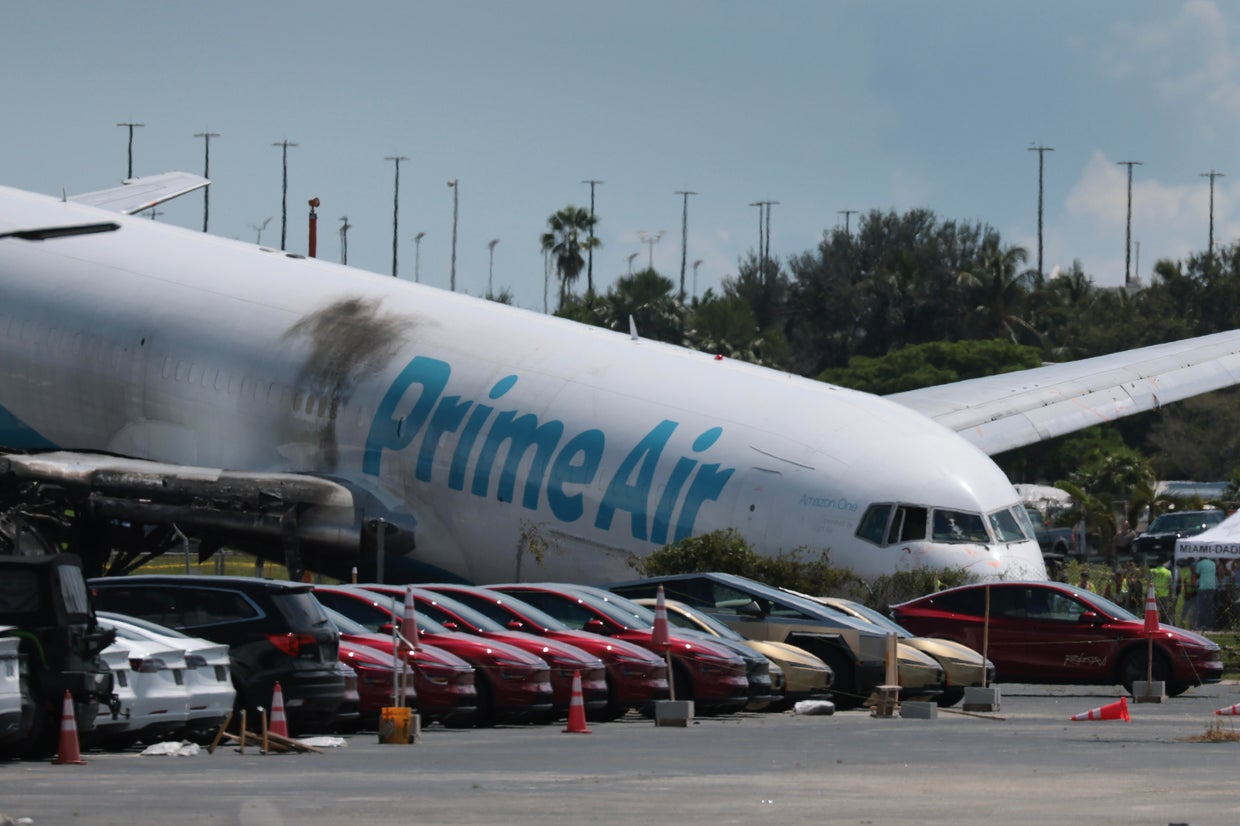
An Amazon Prime Air Boeing 767 cargo jet operated by 21 Air overran Runway 30 while landing at Miami International Airport Sunday afternoon, traveling roughly 1,300 feet beyond the paved runway, smashing through airport infrastructure and fencing, and striking two vehicles before coming to rest. Five people in the vehicles were killed and five others were injured, three critically, while the pilot and co-pilot survived. Federal investigators have recovered both the flight-data recorder and cockpit-voice recorder and are examining the aircraft’s touchdown point, speed, braking performance, mechanical condition, weather and wind conditions, and whether the crew should have abandoned the landing and executed a go-around. Investigators are also examining the absence of an Engineered Materials Arresting System at the runway, although the airport appears to have complied with federal runway-safety requirements through its existing 1,000-foot safety area.
Key Takeaways
- The Boeing 767 traveled approximately 1,300 feet beyond the paved runway, striking navigational equipment, fencing, an airport cleaning-crew van and an SUV traveling outside the airport perimeter. The five fatalities were among people in the two vehicles; the two pilots survived.
- Investigators recovered the flight-data and cockpit-voice recorders and are focusing on fundamental questions surrounding the landing: exactly where the aircraft touched down, its speed, braking performance, wind and weather conditions, mechanical condition, and whether circumstances warranted a go-around rather than completing the landing.
- The investigation is also drawing attention to runway-overrun protection. Miami International does not have an Engineered Materials Arresting System at the runway, but the airport reportedly satisfies federal requirements through a 1,000-foot runway safety area. Determining whether additional safeguards could have prevented deaths beyond the airport property will likely become an important safety-policy question.
In-Depth
The investigation into the deadly Miami International Airport cargo-plane crash is increasingly centered on why a Boeing 767 was unable to stop after landing and whether the accident could have been prevented before the aircraft reached people outside the runway environment.
The aircraft, operating as Amazon Air Flight 7598 for Amazon Prime Air, was flown by 21 Air and was returning from San Juan, Puerto Rico, when it landed at approximately 1:53 p.m. Sunday. The 32-year-old Boeing 767 had already flown from Cincinnati to Miami and Miami to San Juan earlier that day.
After overrunning Runway 30, the aircraft struck navigational equipment and an Econoline van carrying seven airline-cleaning workers. It continued through the airport perimeter fence and collided with a Toyota SUV traveling on Northwest 67th Avenue before eventually stopping approximately 1,300 feet beyond the paved runway. Federal investigators confirmed that all five people killed were occupants of the two vehicles. Five additional people were injured, three critically.
Investigators have recovered the flight-data recorder and cockpit-voice recorder and are sending them to Washington for analysis. Those devices should provide crucial evidence regarding airspeed, touchdown location, braking, aircraft configuration and cockpit communications.
One particularly important issue is whether the jet touched down too far along the runway. Video evidence reportedly appears to show the aircraft remaining airborne unusually far down the runway before touching down. Investigators will consequently examine whether the pilots had sufficient runway remaining to stop safely and whether a go-around should have been initiated.
The crash also raises a broader infrastructure question. Miami International lacks an Engineered Materials Arresting System, a crushable runway-end surface designed to stop aircraft during overruns. The airport nevertheless appears to satisfy existing federal standards through its 1,000-foot runway safety area. Compliance, however, does not necessarily end the policy debate. With five people dead beyond the normal runway environment, investigators and aviation officials will have to determine not merely whether existing regulations were followed, but whether those regulations provided adequate protection.
Sources
- https://apnews.com/article/cargo-plane-crash-miami-airport-amazon-prime-d5118998e880f380a3fd8786e35fd9bb
- https://www.reuters.com/business/aerospace-defense/ntsb-give-updates-deadly-amazon-prime-air-cargo-plane-crash-miami-2026-09-07/
- https://www.wpbf.com/article/ntsb-jennifer-homendy-black-box-cockpit-voice-recorder-amazon-miami-international-airport-crash/73634825