

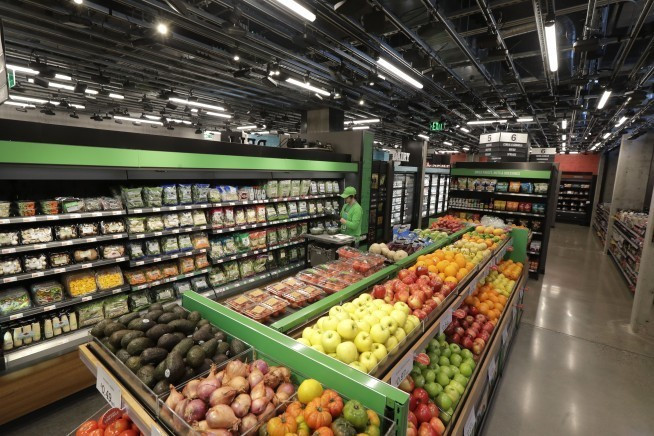
Amazon has officially merged its grocery brands—Amazon Fresh and Happy Belly—into a unified private-label line called “Amazon Grocery,” which now includes more than 1,000 items, most priced under $5. The move aims to simplify customers’ shopping experience and compete more directly with value grocers such as Walmart and Aldi. This consolidation follows a year in which Amazon saw a 15 percent rise in private-label purchases. The new brand will be available online and through Amazon Fresh stores, and it’s part of a larger internal reorganization (dubbed “One Grocery”) that aligns Whole Foods, Fresh, and other grocery operations under shared leadership. Analysts view the move as a critical step in Amazon’s bid to turn grocery into a key growth engine rather than a drag on margins.
Sources: Investopedia, Business Insider
Key Takeaways
– Amazon is consolidating its previously separate private-label grocery brands (Amazon Fresh, Happy Belly) under a single new umbrella brand, “Amazon Grocery,” with over 1,000 items priced mostly under $5.
– This brand consolidation aligns with a broader internal restructuring (the “One Grocery” strategy) that centralizes oversight of Amazon’s grocery operations, including Whole Foods and Amazon Fresh.
– The strategy reflects Amazon’s intention to compete more aggressively in the value grocery space, leveraging its private-label growth and delivery infrastructure to gain share from traditional grocers in a high-pressure margin environment.
In-Depth
Amazon’s decision to combine its grocery brands under the new “Amazon Grocery” label marks a tipping point in how the company views its grocery business: not as a supplement to e-commerce, but as a full-blown battleground. The new brand pulls in legacy lines like Amazon Fresh and Happy Belly, uniting them into a streamlined offering comprised of over 1,000 products—spanning everything from pantry staples to fresh produce and meat—most of which Amazon says will carry sub-$5 prices.
This move is far from cosmetic. Amazon is simultaneously rolling out an internal reorganization under the banner of “One Grocery,” which consolidates leadership over Amazon Fresh, Whole Foods, and other grocery operations in order to eliminate inefficiencies and unify strategy. Whole Foods’ merchandising and marketing functions now fall under broader Amazon compensation plans as part of this restructure. Previously, the grocery operations ran in more siloed fashion; now Amazon aims to apply scale, centralized planning, and data-driven consistency across those divisions.
Why take this step now? Private-label grocery is growing in appeal—consumers under inflationary pressure are more willing to try store brands, and Amazon’s own data shows private-label purchases rose by 15 percent year-over-year. Through Amazon Grocery, the company hopes to position itself more firmly against competitors like Walmart’s Great Value or Aldi’s in-house lines. With its delivery infrastructure, logistics prowess, and customer reach, Amazon is well-suited to push aggressively into lower-margin goods if it can drive volume and reduce inefficiencies.
Still, the grocery space is notoriously tough on margins. Executing consistently across perishables, quality control, and logistics is complex. Amazon’s UK experiments suggest the risks: in the UK, Amazon is shuttering all Amazon Fresh stores after failing to gain traction, redirecting focus to online delivery. As Amazon doubles down here in the U.S., it’s a bet on its ability to scale grocery profitably at volume. If it succeeds, this could help shift Amazon’s growth story from tech and AI back toward everyday essentials—and strain the margins of legacy grocery chains that lack the same logistical or data-driven advantages.