

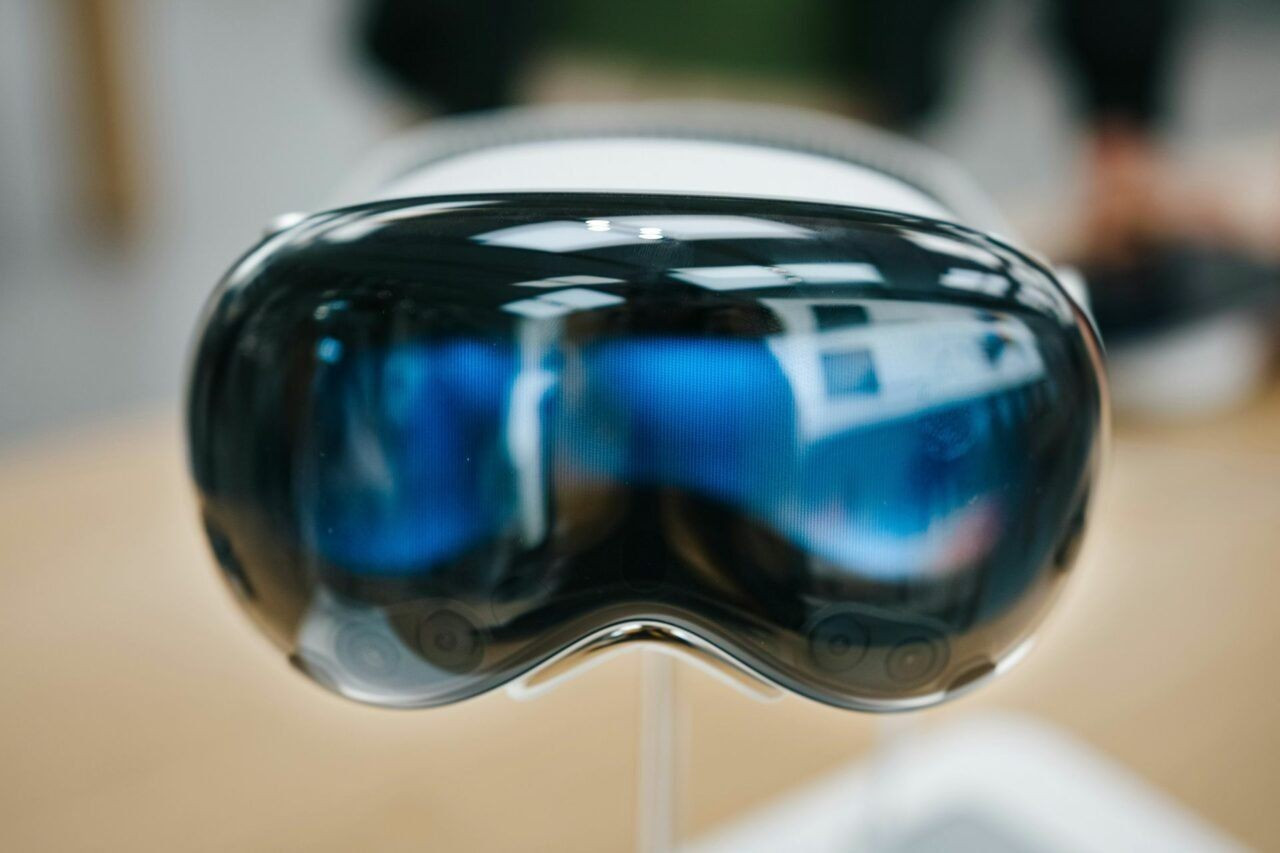
Apple has reportedly put its planned overhaul of the Vision Pro headset on hold to double down on developing AI-powered smart glasses, realigning internal resources toward competing with Meta‘s emerging eyewear products. Bloomberg’s Mark Gurman reports that Apple is shifting staff from its shelved “Vision Air” project into two new glasses efforts: a display-less model code-named N50 that will pair with an iPhone and is expected to debut in 2026 (with a 2027 release), and a second display-equipped version that’s been accelerated ahead of its 2028 target to rival the Meta Ray-Ban Display. Meanwhile, Meta’s own smart glasses, especially the $799 display model, have already hit strong demand, reinforcing the pressure on Apple.
Key Takeaways
– Apple is shelving or deferring its planned lighter, cheaper Vision Pro revision in order to focus efforts on AI smart glasses development.
– The company is pursuing two models: one without a display (iPhone-paired) expected in 2027, and a more advanced display version fast-tracked to compete with Meta’s Ray-Ban Display.
– Meta’s Ray-Ban Display glasses have strong early demand, giving Meta a lead in this segment and raising the stakes for Apple’s pivot.
In-Depth
Apple’s strategic shift away from a Vision Pro refresh in favor of smarter, lighter eyewear reflects a hard readjustment in priorities amid evolving market dynamics. The original Vision Pro, though technologically ambitious, has faced criticism for its steep $3,499 price, heavy form factor, and unclear mass market appeal. Now, Bloomberg reports Apple has pulled engineering and design talent from its shelved “Vision Air” redesign to instead accelerate work on smart glasses. One version, the N50, reportedly will omit a display and function primarily as a companion device to the iPhone. Apple aims to unveil that model as early as 2026, with product shipping in 2027. The second, more premium version—with its own display—is being fast-tracked ahead of its earlier 2028 window in order to better match Meta’s timely move into the AR glasses space.
Meta, for its part, has been gaining traction. Its Ray-Ban Display glasses, priced at $799, combine AI features and a heads-up display in a form factor intended to pass as ordinary eyewear. Early U.S. inventory sold out quickly, prompting waitlists and restock plans. Meta’s dominance in the nascent smart glasses segment presents a critical benchmark for Apple’s pivot. Some observers see Apple’s move as late but necessary, leveraging hardware design and ecosystem integration strengths to dethrone Meta in the long run. That said, Apple must now deliver a compelling experience in AI, battery life, miniaturization, comfort, and software to avoid the pitfalls that earlier wearables (including the Vision Pro) have encountered. The pivot suggests that Apple sees AI glasses—not mixed-reality headsets—as the more viable bridge to ubiquitous spatial computing and next-gen human-computer interfaces.