

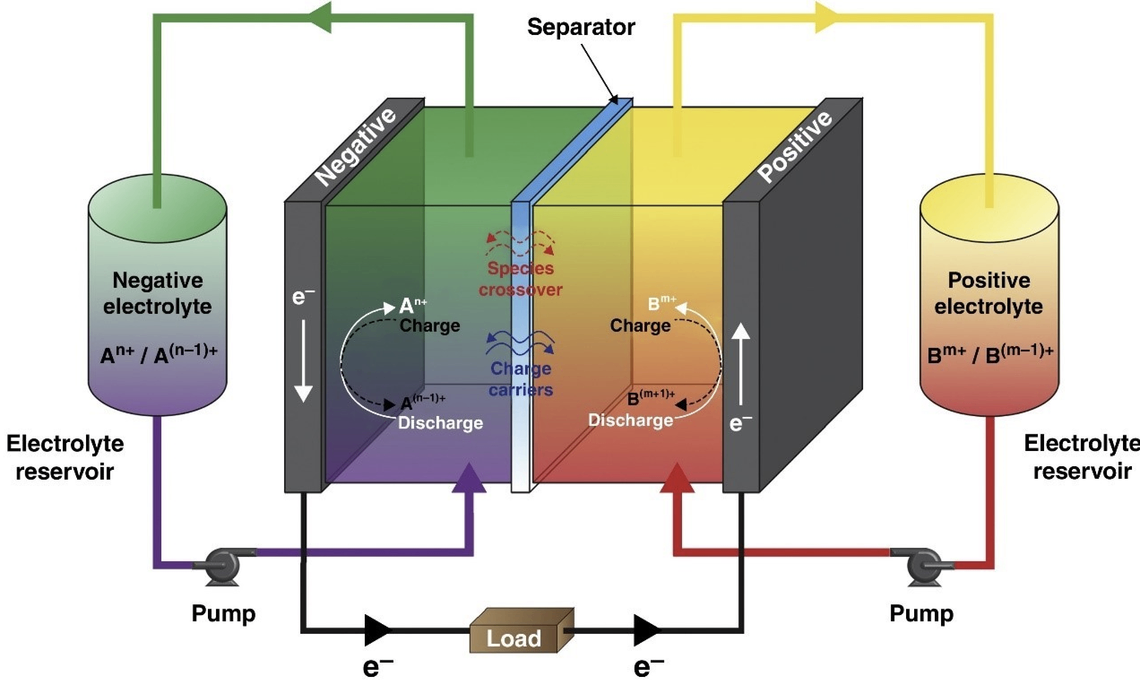
Engineers at Monash University in Australia have recently developed a water-based “flow battery” designed as an affordable, safe, and efficient alternative to typical home solar lithium-ion systems, which cost around $10,000. The innovation promises faster charging, enhanced stability, and significantly lower cost. In testing, the new battery completed about 600 high-current cycles with virtually no capacity loss, outperforming standard industry membranes in speed and reliability. This breakthrough could transform residential solar storage by providing a more accessible option for homeowners.
Sources: SciTech Daily, LifeBost.com, ANews.com.tr
Key Takeaways
– The new water-based flow battery from Monash offers a far more affordable option compared to the ~$10,000 cost of typical lithium-ion home solar storage.
– High-current cycling tests show exceptional durability and efficiency, with negligible capacity degradation over 600 cycles.
– The technology promises to make home solar energy storage safer, faster, and more accessible, potentially broadening adoption among homeowners.
In-Depth
If you’re thinking solar plus storage must come at a steep price tag, Monash University’s latest water-based flow battery might change your tune. Engineered to be safer, faster, and significantly more affordable than traditional lithium-ion setups, which go for about ten grand, this innovation could bring residential energy independence within reach for more Australians—and potentially homeowners worldwide.
What stands out is how this battery handles endurance. In trials, it endured roughly 600 high-current cycles without noticeable capacity loss. That’s impressive, especially when compared with standard membranes that typically degrade faster. Plus, the design promises swifter charge rates and improved stability—key selling points for anyone looking at long-term investment and reliability.
The use of water-based chemistry makes it inherently safer—less fire risk, no volatile organic solvents involved. In a conservative-leaning light, it aligns with the value of practical innovation: improving lives, rewarding thrift, and delivering resilience without needless complexity. You get effective energy storage that doesn’t break the bank or raise safety concerns.
From a policy or homeowner standpoint, this development is meaningful. Encouraging efficient, lower-cost technologies that deliver tangible benefits aligns with a fiscally sensible path toward energy autonomy. If widely adopted, flow batteries could help smooth the intermittency of solar power, reduce strain on the grid, and lower energy bills—all while supporting private investment in clean energy infrastructure.
Monash’s accomplishment demonstrates that smart engineering, rooted in real-world practicality, can pave the way toward broader access to renewable energy solutions—without premium price tags or compromise on performance.