

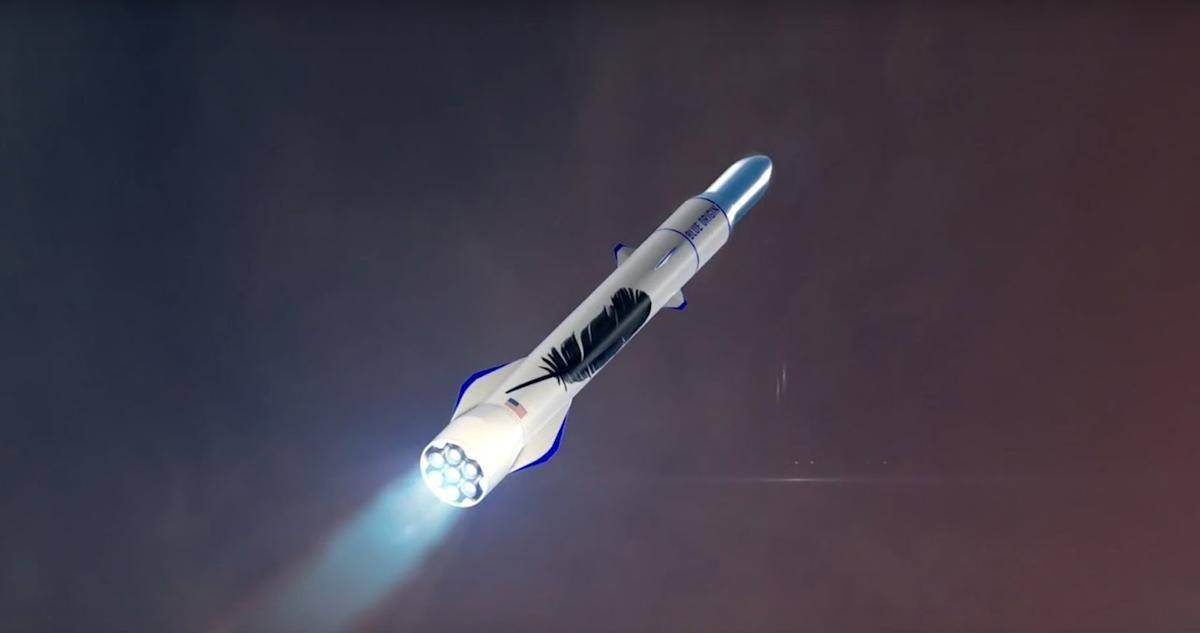
Blue Origin has announced that its heavy-lift rocket New Glenn is slated for a second flight from Launch Complex 36 at Cape Canaveral, Florida, on Sunday, November 9. The inaugural mission earlier this year successfully placed its second stage into orbit but failed to recover the first-stage booster after a landing attempt. This upcoming flight will carry critical payloads: twin ESCAPADE spacecraft bound for Mars on behalf of NASA and a technology demonstrator from Viasat, marking the first commercial operation of New Glenn. With the company under pressure to prove its reusable-rocket credentials and compete in the heavy-lift launch market, this mission carries both technical and strategic weight.
Sources: Dataconomy, WESH.com
Key Takeaways
– The New Glenn’s second flight will carry paying-customer payloads — including NASA’s twin ESCAPADE spacecraft to Mars — elevating the mission beyond a mere test flight.
– Blue Origin is under significant pressure to demonstrate reliable booster recovery and launch cadence in order to credibly compete in the reusable heavy-lift market.
– Any failure or hiccup on this flight could delay the company’s next big contract opportunities — making Sunday’s window a pivotal moment in its future commercial launch trajectory.
In-Depth
In a move that underscores the escalating competition within the commercial space industry, Blue Origin has scheduled the second flight of its New Glenn heavy-lift rocket for Sunday, November 9. The company ultimately aims to challenge the dominance of competitors like SpaceX, but to do so it must deliver — and this mission presents a high-stakes test of both its hardware and its business model.
The inaugural flight of New Glenn in January succeeded in placing the second stage into orbit, yet the first-stage booster failed during re-entry and no successful landing was achieved. That outcome did not derail the mission’s primary objective, but exposed a core weakness in Blue Origin’s efforts to master reusable rocket technology — a field where SpaceX has long been the front-runner. With this second flight now carrying actual commercial and scientific payloads, including NASA’s twin ESCAPADE spacecraft built to study Mars’ magnetosphere, the stakes are higher: technical success must merge with operational reliability.
Blue Origin has delayed this launch multiple times, citing the need for additional testing, engineering refinements, and safety precautions. A recent hot-fire test of New Glenn’s seven BE-4 engines demonstrated improved performance and offered some reassurance. The company has emphasized that it will approach this second flight with more caution than the first — a prudent move given the payload’s nature and customer commitments.
Beyond the technical dimension, this mission occupies a strategic moment for Blue Origin. If successful, it will signal to commercial satellite customers and government agencies that the company is a credible provider of heavy-lift, reusable launch services. That credibility is essential if Blue Origin is to win major contracts in military launches, lunar lander missions, or planetary science probes. Conversely, any setback could postpone contract awards, reduce market confidence, and leave Blue Origin further behind in a sector moving at warp speed.
The inclusion of NASA’s ESCAPADE mission elevates the profile of the flight: placing twin spacecraft on a trajectories toward Mars aligns Blue Origin not simply with commercial launches but with deep-space exploration and scientific ambition. That fact raises the bar. The company’s next phase — including lunar lander support and broader launch cadence — hinges on demonstrating this rocket is not just a novelty but a dependable workhorse.
In sum, November 9 will test Blue Origin’s engineering resolve, its operational readiness, and its business proposition. The company is no longer merely chasing a developmental goal; it is stepping into a realm where performance touches contracts, budgets, and reputations. For those backing Blue Origin — including NASA, satellite firms and investors — the outcome will go well beyond a dramatic launch or landing. This flight could determine whether the company moves from visionary ambition to sustainable reality, or whether it remains a hopeful contender in the race for heavy-lift dominance.