

Close Menu

    Subscribe to Updates

    Get the latest creative news from FooBar about art, design and business.

    What's Hot

    Microsoft Shares BitLocker Keys With FBI, Raising Encryption and Privacy Debate

    January 28, 2026

    Breakthrough Stretchable OLED Doubles Size Without Dimming, Paving Way for Wearables and Flexible Displays

    January 28, 2026

    Hidden Leak Undercuts “Miracle” Electronics Insulator Discovery

    January 28, 2026
    Facebook X (Twitter) Instagram
    • Tech
    • AI News
    • Get In Touch
    Facebook X (Twitter) LinkedIn
    TallwireTallwire
    • Tech

      Breakthrough Stretchable OLED Doubles Size Without Dimming, Paving Way for Wearables and Flexible Displays

      January 28, 2026

      Robot Lip-Sync Breakthrough: Machine Learns Realistic Speech Movement from YouTube

      January 28, 2026

      Hidden Leak Undercuts “Miracle” Electronics Insulator Discovery

      January 28, 2026

      New Malicious Chrome Extensions Steal Enterprise HR Credentials and Enable Full Account Takeovers

      January 27, 2026

      Patent Data Reveals U.S. Tech Growth Shifting to Batteries and Sustainable Materials

      January 27, 2026
    • AI News

      Robot Lip-Sync Breakthrough: Machine Learns Realistic Speech Movement from YouTube

      January 28, 2026

      Adobe Rolls Out New AI-Powered Video Editing Tools in Premiere and After Effects

      January 27, 2026

      Patent Data Reveals U.S. Tech Growth Shifting to Batteries and Sustainable Materials

      January 27, 2026

      Google Temporarily Disables YouTube’s Advanced Captions, Triggering Backlash

      January 27, 2026

      Meta’s Metaverse Retreat Signals VR Era Is Fading

      January 27, 2026
    • Security

      Microsoft Shares BitLocker Keys With FBI, Raising Encryption and Privacy Debate

      January 28, 2026

      New Malicious Chrome Extensions Steal Enterprise HR Credentials and Enable Full Account Takeovers

      January 27, 2026

      Chinese AI Leaders Warn US Lead Is Widening in Tech Race

      January 25, 2026

      Emergency Windows 11 Shutdown Bug Prompts Microsoft To Release Urgent Fix

      January 25, 2026

      Pentagon Integrates Elon Musk’s Grok AI Into U.S. Military Systems Amid Innovation Push

      January 25, 2026
    • Health

      Biotics AI Secures FDA Clearance for AI-Driven Fetal Ultrasound Tool

      January 27, 2026

      Israeli Defense Corps Unveils AI-Driven PTSD Tools and Blood-Delivering Drones

      January 26, 2026

      New AI Model Flags Hidden Risks in Drinking Water Disinfection

      January 24, 2026

      Anthropic Launches Claude for Healthcare to Rival OpenAI’s ChatGPT Health

      January 20, 2026

      Goldman Sachs Says Young Workers Better Poised for Tech-Era Changes

      January 18, 2026
    • Science

      Breakthrough Stretchable OLED Doubles Size Without Dimming, Paving Way for Wearables and Flexible Displays

      January 28, 2026

      Robot Lip-Sync Breakthrough: Machine Learns Realistic Speech Movement from YouTube

      January 28, 2026

      Hidden Leak Undercuts “Miracle” Electronics Insulator Discovery

      January 28, 2026

      Biotics AI Secures FDA Clearance for AI-Driven Fetal Ultrasound Tool

      January 27, 2026

      Israeli Defense Corps Unveils AI-Driven PTSD Tools and Blood-Delivering Drones

      January 26, 2026
    • People

      Starlink Becomes Critical Internet Lifeline Amid Iran Protest Crackdown

      January 25, 2026

      Musk Pledges to Open-Source X’s Recommendation Algorithm, Promising Transparency

      January 21, 2026

      Meta Taps Former Trump National Security Advisor Dina Powell McCormick as New President, Vice Chair

      January 19, 2026

      Big Tech Scores a Win as Europe Softens Digital Rule Overhaul

      January 18, 2026

      Google’s John Mueller Tells Marketers to Prioritize Real Audience Data Over SEO vs. GEO Buzz

      January 17, 2026
    TallwireTallwire
    Home»Science»Breakthrough Stretchable OLED Doubles Size Without Dimming, Paving Way for Wearables and Flexible Displays
    Science

    Breakthrough Stretchable OLED Doubles Size Without Dimming, Paving Way for Wearables and Flexible Displays

    4 Mins Read
    Facebook Twitter Pinterest LinkedIn Tumblr Email
    Share
    Facebook Twitter LinkedIn Pinterest Email

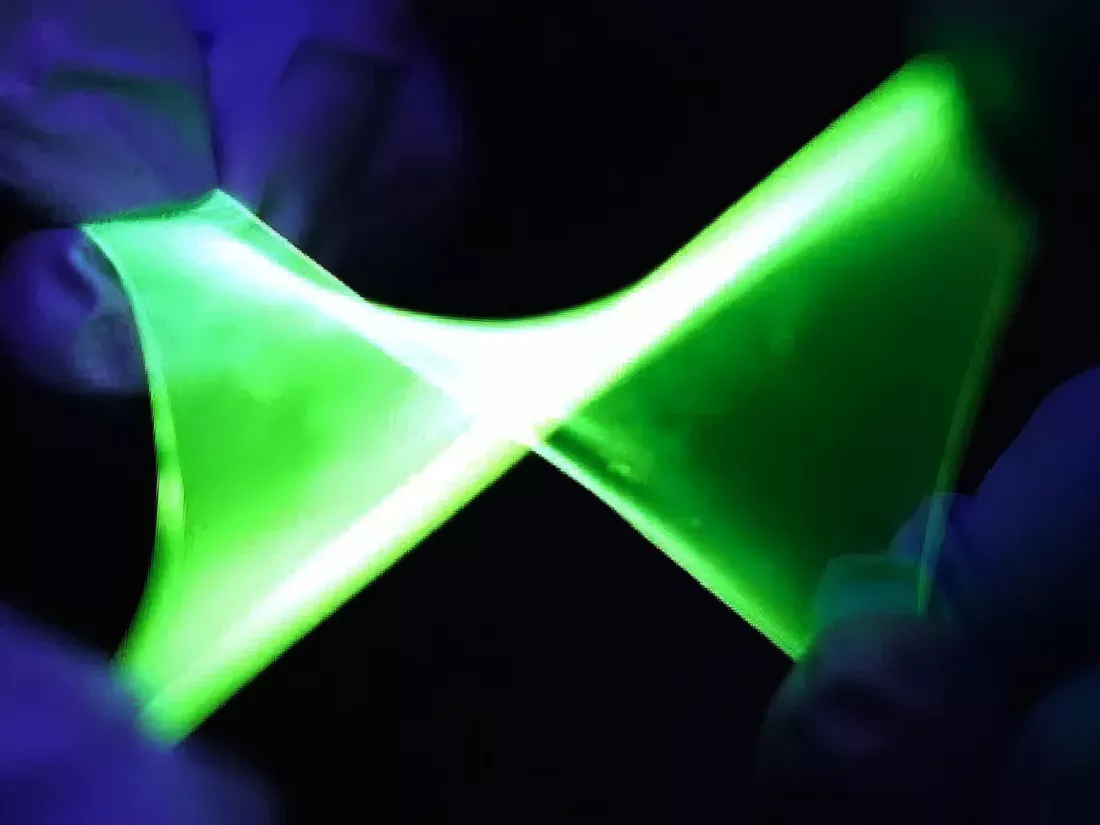
    Researchers from Drexel University and Seoul National University have developed a new stretchable organic light-emitting diode (OLED) that can double in size without losing brightness or performance—a significant advancement toward truly flexible, wearable displays. By replacing the traditionally brittle transparent electrode (indium tin oxide) with a MXene-based transparent electrode material, the team achieved record performance, maintaining high brightness and efficiency even as the display is stretched. This innovation also uses specialized organic layers to guide charge and recycle energy, further improving stability under strain. Applications could span from clothing-integrated screens to real-time health sensors, though challenges remain, such as improving durability and moisture/oxygen resistance before commercialization.

    Sources:

    https://www.techspot.com/news/110973-researchers-build-stretchable-oled-can-double-size-without.html
    https://tech.yahoo.com/science/articles/ukrainian-scientist-helps-develop-stretchable-150400324.html
    https://www.sciencedaily.com/releases/2026/01/260115220608.htm

    Key Takeaways

    • A new OLED design uses MXene materials to enable stretchability up to 200% of original size with minimal brightness loss.
    • This technology represents a step forward for wearable electronics, on-skin health monitors, and flexible displays, extending beyond rigid screens.
    • While promising, commercial viability is still limited by material durability issues such as oxygen/moisture barrier performance.

    In-Depth

    In display technology, the longstanding challenge has been to create screens that are not just flexible in a bendable sense, but stretchable—capable of expanding and contracting in size without losing the clarity or brightness consumers expect from modern OLED panels. A recent research breakthrough involving collaborative work between Drexel University and Seoul National University has brought that future closer to reality with the development of a stretchable OLED that can grow up to twice its original size, maintain luminescence, and sustain high efficiency throughout mechanical deformation. At the core of this innovation is a class of materials known as MXenes—ultrathin sheets of highly conductive metal carbides and nitrides that combine conductivity with mechanical resilience.

    OLED displays emit light through organic layers sandwiched between conductive electrodes; historically, the industry’s standard transparent electrode material—indium tin oxide (ITO)—has proven brittle, cracking under even moderate mechanical strain. Replacing ITO with MXene-based transparent electrodes only about 10 nanometers thick gives these displays a remarkable ability to stretch while still conducting electricity effectively. In the new stretchable OLEDs, the MXene electrodes outperform traditional ITO not only in elasticity but also in maintaining brightness and performance under stretching.

    In addition to the electrode innovation, researchers introduced two advanced organic layers within the OLED structure: one to efficiently guide positive charges into the light-emitting region, and another to recycle energy that would otherwise be lost as heat. These additions have helped achieve a record external quantum efficiency (EQE) for stretchable OLED devices at around 17 percent—notable given that commercially optimized rigid OLEDs can reach higher figures but have traditionally lacked stretchable capability.

    The applications for this technology are potentially transformative. Wearable electronics could feature real displays integrated directly into clothing or on-skin patches that change size with movement. Real-time medical sensors embedded with OLED displays could show biometrics like heart rate, temperature, or blood oxygen directly on the user’s garment or skin. Soft robots, industrial displays that need dynamic form factors, and new classes of interactive surfaces also emerge as possible use cases.

    Despite the excitement, significant hurdles remain before mass commercialization. One of the most persistent challenges with OLED technology, stretchable or otherwise, is reliability under environmental stress—particularly resistance to moisture and oxygen, which degrade organic materials over time. Stretchable designs also need robust encapsulation layers that can flex without compromising the OLED’s longevity. Researchers acknowledge that solving these issues is key to moving from lab prototypes to consumer products.

    This breakthrough also fits into a broader landscape where flexible and stretchable electronics are gaining attention, with various institutions and companies exploring high-performance materials, alternative electrode structures, and fully deformable displays. While consumer gadgets like foldable phones and curved monitors hint at what’s possible, stretchable OLEDs represent the next frontier—moving beyond bendable displays toward truly form-adaptable screens.

    The progress achieved by the Drexel–Seoul team demonstrates that materials science and smart design can overcome fundamental limitations that have long held back flexible OLEDs. By focusing on stretchability without sacrificing brightness and efficiency, this research marks a meaningful advance toward future wearable technologies that are both practical and visually compelling. Given ongoing work to strengthen durability and encapsulation, such stretchable OLEDs may not be immediate commercial reality, but they are undeniably on the horizon as a core technology for next-generation displays.

    Share. Facebook Twitter Pinterest LinkedIn Tumblr Email
    Previous ArticleHidden Leak Undercuts “Miracle” Electronics Insulator Discovery
    Next Article Microsoft Shares BitLocker Keys With FBI, Raising Encryption and Privacy Debate

    Related Posts

    Robot Lip-Sync Breakthrough: Machine Learns Realistic Speech Movement from YouTube

    January 28, 2026

    Hidden Leak Undercuts “Miracle” Electronics Insulator Discovery

    January 28, 2026

    New Malicious Chrome Extensions Steal Enterprise HR Credentials and Enable Full Account Takeovers

    January 27, 2026

    Patent Data Reveals U.S. Tech Growth Shifting to Batteries and Sustainable Materials

    January 27, 2026
    Add A Comment
    Leave A Reply Cancel Reply

    Editors Picks

    Breakthrough Stretchable OLED Doubles Size Without Dimming, Paving Way for Wearables and Flexible Displays

    January 28, 2026

    Robot Lip-Sync Breakthrough: Machine Learns Realistic Speech Movement from YouTube

    January 28, 2026

    Hidden Leak Undercuts “Miracle” Electronics Insulator Discovery

    January 28, 2026

    New Malicious Chrome Extensions Steal Enterprise HR Credentials and Enable Full Account Takeovers

    January 27, 2026
    Top Reviews
    Tallwire
    Facebook X (Twitter) LinkedIn Threads Instagram RSS
    • Tech
    • Entertainment
    • Business
    • Government
    • Academia
    • Transportation
    • Legal
    • Press Kit
    © 2026 Tallwire. Optimized by ARMOUR Digital Marketing Agency.

    Type above and press Enter to search. Press Esc to cancel.