

Close Menu

    Subscribe to Updates

    Get the latest tech news from Tallwire.

      What's Hot

      Anthropic Code Leak Raises Questions About AI Security and Industry Oversight

      April 8, 2026

      NASA Astronauts Use iPhones to Capture Historic Artemis II Mission Images

      April 8, 2026

      The Rise Of Agentic AI Signals A Shift From Tools To Autonomous Digital Actors

      April 8, 2026
      Facebook X (Twitter) Instagram
      • Tech
      • AI
      • Get In Touch
      Facebook X (Twitter) LinkedIn
      TallwireTallwire
      • Tech

        NASA Astronauts Use iPhones to Capture Historic Artemis II Mission Images

        April 8, 2026

        OpenAI Expands Influence With Strategic TBPN Media Acquisition

        April 8, 2026

        Cybersecurity Veteran Turns Focus To Drone Hacking After Decades Battling Malware

        April 6, 2026

        Anonymous Social App Surges In Saudi Arabia, Testing Limits Of Digital Freedom

        April 6, 2026

        Peter Thiel’s Bold Ag-Tech Gamble Signals High-Tech Disruption of Traditional Ranching

        April 6, 2026
      • AI

        Anthropic Code Leak Raises Questions About AI Security and Industry Oversight

        April 8, 2026

        The Rise Of Agentic AI Signals A Shift From Tools To Autonomous Digital Actors

        April 8, 2026

        AI Chatbots Draw Scrutiny As Teens Engage In Intimate Roleplay And Emotional Dependency

        April 8, 2026

        Ai-Powered Startup Signals Rise Of One-Person Billion-Dollar Companies

        April 8, 2026

        OpenAI Secures Historic $122 Billion Funding Round at $852 Billion Valuation

        April 7, 2026
      • Security

        Anthropic Code Leak Raises Questions About AI Security and Industry Oversight

        April 8, 2026

        DeFi Platform Drift Halts Operations After Multi-Million Dollar Crypto Hack

        April 7, 2026

        Fake WhatsApp App Exposes Users To Government Spyware Operation

        April 7, 2026

        ICE Deploys Controversial Spyware Tool In Drug Trafficking Investigations

        April 7, 2026

        Telehealth Firm Discloses Breach Amid Rising Digital Health Vulnerabilities

        April 6, 2026
      • Health

        European Crackdown Targets Social Media’s Impact on Children

        April 8, 2026

        AI Chatbots Draw Scrutiny As Teens Engage In Intimate Roleplay And Emotional Dependency

        April 8, 2026

        Australia Moves To Curb Social Media Addiction Among Youth With Expanded Under-16 Ban

        April 5, 2026

        Australia’s eSafety Regulator Warns Big Tech As Teens Circumvent Social Media Restrictions

        April 5, 2026

        Meta Finally Held Accountable For Harming Teens, But Real Reform Remains Uncertain

        April 2, 2026
      • Science

        Peter Thiel’s Bold Ag-Tech Gamble Signals High-Tech Disruption of Traditional Ranching

        April 6, 2026

        White House Tech Advisor David Sacks Steps Down To Lead Presidential Science Advisory

        March 31, 2026

        Blue Origin’s Orbital Data Center Push Signals New Frontier in Tech Infrastructure

        March 27, 2026

        Quantum Cryptography Pioneers Awarded Computing’s Highest Honor

        March 25, 2026

        Amazon’s New Robot Looks Like a Toy. That Might Be the Point.

        March 25, 2026
      • Tech

        Peter Thiel’s Bold Ag-Tech Gamble Signals High-Tech Disruption of Traditional Ranching

        April 6, 2026

        Zuckerberg Quietly Offers Musk Support As Tech Titans Align Around Government Power

        April 4, 2026

        White House Tech Advisor David Sacks Steps Down To Lead Presidential Science Advisory

        March 31, 2026

        Another Billionaire Signals Exit As California’s Taxes Drives Out High-Profile Entrepreneurs

        March 28, 2026

        Bezos Eyes $100 Billion War Chest To Rewire Legacy Industry With AI

        March 28, 2026
      TallwireTallwire
      Home»AI»Cyber Warfare Emerges as Central Battlefield in U.S.–Israel Confrontation With Iran
      AI

      Cyber Warfare Emerges as Central Battlefield in U.S.–Israel Confrontation With Iran

      5 Mins Read
      Facebook Twitter Pinterest LinkedIn Tumblr Email
      Share
      Facebook Twitter LinkedIn Pinterest Email

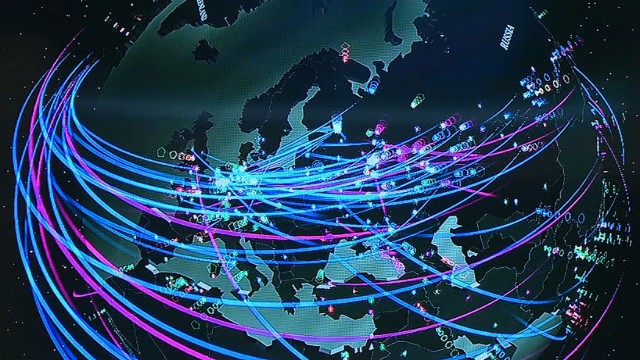
      Modern warfare between the United States, Israel, and Iran is increasingly being shaped not only by missiles, drones, and traditional military power but by a deeply integrated cyber domain that influences everything from intelligence gathering to psychological operations targeting the Iranian regime. Defense analysts say cyber capabilities now serve as a foundational layer of modern conflict, guiding military decisions and enabling precision targeting through real-time data analysis. Experts note that cyber tools allow military planners to gather intelligence, intercept communications, and shape influence campaigns aimed at destabilizing adversaries internally, while also supporting traditional combat operations across air, land, and sea. The digital battlefield has expanded further with efforts to reach Iranian citizens directly through messaging systems and hacked communication platforms, demonstrating how cyber warfare now merges military operations with political pressure campaigns designed to accelerate regime instability. Observers argue that this transformation reflects a broader shift in how modern wars are fought—where algorithms, digital surveillance, and network penetration play a decisive role alongside conventional weapons systems.

      Sources

      https://www.jpost.com/defense-and-tech/article-888820
      https://en.wikipedia.org/wiki/AI-assisted_targeting_in_the_Gaza_Strip
      https://en.wikipedia.org/wiki/Science_and_technology_in_Israel

      Key Takeaways

      • Cyber warfare is now integrated into nearly every aspect of modern military operations, from intelligence collection to targeting decisions and psychological influence campaigns.
      • The U.S. and Israel have increasingly leveraged cyber tools not only for battlefield advantage but also to pressure adversarial regimes internally through digital messaging and information operations.
      • The evolution of warfare toward data-driven targeting and algorithmic intelligence marks a fundamental shift in global conflict, blending conventional combat with technological dominance.

      In-Depth

      The nature of warfare is undergoing a profound transformation, and the confrontation between the United States, Israel, and Iran offers a vivid illustration of how the digital domain is reshaping military strategy. For decades, the dominant images of war centered on tanks, fighter jets, and missile exchanges. Those elements remain critical, but increasingly they operate within a larger ecosystem powered by data, cyber penetration, and algorithmic intelligence.

      Cyber capabilities now function as a connective tissue linking every branch of modern armed forces. Military planners rely on cyber tools to intercept communications, analyze massive volumes of intelligence, and deliver near-instant situational awareness across the battlefield. Analysts note that cyber operations can provide the targeting data necessary for precision strikes, enabling commanders to guide missiles or drones to their objectives with unprecedented speed and accuracy. In this sense, cyber warfare is no longer a parallel domain but a central pillar supporting traditional combat operations.

      Equally important is the psychological and political dimension of cyber conflict. Digital networks offer opportunities to reach populations inside adversary states directly, bypassing traditional media barriers. Reports have described instances where cyber operations were used to distribute messages intended to undermine confidence in governing authorities or encourage public dissent. This approach reflects a strategic understanding that modern conflicts often extend beyond military victory toward broader political outcomes.

      Technological innovation has played a major role in this shift. Israel’s defense sector, for example, has long emphasized indigenous research and development in military technology, creating an ecosystem where cybersecurity, artificial intelligence, and advanced surveillance tools are integrated into national defense capabilities. That emphasis grew out of decades of geopolitical pressure, pushing the country to develop sophisticated homegrown systems ranging from missile defense networks to cyber intelligence platforms.

      Artificial intelligence is increasingly intertwined with cyber warfare as well. AI-driven systems can process vast streams of surveillance data—satellite imagery, intercepted messages, drone footage, and sensor readings—at speeds far beyond human capability. These tools can identify patterns, suggest targets, and prioritize threats in real time. In previous conflicts, analysts might have taken weeks or months to identify high-value targets; with AI-assisted systems, the process can occur in hours or even minutes.

      The integration of these technologies reflects a broader trend in global security. Modern militaries are racing to develop cyber capabilities capable of penetrating adversary networks, disrupting infrastructure, and shaping the information environment. The digital battlefield now extends into communication networks, financial systems, and public information channels, making the concept of warfare far more expansive than the traditional front lines of the past.

      For strategists, the implication is clear: technological superiority in cyberspace can be as decisive as conventional military strength. Nations capable of gathering better intelligence, processing it faster, and deploying it across multiple domains will possess a significant advantage in future conflicts. The struggle between the United States, Israel, and Iran demonstrates how that competition is already unfolding in real time.

      As cyber warfare continues to evolve, the dividing line between physical and digital combat will likely blur even further. Military operations increasingly rely on data dominance, network penetration, and information control—tools that can shape both battlefield outcomes and political stability within rival states. In this emerging landscape, wars may still be fought with missiles and aircraft, but they will increasingly be won or lost through code, algorithms, and the invisible networks that bind the modern world together.

      Intel
      Share. Facebook Twitter Pinterest LinkedIn Tumblr Email
      Previous ArticleHow Engineers Modernized Chornobyl’s Nuclear Control Systems In The 1990s
      Next Article Integrated Defense Systems Aim To Shield Critical Infrastructure From Cyber Warfare

      Related Posts

      Anthropic Code Leak Raises Questions About AI Security and Industry Oversight

      April 8, 2026

      The Rise Of Agentic AI Signals A Shift From Tools To Autonomous Digital Actors

      April 8, 2026

      European Crackdown Targets Social Media’s Impact on Children

      April 8, 2026

      AI Chatbots Draw Scrutiny As Teens Engage In Intimate Roleplay And Emotional Dependency

      April 8, 2026
      Add A Comment
      Leave A Reply Cancel Reply

      Editors Picks

      NASA Astronauts Use iPhones to Capture Historic Artemis II Mission Images

      April 8, 2026

      OpenAI Expands Influence With Strategic TBPN Media Acquisition

      April 8, 2026

      Cybersecurity Veteran Turns Focus To Drone Hacking After Decades Battling Malware

      April 6, 2026

      Anonymous Social App Surges In Saudi Arabia, Testing Limits Of Digital Freedom

      April 6, 2026
      Popular Topics
      Viral UAE Tech Startup Series A SpaceX Tim Cook trending Tesla Tesla Cybertruck Sundar Pichai spotlight Quantum computing Robotics Ransomware Software Series B Taiwan Tech Samsung Satya Nadella Sam Altman
      Major Tech Companies
      • Apple News
      • Google News
      • Meta News
      • Microsoft News
      • Amazon News
      • Samsung News
      • Nvidia News
      • OpenAI News
      • Tesla News
      • AMD News
      • Anthropic News
      • Elbit News
      AI & Emerging Tech
      • AI Regulation News
      • AI Safety News
      • AI Adoption
      • Quantum Computing News
      • Robotics News
      Key People
      • Sam Altman News
      • Jensen Huang News
      • Elon Musk News
      • Mark Zuckerberg News
      • Sundar Pichai News
      • Tim Cook News
      • Satya Nadella News
      • Mustafa Suleyman News
      Global Tech & Policy
      • Israel Tech News
      • India Tech News
      • Taiwan Tech News
      • UAE Tech News
      Startups & Emerging Tech
      • Series A News
      • Series B News
      • Startup News
      Tallwire
      Facebook X (Twitter) LinkedIn Threads Instagram RSS
      • Tech
      • Entertainment
      • Business
      • Government
      • Academia
      • Transportation
      • Legal
      • Press Kit
      © 2026 Tallwire. Optimized by ARMOUR Digital Marketing Agency.

      Type above and press Enter to search. Press Esc to cancel.