

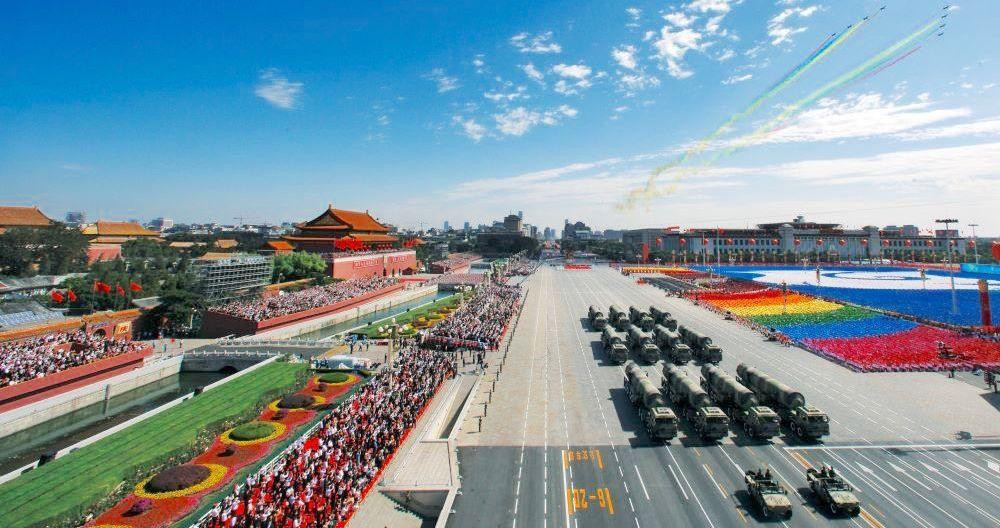
China’s upcoming “Victory Day” military parade on September 3, 2025 in Beijing is set to showcase a cutting‑edge display of advanced weapon systems—everything from hypersonic and AI‑guided missiles (like the YJ‑series), next‑generation ICBMs and submarine‑launched deterrents (e.g., DF‑31AG, DF‑41, JL‑3), to stealth combat drones (like the FH‑97) and directed‑energy systems—all under President Xi Jinping’s inspection and with high‑profile guests such as Putin and Kim Jong‑un highlighting Beijing’s shifting geopolitical choreography.
Sources: Wired, The Guardian, Reuters
Key Takeaways
– Military Modernization & Deterrence: China is publicly unveiling a broad array of advanced weaponry—hypersonic missiles, next‑gen ICBMs, drones, and directed‑energy systems—demonstrating a serious leap in conventional and strategic capabilities.
– Geopolitical Signaling: The guest list—Putin, Kim Jong‑un, and other non‑Western leaders—reinforces China’s alignment with an emerging “axis of upheaval” aimed at balancing or challenging Western influence.
– Strategic Messaging: Beyond commemorating World War II, the parade is a deliberate showcase of domestic strength, technological progress, and China’s readiness to assert strategic independence amid U.S. and Western pressure.
In-Depth
China’s Victory Day Parade this year is more than just history in motion—it’s a full‑on technological spectacle and a nuanced geopolitical statement. On September 3rd, Beijing’s Tiananmen Square will host a military showcase brimming with hypersonic anti‑ship missiles, AI‑enhanced guidance systems, submarine‑launched deterrents, stealth drones, and even directed‑energy weapons, all formally paraded under Xi Jinping’s watchful eye. These aren’t props; they’re a clear signal that China is accelerating its push for military self‑reliance and strategic parity.
It’s also a carefully staged diplomatic tableau. With Russian President Putin and North Korean leader Kim Jong‑un standing center stage, flanked by other leaders from Asia, Africa, and the Global South, Beijing is casting itself as the nucleus of what analysts are calling an “axis of upheaval”—a bloc increasingly at odds with Western influence.
There’s something to respect here: national pride, demonstrable technological progress, and disciplined presentation. While not everyone might agree with it, the parade’s precision is undeniable. This is China talking in a voice only its military-industrial complex could produce—and turning heads while doing it. Whether this ushers in a new era of strategic competition or nudges the U.S. and allies toward more robust deterrence remains to be seen. But make no mistake, Beijing is pushing hard, and the rest of the world is watching.