

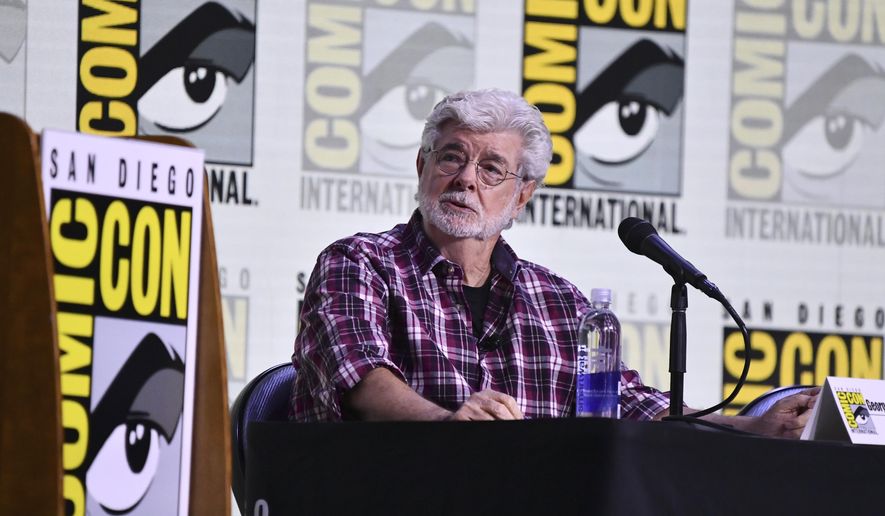
George Lucas has inserted himself squarely into the ongoing debate over artificial intelligence in entertainment, arguing that AI is not merely another technological trend but an unavoidable part of filmmaking’s future. Comparing resistance to AI with rejecting the automobile in favor of horse-drawn transportation, Lucas contended that artificial intelligence will make movie production easier while insisting technological progress cannot be halted. He also suggested AI could eventually become a valuable tool for authenticating content and identifying manipulated media, while emphasizing that humans—not the technology itself—should remain accountable for its use. His comments arrive as Hollywood continues to wrestle with the legal, economic, and artistic consequences of generative AI, with filmmakers, studios, writers, and actors remaining sharply divided over how extensively the technology should be integrated into creative production.
Sources
- https://www.washingtontimes.com/news/2026/jul/14/george-lucas-says-ai-future-calls-unavoidable
- https://www.theguardian.com/film/2026/jul/15/george-lucas-likens-ai-sceptics-to-luddites-clinging-to-horses-and-carts
- https://www.pcgamer.com/software/ai/george-lucas-says-rejecting-ai-is-like-rejecting-cars-in-favour-of-horses-theres-nothing-you-can-do-about-it-its-the-future
Key Takeaways
- AI’s acceptance within Hollywood continues to grow despite ongoing resistance from many writers, actors, and artists concerned about copyright, employment, and creative ownership.
- George Lucas argues technological advancement is inevitable, maintaining that AI should be viewed as another filmmaking tool rather than an existential threat to cinema.
- The larger policy debate has shifted away from whether AI will be used toward how governments, courts, and industries will regulate its development while protecting intellectual property and creative labor.
In-Depth
George Lucas has never been known as a filmmaker who feared technological disruption. Throughout his career he consistently pushed visual effects, digital editing, computer-generated imagery, and digital cinematography long before many of his peers accepted them. His latest embrace of artificial intelligence therefore fits neatly within a decades-long philosophy that technological innovation ultimately expands creative possibilities rather than diminishes them.
His comments, however, arrive during a far more contentious moment than previous technological transitions. Unlike advances in cameras or visual effects, generative AI raises legitimate questions about copyright infringement, unauthorized use of artists’ work for model training, employment displacement, and the potential replacement of creative professionals. Those concerns fueled major labor disputes in Hollywood only a few years ago and continue to shape legislative and judicial battles across the United States. Lucas acknowledges that risks exist but argues that responsibility ultimately belongs with the individuals using AI, not the software itself.
From a conservative perspective, Lucas is correct on one important point: technological progress rarely yields to political resistance. History is filled with innovations that disrupted entire industries while creating new economic opportunities that were initially impossible to predict. Attempts to prohibit transformative technology generally fail, leaving nations that embrace innovation with a competitive advantage over those that do not. Artificial intelligence appears increasingly likely to follow that historical pattern.
At the same time, accepting AI’s inevitability should not mean abandoning common-sense safeguards. Property rights remain fundamental to a free-market economy, and creators deserve meaningful legal protections when their original works are copied or exploited without permission. Innovation flourishes best when entrepreneurs can develop new technologies while artists, writers, musicians, and filmmakers retain confidence that their intellectual property will not simply become uncompensated raw material for commercial AI systems.
Lucas’s remarks underscore the reality that the debate has evolved beyond whether AI belongs in filmmaking. That question is largely settled. The more consequential issue now is establishing rules that preserve human creativity, protect ownership rights, and encourage American technological leadership instead of surrendering the field to foreign competitors that may operate under far weaker legal and ethical standards. As AI rapidly becomes another tool in Hollywood’s production pipeline, the challenge for policymakers will be ensuring that innovation strengthens rather than supplants the creative talent that built the entertainment industry in the first place.