

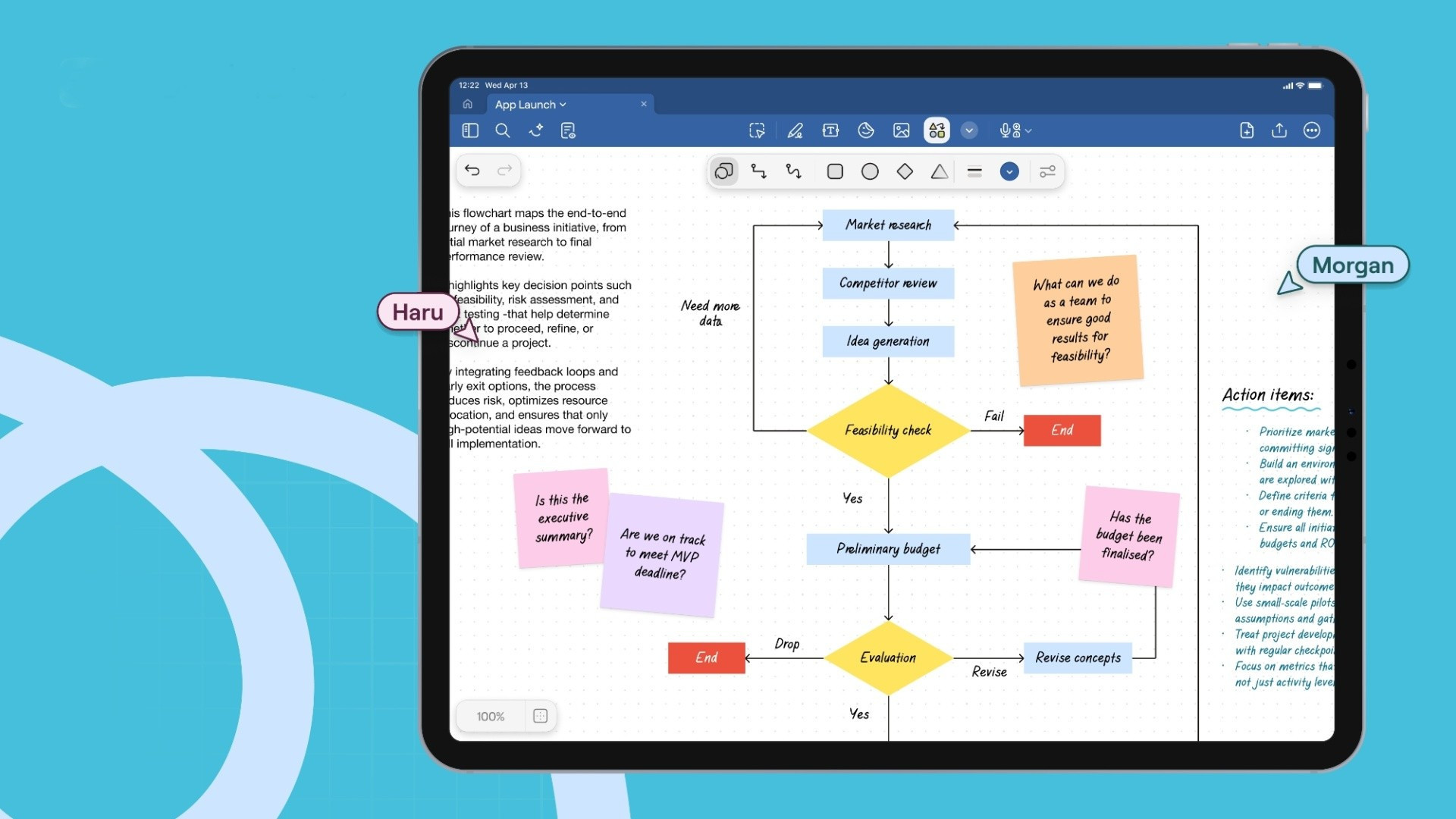
Goodnotes, formerly famed as a student-centric note-taking app, is now making a strong pivot toward professional and enterprise users by unveiling collaborative document creation, an infinite whiteboard canvas, and a built-in AI assistant. The AI can work with handwriting, typing, sketches, or voice to generate summaries, proofread text, build templates, and diagram content. New subscription tiers—Essentials and Pro—bundle varying AI features, collaboration, and integrations, while an optional “AI pass” offers unlimited AI usage. This shift is backed by Goodnotes’ acquisition of a South Korean startup focused on meeting and video summarization, which now underpins many of the AI capabilities. The company says it has over 25 million monthly active users and aims to transform from a classroom tool into a productivity hub for professionals.
Sources: Business Wire, WebProNews
Key Takeaways
– Goodnotes is evolving beyond note-taking by embedding real-time collaboration, letting multiple users edit shared documents and whiteboards simultaneously.
– Its AI assistant is designed to interpret multiple input types (handwriting, voice, sketches) and help with summarization, formatting, templates, proofreading, and more.
– The shift to professional users is reinforced via new pricing tiers (Essentials, Pro) and an optional AI pass, signaling a transformation from educational use toward full productivity suite ambitions.
In-Depth
Goodnotes’ decision to reimagine itself as a full-fledged productivity platform is a bold move, and one that reflects broader trends in how software tools are evolving in the AI era. For years, Goodnotes earned its reputation among students, educators, and note-takers by offering a fluid mix of handwriting and digital convenience. But as hybrid work and distributed teams become the norm, the demand for tools that support both human creativity and seamless collaboration—and that can bridge the gap between analog and digital thinking—has grown sharply.
At the heart of Goodnotes’ new direction is the integration of collaborative whiteboards and document editing, alongside a generative AI assistant that can co-create rather than just respond. The whiteboard offers infinite canvas flexibility for brainstorming, sketching, mapping ideas, and diagramming, while document support allows embedding images, GIFs, tables, and rich text. The AI assistant can analyze any mix of input, summarize meetings, extract action items, proofread, propose edits, and even generate templates or visuals. Goodnotes team also warns users that there are usage caps, even on higher tiers, and offers an AI pass for users who push heavy usage.
The underlying technology is supported by a 2024 acquisition of a Korean startup specializing in meeting and video summarization—indicating that Goodnotes is not building from scratch but integrating proven capabilities. The transition to “Essentials” and “Pro” subscription models (at $11.99/yr and $35.99/yr respectively) marks a shift toward monetizing higher-end, enterprise-level features. The optional $10/month AI pass is a lever that suggests Goodnotes expects intensity of AI use to be a major revenue driver.
However, the pivot is not without challenges. Goodnotes must balance feature complexity with usability. There’s a risk of alienating casual or educational users if the interface becomes cluttered or context-switching becomes overwhelming. Another hurdle lies in privacy and trust: processing sensitive business documents or meetings demands robust security, encryption, and transparency about data use. Goodnotes appears aware of that, but execution will matter. On the competitive front, it now competes more directly with Miro, Notion, Canva, and other tools already entrenched in professional workflows.
Looking ahead, Goodnotes must deliver on reliability, cross-platform performance, and seamless onboarding for teams. If it can offer low latency, consistent syncing, offline support, and strong AI accuracy, it has the potential to be a compelling choice for professionals who want a bridge between freeform, handwritten ideation and structured content creation. The key test will be whether Goodnotes can become indispensable in workflows—not just “another note app with AI.”