

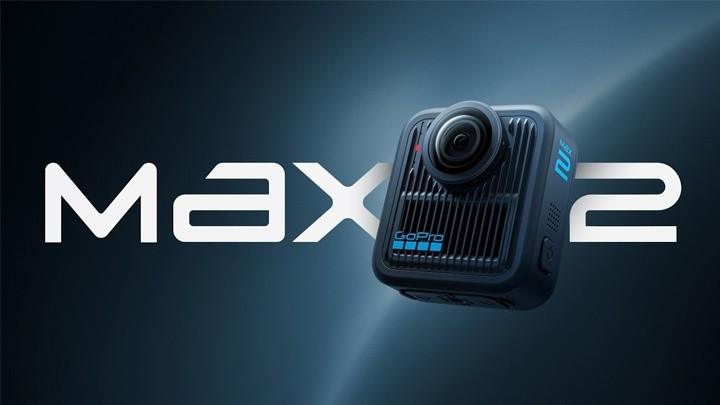
GoPro has just revealed two new moves that show it’s gearing up for a bold push in 2025: the GoPro Max 2, a next-gen 360° camera with “true 8K” capture and swappable lenses, and the Lit Hero, a refined version of its Hero line with built-in LED lighting beside its lens to better light up low-light scenes. The Max 2 runs at 8K/30 fps (and supports 5.6K/60, 4K/100) and promises improved durability, a larger battery, replaceable optical glass lenses, and full support for Bluetooth mics. Meanwhile, the Lit Hero integrates a cluster of four LEDs, offering more illumination than a smartphone flash, and upgrades the base Hero model’s video spec to 4K/60 fps (from 4K/30), while keeping waterproofing to 16 feet. While both products aim to strengthen GoPro’s lineup, some critics note that the Max 2’s low-light results and potential overheating remain areas of concern.
Key Takeaways
– GoPro is leaning hard into innovation, skipping a new Hero Black flagship this cycle in favor of expanding its offerings with Max 2 and Lit Hero.
– The Max 2’s headline selling points are its “true 8K” capture, swappable lenses, and rugged design, but reviewers caution its low-light performance and heat/recording limits aren’t fully solved.
– The Lit Hero’s built-in LEDs and 4K/60 upgrade aim to simplify filming in dim conditions, especially for creators who would otherwise have to carry a separate lighting rig.
In-Depth
GoPro has long been synonymous with action cams that flex in extreme conditions. For 2025, the company seems to be taking a more surgical approach, introducing two distinct models rather than pushing its flagship Hero Black line forward. That move—opting for the GoPro Max 2 and Lit Hero over a new Hero Black—signals that GoPro believes its future lies in specialization rather than broad incremental improvements to its flagship.
The Max 2 is the most significant 360° upgrade from GoPro in years. It captures full 360° video at 8K/30 frames per second, a noticeable leap from its predecessor’s 5.6K output. It also supports higher frame rates on lower resolutions (for slow motion), and introduces swappable glass lenses, something rare in this category. A larger 1.82-inch touchscreen, better battery, and continued support for features like voice control, six-mic arrays, and waterproofing round out its core. Reviewers generally praise its daytime image fidelity, sharpness, and ability to survive rugged conditions. However, they caution that its low-light performance trails some rivals, overheating during extended recording sessions is a possibility, and battery life can be limiting when shooting at top specs. (Digital Camera World, TechRadar)
On the other hand, the Lit Hero is a clever tweak rather than a ground-up rebuild. By embedding four LEDs next to the lens, GoPro gives creators light without requiring a separate lamp or accessory. That integration simplifies low-light or night shooting, especially for face-forward or close-subject scenes. The video spec is also bumped: it now supports 4K at 60 fps (double the previous 4K/30 for the base models), while still preserving GoPro’s water resistance (down to 16 ft). The trade-offs include a bit more weight and the limited reach of the LEDs (they’re more suited to nearby illumination than broad scene lighting). (The Verge)
These product moves arrive in a context where GoPro’s flagship Hero Black line wasn’t updated in 2025—an unexpected shift given that model’s dominance in prior years. GoPro clarified it’s not retiring the Hero Black, but acknowledged that the community’s demand right now is leaning more toward 360 capture and lighting innovations. (TechRadar)
What this means for creators and competitors is intriguing. For adventure videographers, the Max 2 could offer a strong new tool for immersive storytelling, especially if you shoot primarily in favorable light or have workarounds for its thermal and battery constraints. For vloggers, night shooters, or users frequently in dim settings, the Lit Hero might reduce the gear burden. That said, rivals like Insta360 and DJI will be watching closely—if GoPro’s approach succeeds, it could drive a wave of more specialized, modular cam systems rather than one-size-fits-all flagships.