

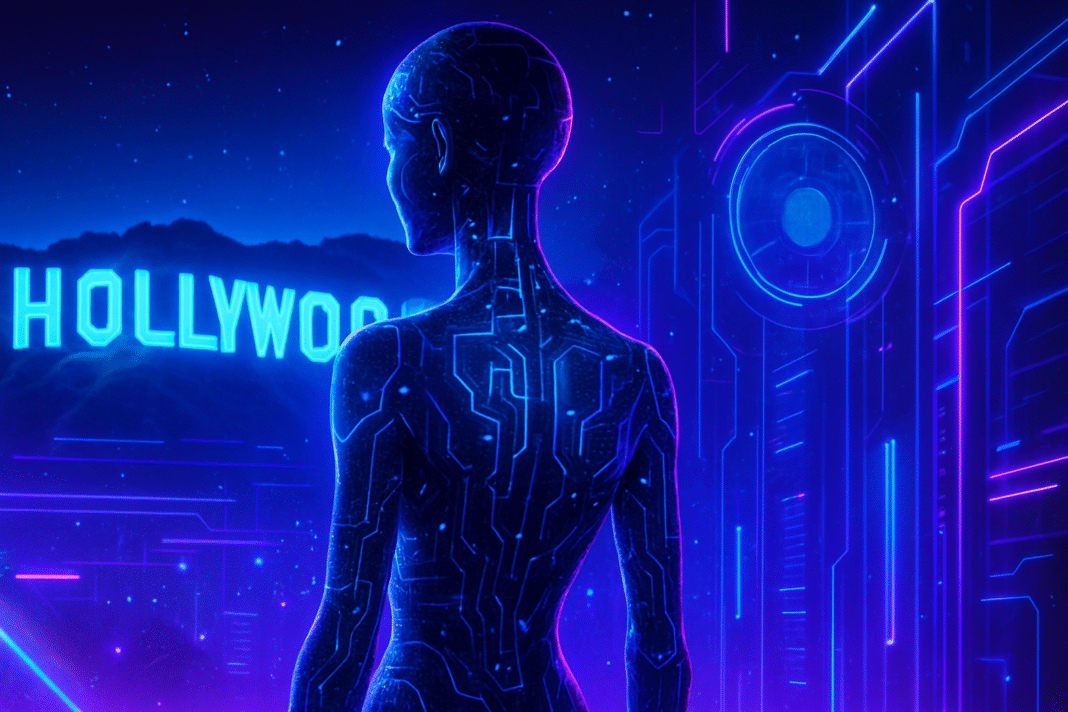
Generative AI is pushing past conceptual art into Hollywood’s terrain—some studios are forging alliances with AI firms while simultaneously suiting up in court to defend intellectual property. The Verge’s “How generative AI boosters are trying to break into Hollywood” maps out how companies like Runway, Amazon‘s Showrunner, and legacy studios are experimenting with AI films (like OpenAI‘s Critterz) even as fundamental limitations remain. At the same time, legal pressures are mounting: Disney and Universal recently filed a sweeping copyright lawsuit against Midjourney over alleged misuse of their characters, and Warner Bros. has launched a fresh suit against the same AI tool for alleged theft of iconic IP. Meanwhile, courts are starting to hold AI companies to account—Anthropic, for its part, has agreed to a roughly $1.5 billion settlement with authors over its training practices. And more broadly, many in Hollywood are keeping their AI usage hidden while navigating how much automation to adopt in production, effects, and distribution. The result is a tense dual strategy of embrace and pushback as the film world braces for an AI-shaped future.
Sources: The Verge, Hollywood Reporter
Key Takeaways
– Hollywood’s approach to AI is bifurcated: studios are partnering with AI firms to reduce costs and expand creative tools, while also suing AI companies to protect copyrights and control revenue streams.
– The legal landscape is shifting: the Midjourney lawsuits and the Anthropic settlement demonstrate that courts are beginning to hold AI firms accountable for how they train and deploy generative models.
– Despite the hype, technical and artistic limitations remain: AI-generated video is still inconsistent, tool control is weak, and the shift to automation risks displacing artists unless carefully managed.
In-Depth
Hollywood now finds itself at a rare technological inflection point. On one hand, generative AI promises to lower the cost of visual effects, concept art, even short video sequences. On the other hand, the industry fears loss of control, erosion of creators’ rights, and a flood of low-quality content. The tension between those two sides is playing out in boardrooms, labs, and courtrooms simultaneously.
The Verge article lays out the optimism driving many AI proponents: models that once produced blurry, dreamlike images have evolved into more detailed visuals; video tools like Runway’s Gen, Meta‘s Make-A-Video, and Google‘s Veo are pushing the frontier. Studios such as Lionsgate have inked deals with Runway to develop in-house AI models trained on their film catalogs. OpenAI’s Critterz is being presented not just as an experiment, but as proof that a full AI-generated feature film is possible. Yet the current output remains flawed—only a few seconds of footage with shifting textures, inconsistent lighting, and limited fine control. Many creative professionals remain skeptical that the technology is ready for the real demands of cinema.
Those doubts intersect with a growing legal backlash. Disney and Universal’s lawsuit against Midjourney charges the tool with infringing their properties by generating unauthorized images of characters like Darth Vader and the Minions. Warner Bros. has followed up with its own suit, alleging the AI company “has made a calculated and profit-driven decision to offer zero protection for copyright owners.” AI firms defend themselves by citing fair use arguments, claiming their models transform inputs into new composites. But recent legal rulings, especially the $1.5 billion preliminary settlement in the Anthropic case, underscore that courts are less willing to treat sweeping copyright violations as academic experiments.
At the same time, many studios and creators are quietly deploying AI now rather than waiting for perfect systems. Reports suggest nearly 100 “AI studios” operate discreetly in Hollywood, and major studios are experimenting behind the scenes with generative tools for editing, effects, and concept work. Industry analysts, like those at Deloitte, expect studios to adopt AI more rapidly in operational domains—marketing, localization, distribution—before fully trusting it for content generation.
This dual strategy—“partner with AI where useful, litigate when necessary”—reflects both ambition and caution. Studios see generative AI as a lever to reduce ballooning budgets, especially as the streaming model under strain demands leaner production. Yet they also want to avoid becoming sidelined by AI firms that extract value from studio libraries without permission.
The future will likely rest on how the courts and regulators draw lines around copyright, licensing, and consent. If Hollywood can secure strong protections or revenue sharing in AI systems, the industry may adopt them rather than fight them. But if AI firms continue to push boundaries without accountability, creators may be increasingly displaced or marginalized.