

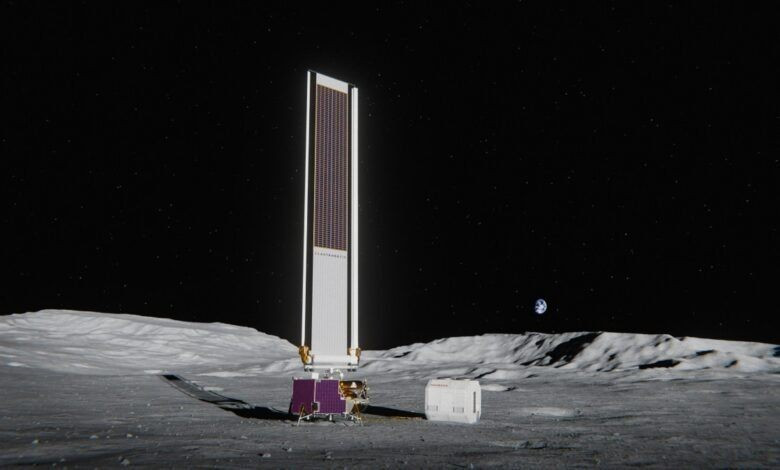
Honda and Pittsburgh’s Astrobotic have inked a joint development agreement to explore whether Honda’s regenerative fuel cell (RFC) technology can be integrated with Astrobotic’s LunaGrid / Vertical Solar Array Technology (VSAT) to maintain continuous electricity across lunar day–night cycles. The companies will conduct illumination studies at candidate lunar south pole sites, simulate year-long solar exposure, and assess the scalability and hardware/software integration needed for their systems to work together. During daytime, the VSAT arrays would drive electrolysis to split water into hydrogen and oxygen; then at lunar night, Honda’s RFC would convert the stored hydrogen back into electricity, yielding only water as a byproduct, which cycles back into the system. The partnership aims to solve one of lunar exploration’s toughest challenges: surviving the approximately two-week lunar night and making long-duration missions feasible.
Sources: Honda News, Autoweek
Key Takeaways
– Honda’s regenerative fuel cell offers a closed-loop energy cycle in which water is split during lunar day and then remade during lunar night, enabling continuous power without consumable inputs.
– Astrobotic’s VSAT and LunaGrid systems provide the solar capture and infrastructure backbone; combining both solutions is central to meeting power demand across the Moon’s long nights.
– The feasibility study will validate the design’s scalability, integration of hardware/software, and site-specific illumination modeling—critical prerequisites before deployment in crewed or robotic missions.
In-Depth
One of the biggest headaches for sustained lunar operations is the brutal, weeks-long lunar night. On the Moon, you get roughly two Earth weeks of daylight followed by two weeks of darkness. During that dark stretch, solar panels go dead, temperatures plummet, and systems go offline. For any serious human or robotic presence, sorting out how to keep the lights on—and the systems alive—through those long nights is nonnegotiable.
Enter Honda and Astrobotic’s new joint development agreement, which tackles this challenge head on. Astrobotic brings its LunaGrid concept and its Vertical Solar Array Technology (VSAT) to the table—deployable, sun-tracking solar panels that, during the lunar day, harvest sunlight efficiently. Honda brings a regenerative fuel cell (RFC) system that turns that collected energy into storable hydrogen via electrolysis, then later recombines hydrogen with oxygen to generate electricity when sunlight is gone—leaving only water as a byproduct. That water is then recycled back through electrolysis, completing a closed-loop cycle.
In practical terms, during the lunar day, VSAT arrays power the electrolysis process, splitting water into hydrogen and oxygen and storing that hydrogen. Then, during the night, the stored hydrogen is run through fuel cells to generate electricity on demand. The only product is water, which gets recycled and fed back into the cycle. The elegance of this design is that it doesn’t rely on expendable fuel or batteries whose capacity degrades massively over extended cold and dark periods.
The immediate goal is a feasibility study. The two companies will run “illumination studies” to see how much sunlight various lunar south pole candidate sites receive over a full year. That helps them understand how much energy they can generate, how much hydrogen storage is needed, and which power demands they can meet. They’ll also test scalability: Can RFC units be scaled up or used modularly? Can they reliably integrate with VSAT hardware and software? These are crucial questions if this is ever to power lunar habitats, research stations, or even commercial operations.
Another interesting dimension: Honda sees crossovers between this lunar technology and its terrestrial ambitions, especially around hydrogen systems and energy resilience. Building hardware that survives harsh lunar extremes might well benefit clean energy solutions on Earth.
If all goes well, this hybrid solution could enable continuous operations on the Moon—robots, instruments, habitats—without shutting down during the darkness. That capability would mark a big step toward a sustainable lunar infrastructure, and tangibly advance ambitions of a long-term human presence on the Moon.