

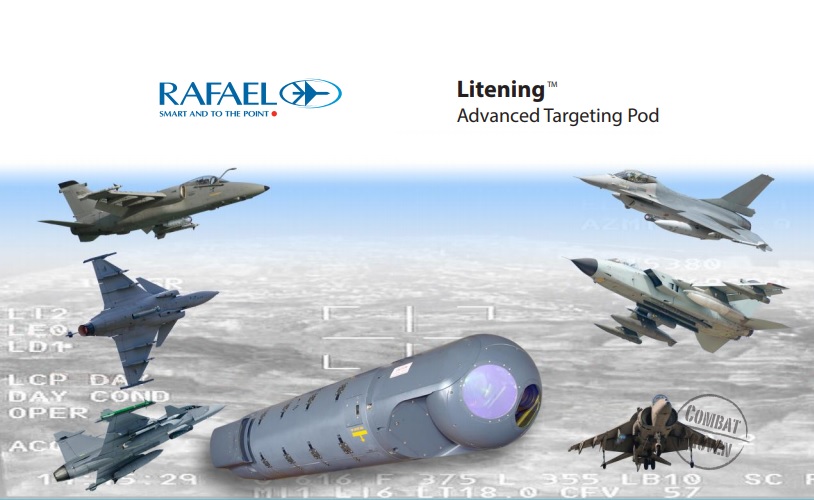
Venezuela’s possession of advanced Israeli military technology traces back to a largely forgotten period when Caracas maintained pragmatic defense relationships with Western-aligned suppliers, including Israel, before the ideological realignment under Hugo Chávez. As reported by The Jerusalem Post and supported by independent defense and aviation records, Venezuela acquired Rafael Advanced Defense Systems’ Python 4 short-range air-to-air missiles and Rafael Litening targeting pods for integration onto its U.S.-built F-16 fighter jets. These purchases occurred when Venezuela was still viewed as a conventional regional military actor rather than a sanctioned adversary, allowing Israeli systems—also used by U.S. and NATO forces—to be legally exported. Over time, however, U.S. pressure, sanctions, and Venezuela’s pivot toward Russia and Iran severed maintenance and upgrade pathways, leaving much of this Israeli technology degraded or non-operational and highlighting how geopolitical shifts can strand sophisticated Western military hardware inside hostile or unstable regimes.
Sources:
https://www.jpost.com/international/article-882214
https://dimse.info/venezuela/
https://en.wikipedia.org/wiki/General_Dynamics_F-16_Fighting_Falcon_operators
Key Takeaways
- • Israeli air-to-air missiles and targeting pods entered Venezuela during a brief window of Western-aligned defense cooperation prior to Chávez’s ideological pivot.
- • The technology was legally integrated onto U.S.-built F-16s and mirrored systems used by American and allied air forces.
- • Sanctions and diplomatic breakdowns ultimately rendered much of the Israeli equipment unusable, underscoring the risks of exporting advanced defense systems amid shifting alliances.
In-Depth
Venezuela’s acquisition of Israeli defense technology was not the result of clandestine transfers or battlefield capture, but rather a conventional arms procurement strategy pursued during a different political era. Before Hugo Chávez’s ascent and subsequent realignment toward Russia, Iran, and other U.S. adversaries, Venezuela diversified its military suppliers and maintained workable defense relationships with Israel and Western manufacturers.
During this period, Caracas purchased Python 4 infrared-guided air-to-air missiles from Rafael Advanced Defense Systems. These short-range missiles, known for their agility and off-boresight targeting capability, were integrated onto Venezuela’s fleet of F-16 Fighting Falcons—aircraft originally supplied by the United States. At the time, the Python 4 was considered comparable to Western equivalents and was already in service with U.S. allies and, in modified form, American forces.
Alongside the missiles, Venezuela also acquired Rafael’s Litening targeting pods, a sophisticated system combining infrared imaging, laser designation, and precision strike capabilities. The Litening pod dramatically improved air-to-ground targeting accuracy and was widely used by U.S. and NATO aircraft, making it a logical enhancement for Venezuela’s F-16 fleet during that era.
This technological relationship began to collapse as Venezuela’s political trajectory hardened. U.S. opposition to further upgrades, combined with sanctions and Israel’s own strategic considerations, effectively cut off technical support and spare parts. As a result, much of the Israeli equipment deteriorated operationally. Venezuela ultimately turned to Russian aircraft and air defense systems, leaving its once-advanced Israeli hardware as a symbol of how quickly geopolitics can render cutting-edge military technology obsolete.