

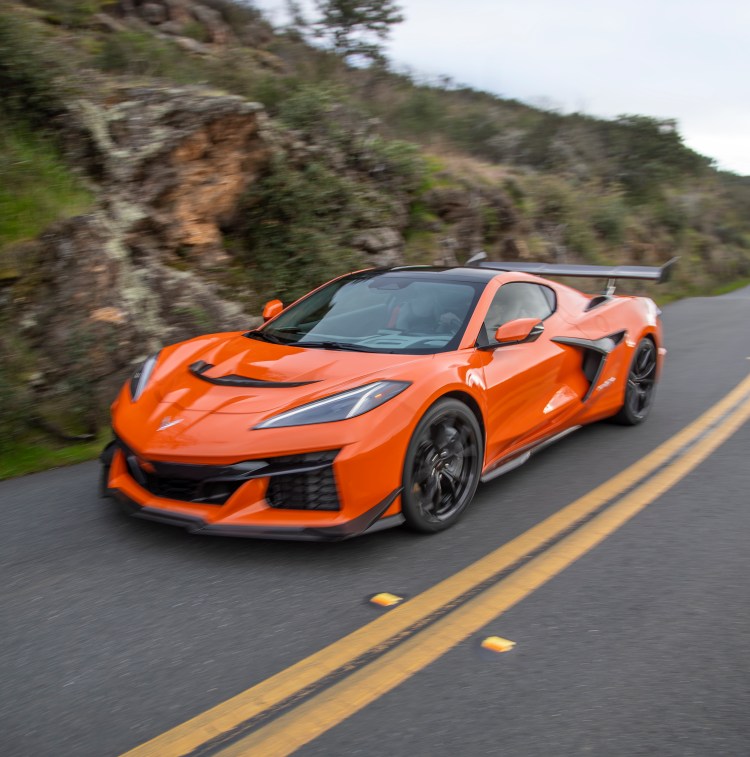
The debut of the 2026 Corvette ZR1X demonstrates that American engineering still has the ability to challenge — and even embarrass — the global hypercar elite. Built around a twin-turbocharged 5.5-liter V8 paired with a front-mounted electric motor, the hybrid Corvette produces a staggering 1,250 horsepower and launches from 0 to 60 miles per hour in roughly 1.7 seconds, placing it among the quickest production cars ever built. Rather than chasing the increasingly fashionable all-electric formula, Chevrolet’s engineers opted for a hybrid performance approach that blends traditional combustion muscle with instantaneous electric torque and all-wheel drive capability. The result is a machine that rivals exotic hypercars costing millions while carrying a price tag closer to $200,000 — still expensive, but dramatically cheaper than the European alternatives dominating the performance conversation. With cutting-edge traction management, regenerative braking, and enormous carbon-ceramic brakes capable of delivering extreme stopping force, the ZR1X illustrates how hybrid technology can amplify raw speed rather than dilute it. For enthusiasts who feared electrification would neuter performance vehicles, the new Corvette instead suggests the opposite: the next era of automotive dominance may belong to hybrid machines that marry mechanical power with digital precision.
Sources
https://www.theverge.com/transportation/888573/chevy-corvette-zr1x-hybrid-racing-performance
https://www.motortrend.com/news/2026-chevrolet-corvette-zr1x-0-60-quarter-mile-drag-strip-times
https://www.caranddriver.com/news/a65079561/2026-chevrolet-corvette-zr1x-revealed
Key Takeaways
- The Corvette ZR1X produces approximately 1,250 combined horsepower by pairing a twin-turbo V8 engine with an electric front-axle motor, making it one of the most powerful production Corvettes ever built.
- The hybrid system provides all-wheel drive and extreme acceleration, allowing the car to reach 60 mph in about 1.7 seconds and complete the quarter-mile in under nine seconds.
- Despite hypercar-level performance, the ZR1X costs dramatically less than most competitors in the million-dollar supercar category, positioning it as a comparatively accessible performance flagship.
In-Depth
For decades, the Corvette has represented something distinctly American in the performance world: brute power, daring design, and a willingness to challenge Europe’s automotive aristocracy. With the introduction of the Corvette ZR1X, that tradition continues — but with a technological twist that signals where high-performance engineering may be headed next.
At the heart of the ZR1X lies a hybrid powertrain that combines the ferocity of internal combustion with the instantaneous torque of electric propulsion. The core engine is a hand-built twin-turbocharged 5.5-liter V8 generating more than 1,000 horsepower on its own. That power is delivered to the rear wheels, maintaining the classic Corvette DNA of a roaring V8 pushing from behind. But the new wrinkle comes from the front axle, where an electric motor adds additional power and effectively turns the car into an electrified all-wheel-drive system.
The result is staggering output — around 1,250 horsepower combined — and acceleration figures that border on the absurd. Testing has shown the ZR1X capable of sprinting from zero to sixty miles per hour in roughly 1.68 seconds under ideal conditions, with quarter-mile runs dipping below nine seconds. That kind of performance traditionally belonged to hypercars costing seven figures, often built in extremely limited production numbers by European boutique manufacturers.
Yet the Corvette achieves similar speed for a fraction of that cost. While a price above $200,000 still places the ZR1X firmly in the luxury performance category, it dramatically undercuts the cost of vehicles that deliver comparable track performance. That pricing strategy reflects a longstanding Corvette philosophy: democratize extreme performance rather than reserve it for a handful of ultra-wealthy collectors.
Equally important is the car’s technological approach. Hybridization in the automotive world is often associated with efficiency — squeezing a few extra miles per gallon out of a family sedan. But in the ZR1X, electrification serves a completely different purpose. The electric motor provides instant torque to the front wheels, improving traction during hard launches and delivering precise power distribution through advanced software controls. This allows the car to deploy enormous horsepower without simply spinning the tires into smoke.
The hybrid system also introduces regenerative braking, capturing energy when the vehicle slows and storing it in a lithium-ion battery pack. On the racetrack — where braking events are frequent and violent — this energy recovery system replenishes the battery and allows drivers to deploy bursts of electric assistance for overtaking or acceleration out of corners.
Meanwhile, the mechanical hardware backing up that performance is equally impressive. The ZR1X uses massive carbon-ceramic brakes with multi-piston calipers designed to bring the car down from extreme speeds with stability and control. Advanced traction management software carefully distributes torque between the front electric motor and the rear gasoline engine, helping drivers harness performance that would otherwise be nearly impossible to manage.
Beyond raw numbers, the ZR1X also represents a philosophical moment for the performance industry. In recent years, some automakers have moved aggressively toward fully electric supercars, betting that battery-powered propulsion will define the future of speed. But the Corvette’s hybrid approach suggests a different path: blending traditional internal-combustion power with targeted electrification to maximize performance.
That strategy may resonate with enthusiasts who still value the sound, character, and visceral feel of a high-revving V8. Instead of eliminating the combustion engine entirely, the ZR1X amplifies it with electric assistance — turning electrification into a performance multiplier rather than a replacement.
In that sense, the Corvette ZR1X is more than just another fast car. It represents a hybrid philosophy that could shape the next chapter of high-performance engineering. By merging old-school muscle with modern electrification, it proves that the American sports car — long underestimated by the European elite — still has plenty of fight left in it.