

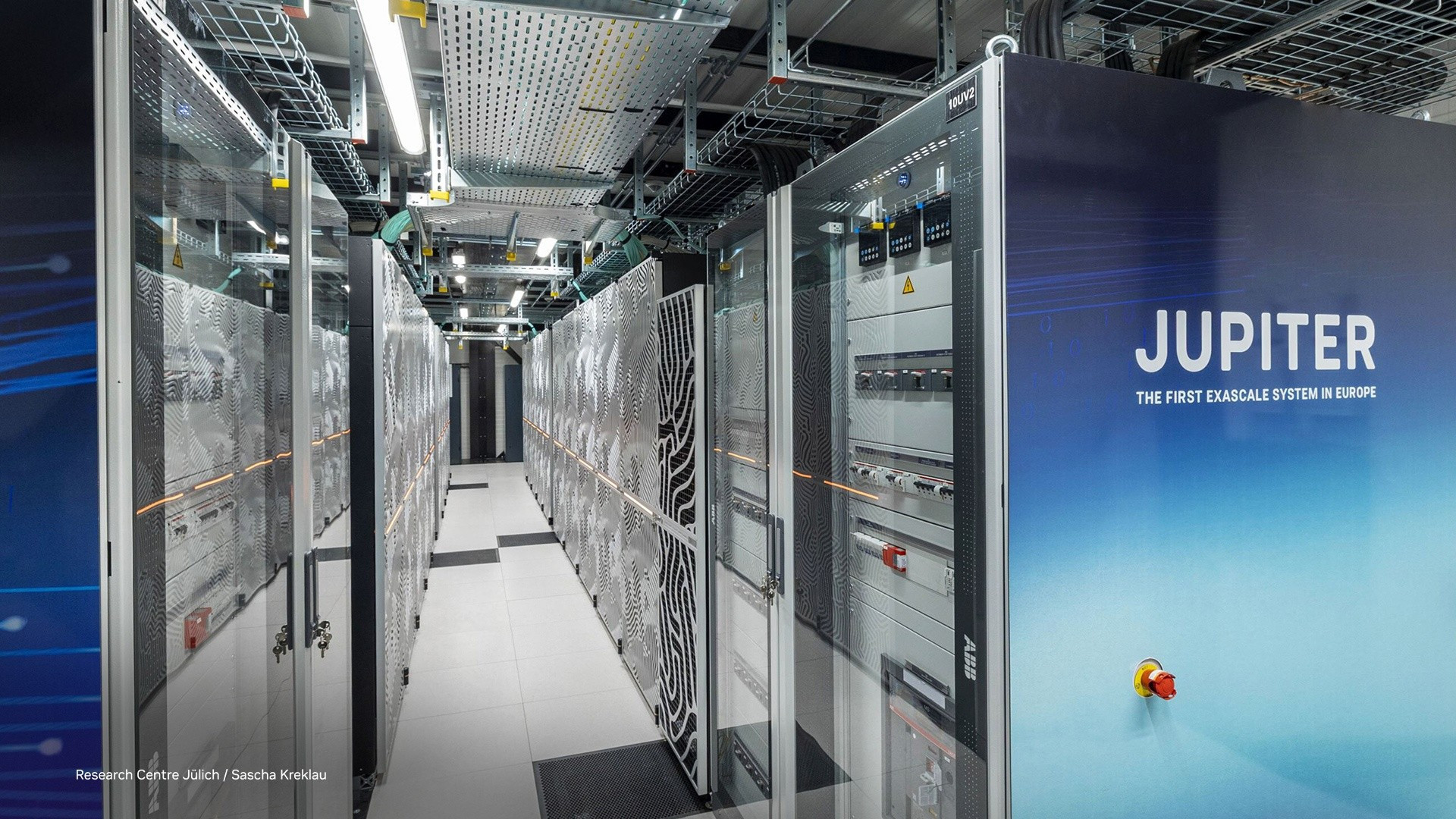
Abu Dhabi-based AI powerhouse G42 will build a national-scale AI supercomputer in India in partnership with U.S. chipmaker Cerebras, the Mohamed bin Zayed University of Artificial Intelligence, and India’s Centre for Development of Advanced Computing, with an 8-exaflops peak capacity aimed at giving India sovereign high-performance computing for AI research and industry under Indian governance and data residency rules, announced at the AI Impact Summit in New Delhi.
Sources
https://www.semafor.com/article/02/23/2026/abu-dhabis-g42-to-build-supercomputer-for-india
https://www.thenationalnews.com/future/technology/2026/02/20/abu-dhabis-g42-and-mbzuai-join-us-firm-cerebras-to-build-india-ai-supercomputer/
https://news.az/news/abu-dhabis-g42-to-construct-supercomputer-in-india
Key Takeaways
• G42 will lead construction of an 8-exaflop AI supercomputer in India, partnering with Cerebras and research institutions under Indian data governance.
• The project aims to give India sovereign compute capacity, enabling universities, startups, and government entities to train and run advanced AI models domestically.
• The announcement at the India AI Impact Summit reflects growing UAE-India tech cooperation and a strategic focus on national competitiveness in AI infrastructure.
In-Depth
The announcement that Abu Dhabi’s global technology group G42 plans to build a national-scale AI supercomputer in India represents a significant milestone in global artificial intelligence infrastructure and in strategic technology cooperation between the United Arab Emirates and India. The supercomputer project was unveiled on the sidelines of the India AI Impact Summit in New Delhi, underscoring a diplomatic and economic alignment between the two countries that reaches beyond symbolic partnerships and into hard technological capacity building. This initiative brings together multiple major partners: G42, U.S. AI hardware firm Cerebras Systems, the Mohamed bin Zayed University of Artificial Intelligence (MBZUAI), and India’s Centre for Development of Advanced Computing (C-DAC), a key national research organization focused on advanced computing and AI. The system’s projected peak capacity of 8 exaflops — equivalent to eight quintillion calculations per second — positions it among the most powerful AI compute platforms globally, far exceeding the current AI supercomputing capacity housed at India’s existing facilities.
A central thrust of this collaboration is India’s effort to establish sovereign compute infrastructure. Instead of relying heavily on foreign cloud services that may store data abroad or operate under foreign jurisdiction, India will host this supercomputer within its borders and retain governance over both data and operational compliance. This is consistent with broader national goals of developing indigenous AI ecosystems that can compete internationally while safeguarding sensitive information and research. Officials, including G42 India CEO Manu Jain, have framed “sovereign AI infrastructure” as critical to national competitiveness, highlighting that such a platform enables researchers, enterprises, and innovators to build, train, and deploy advanced models without forfeiting control to external cloud providers or foreign regulatory regimes.
From a practical standpoint, access to an exaflop-scale machine could be transformative for academic institutions, startups, and government ministries. Training cutting edge AI models often requires compute power that is financially or logistically out of reach for smaller entities; hosting a national resource of this scale can democratize access to high-performance computing and help cultivate a new generation of AI development across industries. It also aligns with India’s broader AI Mission initiatives, which emphasize the integration of AI into the country’s economic and innovation strategies. The choice of partners reflects the cross-border nature of modern technology projects. Cerebras Systems brings specialized hardware expertise with its AI-optimized chips and large-scale system architectures. MBZUAI, a research university focused on artificial intelligence education and research, brings regional expertise and academic leadership from the UAE. Together, these partners form a consortium that combines capital, research leadership, and hardware innovation to accelerate deployment.
This development is part of a larger pattern of international AI collaboration, particularly emerging economies partnering with global technology firms to compete with established AI powerhouses. For India, which already hosts major tech sectors and a vast pool of engineering talent, exaflop-class computation is a logical next step to maintain momentum in digital transformation and innovation. The involvement of Emirati institutions also reflects the UAE’s ambitions to expand its footprint in global technology infrastructure — positioning itself as both investor and builder in sovereign tech capacity abroad. While the timeline for operational deployment has not been made public, the announcement itself signals a clear intent and commitment to realising a substantial AI compute resource domestically. For conservative observers of technology policy and national competitiveness, the project illustrates how nations seeking strategic autonomy in digital domains are moving beyond software initiatives to invest in dedicated hardware infrastructure that underpins the next generation of innovation.