

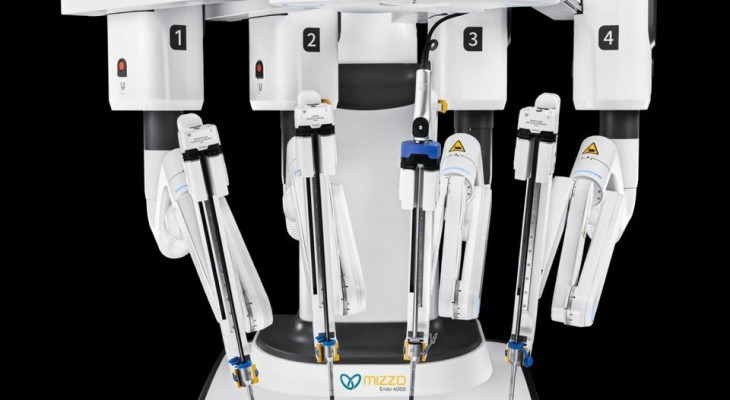
Meril Life Sciences out of India has introduced the Mizzo Endo 4000, a robotic surgical system enhanced with artificial intelligence, designed for high-precision soft tissue operations. It features haptic feedback and 3D visualization to improve surgical accuracy, reduce complications, and potentially speed up patient recovery. The system is built with a modular design meant to integrate into existing operating rooms. By pricing aggressively relative to established global alternatives, Meril aims to make advanced robotic surgery more accessible in emerging markets. The machine builds on Meril’s earlier robotics and surgical product lines, while also navigating challenges such as regulatory approvals and surgeon training.
Sources: WebProNews, LinkedIn, Meril Group
Key Takeaways
– Precision & Innovation: The Mizzo Endo 4000 brings together AI-driven imaging, haptic (touch-based) feedback, and 3D visualization to enhance control during delicate soft tissue surgeries.
– Cost & Access: By being priced more competitively than many Western or legacy robotic systems, it could help widen access to advanced surgery in India and similar markets.
– Adoption Barriers: Regulatory hurdles, infrastructure demands, and retraining of surgeons are significant challenges that Meril must address for widespread uptake.
In-Depth
India is steadily making its mark on the global stage of medical device innovation, and the launch of Mizzo Endo 4000 by Meril Life Sciences is a strong statement of intent. This new robotic surgery system is aimed specifically at soft tissue procedures—an area that traditionally presents more challenges than hard-tissue surgeries because of the delicate nature of organs, blood vessels, and connective structures.
To help address those challenges, Meril has infused the design with advanced AI-powered imaging, haptic feedback so surgeons can “feel” what’s happening, and real-time 3D visualization, all of which aim to improve accuracy, reduce risk of unintended damage, and ideally shorten recovery times.
Central to its strategy is accessibility. Meril is known in India for affordable, home-grown surgical technologies, and Mizzo Endo 4000 continues that trajectory. By designing a modular system that can slot into many existing operating rooms, and by pricing more affordably than many western robotic systems, the company is betting this robot can find traction not just in high-end hospitals, but also in smaller centers and in emerging economies. There’s also a strategic push: soft tissue robotics is relatively under-served compared to orthopedic or other robotic surgical fields. If Meril can deliver on precision and reliability, it could fill an important niche.
That being said, the path ahead isn’t devoid of hurdles. Regulatory approval in India (from bodies like the CDSCO) often involves rigorous testing, especially where patient safety is concerned. Then there’s the human factor—surgeons must be trained, workflows adapted, and hospitals equipped. Adoption generally lags when it comes to integrating new tech into routine practice. Also, while promising, the system’s performance in real-world environments (vs simulated or early adopters) will be closely watched, especially for metrics like complication rates, cost of maintenance, system downtime, and long-term outcomes.
In sum, the Mizzo Endo 4000 embodies both promise and challenge. It’s a leap forward for Meril and for India in medical robotics, particularly in soft tissue surgery. Whether it becomes a game changer will depend on execution — regulatory pathways, training, access, cost structures — and, ultimately, whether it delivers superior patient outcomes in diverse settings.