

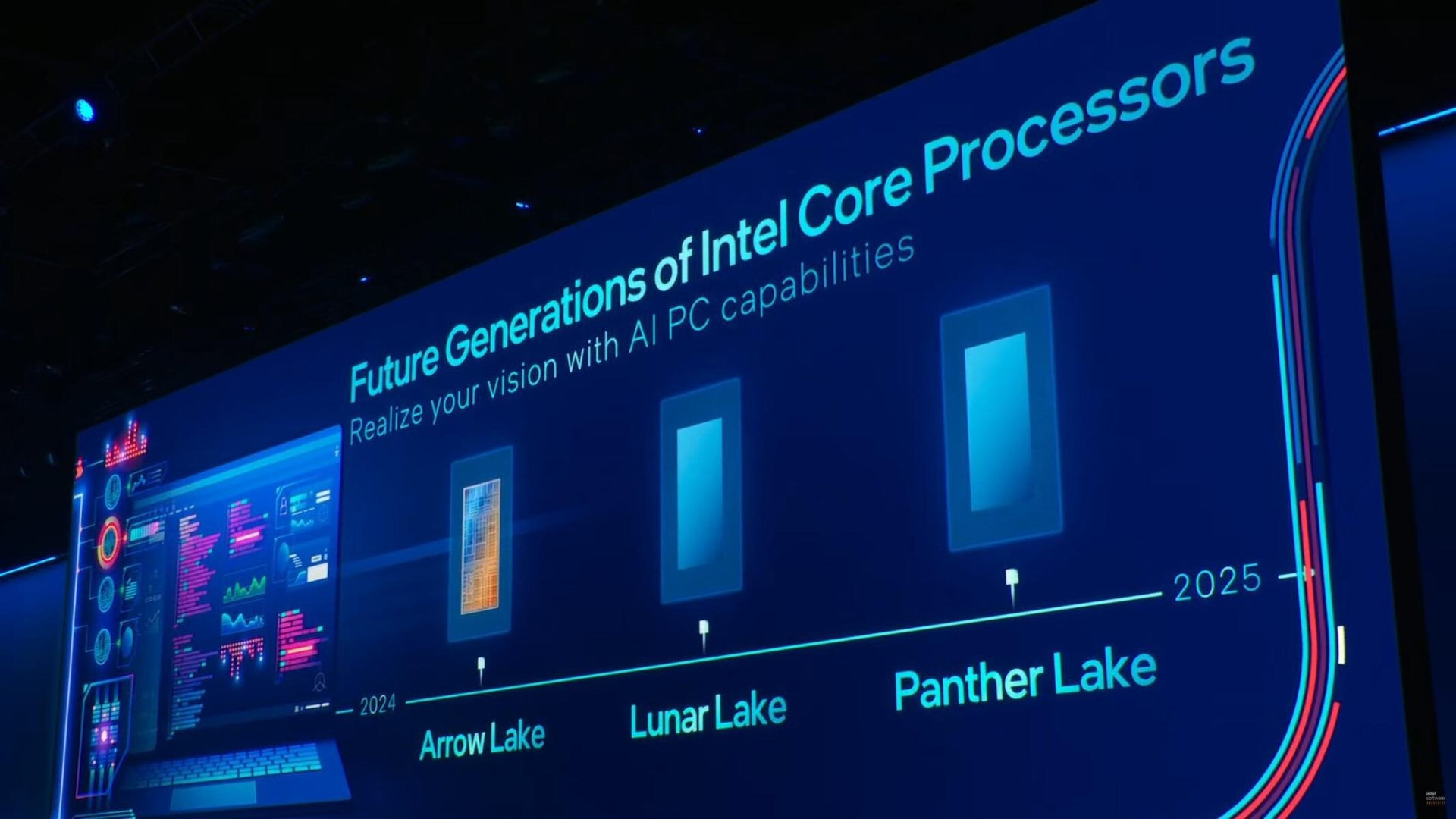
Here’s what we’re seeing: Intel‘s next big move, its Panther Lake line of CPUs built on the new 18A process node, is being framed internally (and by observers) as a “gamble”—a moment that could make or break confidence in Intel’s foundry ambitions and competitive edge. The chips are expected to roll out in late 2025 or early 2026, with mobile and laptop versions showing up first. Leaks suggest top-end Panther Lake laptop chips could hit 16 cores (4P + 8E + 4 LPE), pair with up to 12 Xe3 “Celestial” iGPU cores, and run at up to 45 W TDP. But trouble looms: early yield reports indicate only a small percentage of manufactured units are meeting quality standards, putting production timing and cost control at risk. Meanwhile, Intel has demonstrated working Panther Lake silicon and is pushing hard to get 18A into volume production in 2025.
Source links: WCCF Tech, TweakTown
Key Takeaways
– Panther Lake is Intel’s flagship push into its 18A node, with expectations for major performance, AI, and graphics improvements—but it’s also viewed as a litmus test for Intel’s foundry credibility.
– Leaks point to aggressive specs (16-core combos, 12 EU iGPU, 45 W peak power), though early yield issues on 18A raise real risks around timing, cost, and availability.
– Intel is under pressure to deliver: it has already shown powered-on 18A/Panther Lake test chips and claims the process is “on track,” but supply chain and production execution will determine whether Panther Lake is a turning point or a cautionary tale.
In-Depth
Intel’s Panther Lake is shaping up to be more than just another CPU release—it’s being positioned as a key inflection point for the company’s return to leading-edge chip manufacturing credibility. After years of falling behind rivals on process node innovation, Intel’s 18A (1.8 nm class) technology is now central to that comeback. Intel’s own communications state that RibbonFET transistors and PowerVia (its backside power delivery design) are featured in 18A, promising better density and performance-per-watt. The company says it’s on track for production ramp in 2025. (Intel describes these innovations in detail on its site.)
Publicly, Panther Lake is slated for a late 2025 to early 2026 debut, with mobile or laptop variants arriving first, followed by broader adoption. Intel’s Computex 2025 press kit already calls Panther Lake its “lead client computing processor” on the 18A node. Early demos and engineering samples have been shown, and Intel has confirmed that both Panther Lake (for client) and Clearwater Forest (for server) test dies have powered on.
Leaked specs are ambitious. According to a recent write-up, Panther Lake-H laptop chips may push 16 cores (4 performance “Cougar Cove” cores, 8 efficiency “Darkmont” cores, plus 4 LPE cores) paired with up to 12 Xe3 “Celestial” integrated graphics cores. The leaks also claim that the CPU tile will be manufactured on Intel’s 18A, while GPU and platform controller components might rely on external foundries (TSMC N3E for GPU, TSMC N6 for control die). The rumored TDP ceiling is about 45 W for the top variants. Early performance estimates suggest 15–30% gains in GPU performance over Lunar Lake at similar power.
But for all the promise, there’s a looming risk: yield. Reports out of Intel and the industry warn that the 18A process is suffering from poor defect rates. One source says only ~10 % of chips meet quality thresholds—a far cry from what’s needed for profitable high-volume manufacturing. These yield struggles cause uncertainty in OEM product timelines, potential cost inflation, and could hand the advantage to competitors if Intel stumbles.
While leaks point to bold specs and Intel is clearly pushing to make 18A and Panther Lake a success, the balance between innovation and execution will matter most. If Intel can get yields under control and deliver broadly competitive products on schedule, Panther Lake could restore confidence. But missteps or delays could echo past disappointments and undermine the narrative of a clean resurgence.