

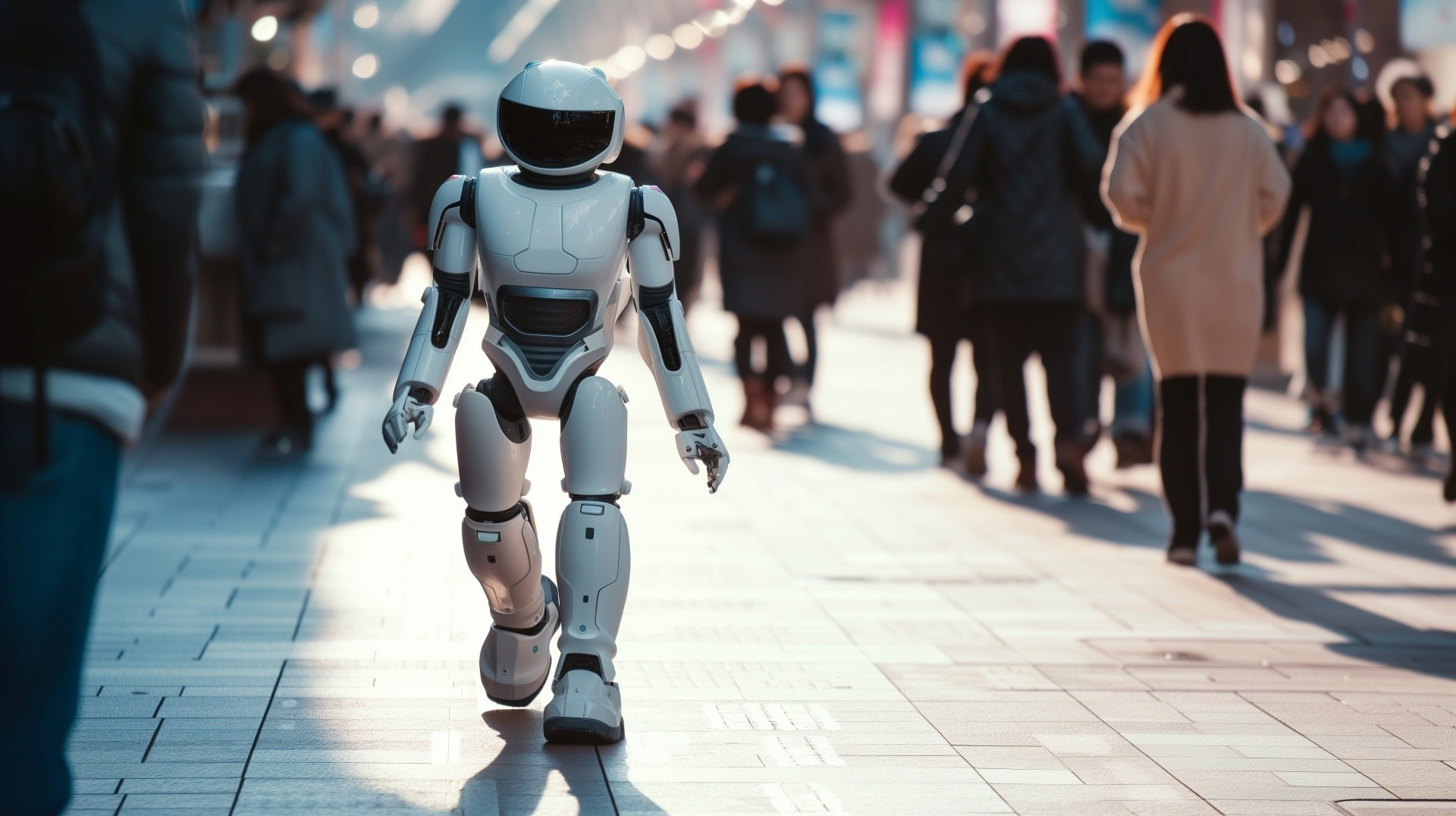
Meta, under CEO Mark Zuckerberg and with input from CTO Andrew Bosworth, is aggressively pushing into the humanoid robotics arena as its next “AR-size bet,” undertaking development of a humanoid prototype (internally dubbed “Metabot”) while planning to license its software platform to third-party manufacturers. Bosworth insists that the hardware is less of a bottleneck than the software—particularly dexterous manipulation and simulation of a “world model”—and Meta intends to focus on building advanced AI, sensor, and robotics software, rather than becoming a full hardware maker itself. Meta’s newly formed robotics division within Reality Labs, led by former Cruise CEO Marc Whitten, aligns with its broader AI efforts and positions it in direct competition with firms like Tesla and Figure AI.
Key Takeaways
– Meta is anchoring its humanoid robotics strategy on software licensing rather than manufacturing hardware itself.
– The biggest technical challenge Meta sees is enabling robots to perform fine manipulation tasks in messy real-world environments via advanced AI and simulation (“world model”).
– Meta’s move places it in a direct race with firms like Tesla, Figure AI, and other robotics efforts led by major AI players.
In-Depth
Meta’s ambitions in humanoid robotics aren’t a casual experiment—they’re a full strategic play. The company is treating this push as comparable in scale to its investments in augmented reality, dubbing it an “AR-size bet.” The plan is to build out a robotics research arm, integrate that with its AI stack (especially its foundational models like Llama), and ultimately license the robotics software to hardware manufacturers who meet certain specs.
What’s especially interesting is how Meta frames the problem. In public remarks, Bosworth has stated that while designing motors, joints, and sensors is challenging, those are solvable engineering problems. The harder piece, he argues, is software—getting robots to understand their environment and manipulate objects with the grace, adaptability, and subtlety our hands and brains accomplish unconsciously. For instance, in an anecdote, Bosworth picked up a glass of water during a demo to illustrate how trivial it is for a human but fiendishly difficult for a robot to do without crushing or spilling. Meta is putting serious effort into constructing a “world model”—a simulation-driven neural understanding of physics, spatial relationships, and object interactions—so robots can reason about how to act, not just react.
Meta’s internal memo (as reported by Reuters) shows the company forming a new division in its Reality Labs unit to house this push. The group will not only develop hardware designs for humanoid robots capable of household or task-level functions but also build out the AI, sensor suites, and software that can be embedded into such machines. Leadership choices are telling: Marc Whitten, formerly of Cruise, is now VP of robotics; John Koryl, formerly in retail and consumer hardware, is VP of retail strategy. This signals Meta’s intention to integrate robotics into its broader ecosystem—not just as a lab curiosity, but as a real product or platform.
Meta also appears to be positioning itself as the software “middleware” provider for the robotics industry. Rather than chasing every hardware innovation, it plans to set a spec for robotics and let third parties build the machines, as long as they conform to certain software interfaces. That model echoes Google‘s licensing approach with Android: focus on the OS, let OEMs build the hardware. It’s a potentially scalable strategy, but also one that puts Meta in a position of gatekeeper and dependency for the robotics hardware ecosystem.
Of course, Meta is not entering this arena in a vacuum. Tesla’s Optimus project has been one of the most visible humanoid robot efforts. That means Meta will need to differentiate—perhaps not by promising the absolute most dexterous hands or legs, but by promising dependable software integration, third-party adoption, and general-purpose adaptability. That could give it a different competitive edge. In the robotics space, software and algorithms matter more than flashy hardware in many cases—especially when the problems become about perception, uncertainty, adapting to noise, and real-world variation.
Still, tremendous challenges remain. Achieving human-level dexterity, multi-step planning, robust generalization across environments, safety assurance, and managing power and mechanical constraints are all open and difficult problems. Even if Meta succeeds in licensing software, it must also ensure compliance, standardization, cross-hardware adaptability, and security. Moreover, market timing is tough. If robotics is still nascent when Meta’s software is ready, hardware adoption could lag, reducing immediate returns.
In sum: Meta is pushing into humanoid robotics with serious capital, a software-first strategy, alignment with its AI infrastructure, and leadership hire moves. Whether that becomes a major growth engine or a speculative gamble will hinge on how quickly it can overcome the core technical obstacles—and whether the wider robotics ecosystem moves with it.