

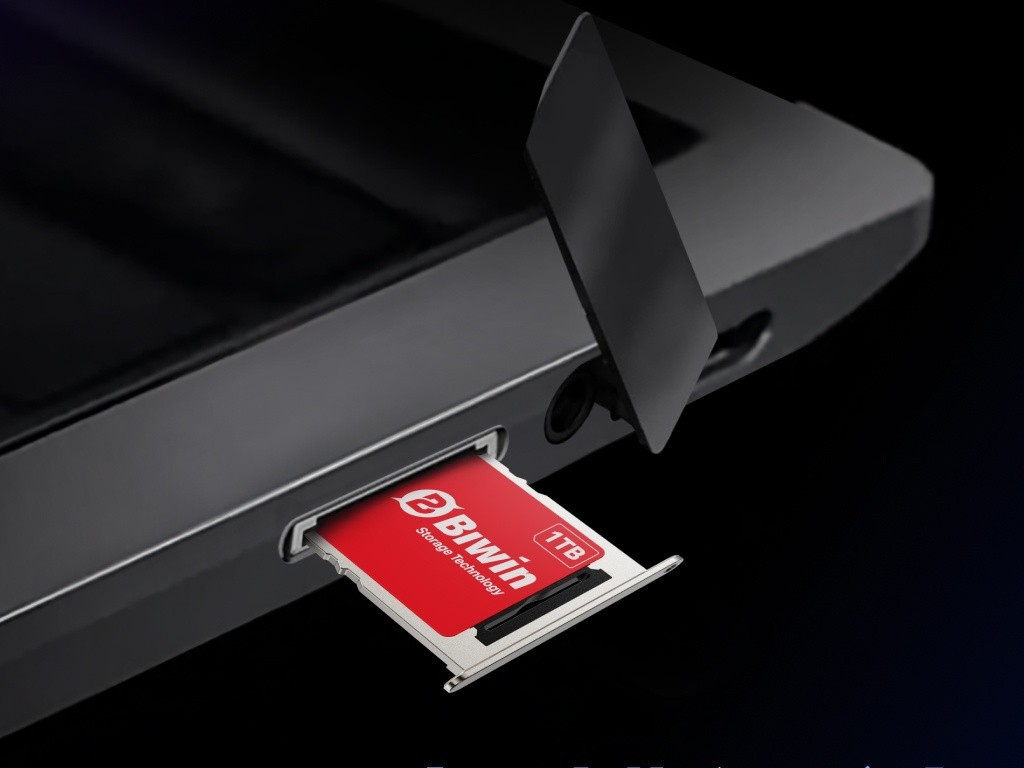
Biwin has introduced a new storage format called Mini SSD (also referred to by some as the “1517”), a form factor about 15 × 17 × 1.4 mm — smaller than a US penny — that holds up to 2 TB of data and delivers blistering speeds: sequential reads at ~3,700 MB/s and writes around ~3,400 MB/s via a PCIe 4.0 x2 interface. Compared to microSD Express cards (which top out near 985 MB/s), the Mini SSD is leaps ahead, and it even challenges full-size SD Express cards (which are much bigger) while offering rugged features like IP68 water/dust resistance and the ability to survive drops of up to three meters. The catch, though: despite the technical promise, widespread adoption hinges on Biwin submitting this format to a recognized industry standard body like the SDA (Secure Digital Association) or PCI-SIG; without such standardization, the Mini SSD risks being sidelined as a proprietary oddity instead of the next universal storage format.
Sources: TechRadar, Tom’s Hardware, PC Gamer
Key Takeaways
– Performance leap over microSD: The Mini SSD delivers multiple times the sequential read/write throughput of microSD Express, making it a significant upgrade in speed, especially for devices with heavy storage demands.
– Size vs. ruggedness trade-off: Despite its ultra-compact form, the drive includes meaningful durability—water/dust resistance, drop protection, and a SIM-tray style slot—features that may make it viable in mobile, camera, and handheld gaming devices.
– Standards and compatibility are make-or-break: Unless this new format is submitted to and adopted by standardization bodies, its adoption will likely remain niche; manufacturers and consumers favor universal formats that guarantee compatibility and long-term support.
In-Depth
Technology often moves fastest where demands for both miniaturization and performance intersect, and Biwin’s Mini SSD may hit that sweet spot. At only 15 mm by 17 mm and 1.4 mm thick, this thing is nearly invisible in comparison to traditional SSDs. Yet, it offers capacities up to 2 TB, matching many full-size SSDs while delivering read/write speeds that outperform many microSD cards by a wide margin. For mobile devices, gaming handhelds, action cameras, and ultra-thin laptops, that combo—size, speed, and ruggedness—is extremely compelling.
Still, technical merit alone doesn’t guarantee success. One of the central issues will be compatibility. If every manufacturer uses the Mini SSD in a different proprietary slot, the user base remains fragmented. The reason microSD succeeded was because SanDisk and others submitted the format to the Secure Digital Association (SDA), making it a standard that multiple device makers adopted. Without similar standardization — from bodies like SDA or PCI-SIG — the Mini SSD could be technically superb but commercially marginal.
Another material factor is cost and ecosystem. Will accessories and slot readers be readily available? Will consumers be willing to pay premium prices for hardware that takes this format? It also must contend with existing standards: microSD Express is improving, SD Express cards are delivering serious speeds, and M.2 SSDs are still king when speed/troughput is paramount. The Mini SSD sits somewhere in between: much more than microSD, but less than a full size M.2. It may well find a niche first in handheld gaming devices (some, like the GPD Win 5 and OneXPlayer Super X, already include support), before seeing broader usage. Finally, manufacturer adoption depends not just on standards but on willingness to re-tool design, support new connector types, supply chains, and user expectations.
In sum: Biwin’s Mini SSD has potential to reshape removable storage, offering a performance/size/ruggedness package that could render microSD cards obsolete — but that potential depends heavily on winning industry approval, ensuring backward compatibility (or at least broad forward compatibility), and delivering on cost and durability in real-world usage. Without those, it may just be a remarkable prototype rather than a revolutionary standard.