

Close Menu

    Subscribe to Updates

    Get the latest creative news from FooBar about art, design and business.

    What's Hot

    Google’s Compliance With ICE Data Request Sparks Privacy Concerns

    February 14, 2026

    XAI Publicly Unveils Elon Musk’s Interplanetary AI Vision In Rare All-Hands Release

    February 14, 2026

    Elon Musk Shifts SpaceX Priority From Mars Colonization to Building a Moon City

    February 14, 2026
    Facebook X (Twitter) Instagram
    • Tech
    • AI News
    • Get In Touch
    Facebook X (Twitter) LinkedIn
    TallwireTallwire
    • Tech

      Microsoft Exchange Online’s Aggressive Filters Mistake Legitimate Emails for Phishing

      February 13, 2026

      Hobbyist Finds $500 Worth Of RAM In Landfill As Memory Shortages Bite Hardware Market

      February 13, 2026

      Intel Quietly Pulls Plug on Controversial Pay-to-Unlock CPU Feature Model

      February 13, 2026

      Toyota Announces Open-Source “Console-Grade” Game Engine For Vehicle Systems And Beyond

      February 13, 2026

      Snapchat Rolls Out Expanded Arrival Notifications Beyond Home

      February 13, 2026
    • AI News

      XAI Publicly Unveils Elon Musk’s Interplanetary AI Vision In Rare All-Hands Release

      February 14, 2026

      OpenAI Begins Testing Ads in ChatGPT’s Free and Low-Cost Tiers as Industry Monetization Shift

      February 14, 2026

      Discord to Mandate Global Age Verification With Face Scans and IDs in March 2026

      February 13, 2026

      Hobbyist Finds $500 Worth Of RAM In Landfill As Memory Shortages Bite Hardware Market

      February 13, 2026

      Chinese Firms Expand Chip Production As Global Memory Shortage Deepens

      February 12, 2026
    • Security

      Microsoft Exchange Online’s Aggressive Filters Mistake Legitimate Emails for Phishing

      February 13, 2026

      China’s Salt Typhoon Hackers Penetrate Norwegian Networks in Espionage Push

      February 12, 2026

      Reality Losing the Deepfake War as C2PA Labels Falter

      February 11, 2026

      Global Android Security Alert: Over One Billion Devices Vulnerable to Malware and Spyware Risks

      February 11, 2026

      Small Water Systems Face Rising Cyber Threats As Experts Warn National Security Risk

      February 9, 2026
    • Health

      AI Advances Aim to Bridge Labor Gaps in Rare Disease Treatment

      February 12, 2026

      Boeing and Israel’s Technion Forge Clean Fuel Partnership to Reduce Aviation Carbon Footprints

      February 11, 2026

      OpenAI’s Drug Royalties Model Draws Skepticism as Unworkable in Biotech Reality

      February 10, 2026

      New AI Health App From Fitbit Founders Aims To Transform Family Care

      February 9, 2026

      Startups Deploy Underwater Robots to Radically Expand Ocean Tracking Capabilities

      February 9, 2026
    • Science

      XAI Publicly Unveils Elon Musk’s Interplanetary AI Vision In Rare All-Hands Release

      February 14, 2026

      Elon Musk Shifts SpaceX Priority From Mars Colonization to Building a Moon City

      February 14, 2026

      NASA Artemis II Spacesuit Mobility Concerns Ahead Of Historic Mission

      February 13, 2026

      AI Agents Build Their Own MMO Playground After Moltbook Ignites Agent-Only Web Communities

      February 12, 2026

      AI Advances Aim to Bridge Labor Gaps in Rare Disease Treatment

      February 12, 2026
    • People

      Google Co-Founder’s Epstein Contacts Reignite Scrutiny of Elite Tech Circles

      February 7, 2026

      Bill Gates Denies “Absolutely Absurd” Claims in Newly Released Epstein Files

      February 6, 2026

      Informant Claims Epstein Employed Personal Hacker With Zero-Day Skills

      February 5, 2026

      Starlink Becomes Critical Internet Lifeline Amid Iran Protest Crackdown

      January 25, 2026

      Musk Pledges to Open-Source X’s Recommendation Algorithm, Promising Transparency

      January 21, 2026
    TallwireTallwire
    Home»Tech»Military Tech Awakens: Anduril, Meta Roll Out EagleEye AR Helmets
    Tech

    Military Tech Awakens: Anduril, Meta Roll Out EagleEye AR Helmets

    Updated:December 25, 20255 Mins Read
    Facebook Twitter Pinterest LinkedIn Tumblr Email
    Military Tech Awakens: Anduril, Meta Roll Out EagleEye AR Helmets
    Military Tech Awakens: Anduril, Meta Roll Out EagleEye AR Helmets
    Share
    Facebook Twitter LinkedIn Pinterest Email

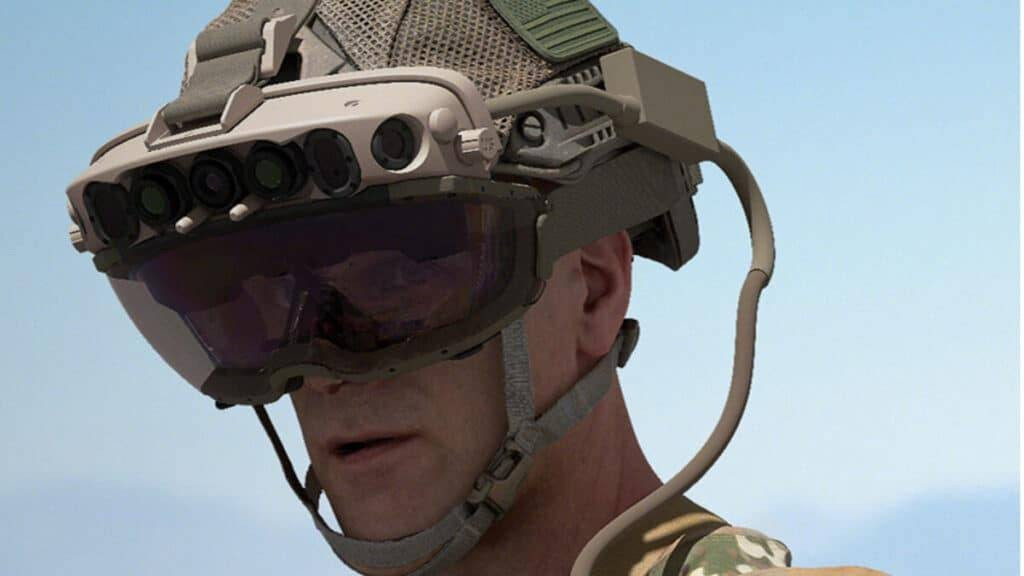
    Anduril Industries, the defense-tech company founded by Oculus creator Palmer Luckey, has officially unveiled EagleEye, a modular, AI-powered mixed-reality system built into helmets, visors, and glasses for combat use, developed in collaboration with Meta. The system integrates heads-up displays, spatial audio, radio frequency detection, real-time mapping, and drone/robot control into one “digital teammate.” This marks a dramatic reunion between Luckey and Meta, whose prior partnership ended acrimoniously, now reconnecting for defense work. The EagleEye line targets the U.S. Army’s Soldier Borne Mission Command (SBMC) program (a reboot of the troubled IVAS program), leveraging Anduril’s Lattice software and Meta’s AR/VR and AI capabilities. Anduril anticipates delivering roughly 100 units to selected Army units by mid-2026, while exploring multiple variants (from lightweight glasses to full-face ballistic helmets). The move signals a broader trend in Silicon Valley’s growing alignment with military contracts, as Big Tech and defense converge.

    Sources: Washington Post, Business Insider

    Key Takeaways

    – EagleEye is designed as a family of modular AR/MR systems (helmets, visors, glasses) combining sensor fusion, AI overlays, tactical commands, and drone/robot control in a single wearable system.

    – Anduril’s partnership with Meta leverages Anduril’s Lattice autonomy/command platform and Meta’s AR/VR and AI assets (e.g. Reality Labs, Llama models) to bolster soldier situational awareness and lethality.

    – The EagleEye program is tied to the Army’s shift from Microsoft’s troubled IVAS program toward a more open procurement effort under SBMC, with early prototypes slated for delivery around mid-2026.

    In-Depth

    What’s unfolding here is more than just another gadget unveiling — it’s potentially a turning point in how warfare and defense technology intersect with Big Tech. Palmer Luckey’s Anduril has long positioned itself at the frontier of defense innovation, playing in areas from autonomous drones to border tech. But EagleEye represents a bold pivot: embedding AI and augmented reality directly into what a soldier wears, so the helmet itself becomes a combat interface, not just protection.

    Anduril describes EagleEye as a “family of systems” — meaning it’s not a singular device but a modular platform. The variants include lightweight glasses for support or logistics units, transparent AR modules for daylight operations, and full-face ballistic MR helmets with intrusive overlays. The system aims to fuse multiple sensor feeds (optical, RF, spatial) into actionable overlays: maps, threat bounding boxes, teammate positions, mission commands, even direct control of associated drones or robotic assets. Anduril’s Lattice software serves as the neural backbone that correlates and relays data across multiple nodes in the battlespace.

    A key move is the resurrection — or retooling — of the U.S. Army’s mixed reality initiative. The original IVAS (Integrated Visual Augmentation System) program, led by Microsoft, struggled under usability complaints, adaptation issues, and technical hurdles (cybersickness, interface latency, etc.). Earlier this year, the Army shifted its approach by stripping hardware oversight from Microsoft and promoting open competition under the SBMC (Soldier Borne Mission Command) umbrella. Anduril was handed the lead role in managing the software architecture and now is competing for hardware development. EagleEye is its pitch.

    The Meta connection is particularly significant. Luckey and Zuckerberg were once allies—Luckey co-founded Oculus, sold it to Facebook, and was later pushed out for political reasons. Now, their reconciliation is being put to work in defense. Meta contributes its AR/VR hardware design, optics, and AI model expertise (notably Llama and Reality Labs efforts), while Anduril brings domain knowledge, autonomy algorithms, defense credibility, and battlefield context. This sort of convergence between Silicon Valley and the Pentagon is exactly what many technologists once resisted — but is now becoming normalized.

    Timelines currently suggest that Anduril aims to deliver around 100 early EagleEye units to select U.S. Army units during Q2 2026, likely as prototypes or evaluation units. From there, scalability, durability in combat conditions, and secure integration will be key hurdles. Balancing weight, protection, battery life, and computational latency all pose engineering challenges. And users (soldiers) must adjust to augmented visuals without compromising natural situational awareness or incurring physical side effects.

    Strategically, EagleEye signals that the military is increasingly viewing wearables as one of the frontiers for force multiplication. Soldiers who can see more, react faster, and command or delegate tasks to autonomous systems become nodes in a hybrid human-AI force. On the flip side, reliance on such systems introduces risk vectors: cyber vulnerabilities, sensor spoofing, software bugs, and reliance on complex supply chains.

    From a conservative perspective, there’s upside in reinvigorating defense procurement with fresh private-sector energy, competition, and innovation. Yet it also demands rigorous oversight: in test regimes, in chain of command control, in export and counterintelligence risks. A tool is only as sound as its governance. If EagleEye works as promised, it could level up U.S. soldier capabilities. If not, it risks becoming another expensive experiment.

    In short: EagleEye is both symbolic and practical. It’s symbolic in how it reunites tech and defense in a new political era. It’s practical in that it could remake the soldier’s interface with the battlefield. But announcements and prototypes are one thing — deployment, resilience, and accountability ultimately determine success or failure.

    Share. Facebook Twitter Pinterest LinkedIn Tumblr Email
    Previous ArticleMicrosoft to Push Microsoft 365 Companion Apps to Windows 11 by Year’s End
    Next Article Mini SSD’ by Biwin Could Make microSD Cards Look Ancient — If It Becomes a Standard

    Related Posts

    Microsoft Exchange Online’s Aggressive Filters Mistake Legitimate Emails for Phishing

    February 13, 2026

    Hobbyist Finds $500 Worth Of RAM In Landfill As Memory Shortages Bite Hardware Market

    February 13, 2026

    Intel Quietly Pulls Plug on Controversial Pay-to-Unlock CPU Feature Model

    February 13, 2026

    Snapchat Rolls Out Expanded Arrival Notifications Beyond Home

    February 13, 2026
    Add A Comment
    Leave A Reply Cancel Reply

    Editors Picks

    Microsoft Exchange Online’s Aggressive Filters Mistake Legitimate Emails for Phishing

    February 13, 2026

    Hobbyist Finds $500 Worth Of RAM In Landfill As Memory Shortages Bite Hardware Market

    February 13, 2026

    Intel Quietly Pulls Plug on Controversial Pay-to-Unlock CPU Feature Model

    February 13, 2026

    Toyota Announces Open-Source “Console-Grade” Game Engine For Vehicle Systems And Beyond

    February 13, 2026
    Top Reviews
    Tallwire
    Facebook X (Twitter) LinkedIn Threads Instagram RSS
    • Tech
    • Entertainment
    • Business
    • Government
    • Academia
    • Transportation
    • Legal
    • Press Kit
    © 2026 Tallwire. Optimized by ARMOUR Digital Marketing Agency.

    Type above and press Enter to search. Press Esc to cancel.