

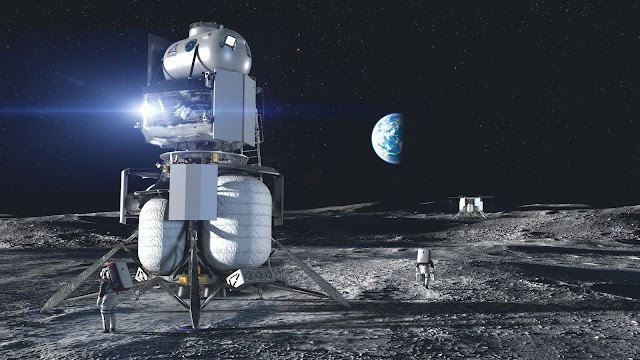
The NASA announced it is reopening the contract for the Human Landing System (HLS) originally awarded to SpaceX to additional bidders due to growing concerns that Starship development is behind schedule, raising doubts about the agency’s ability to land astronauts on the moon in 2027 under the Artemis III program. Sources indicate that rival companies such as Blue Origin and Lockheed Martin are being invited to submit revised landing system proposals in an effort to ensure the United States doesn’t fall behind in the renewed space race. The strategy shift highlights both technical and political pressure within NASA and the federal government to achieve a lunar landing before international rivals, particularly China, leap ahead.
Sources: Reuters, New York Times
Key Takeaways
– NASA’s decision to open up the Artemis III lunar-lander contract underscores growing concern that SpaceX’s Starship program is not meeting critical development milestones in time to support the original 2027 timeline.
– Opening competition invites Blue Origin, Lockheed Martin and other domestic aerospace firms to step in, offering redundancy and potentially accelerating mission readiness while safeguarding national space-leadership objectives.
– The move signals that geopolitical and industrial-strategy pressures (notably from China’s lunar ambitions) are driving NASA to hedge its bets and diversify its lunar-landing capabilities rather than rely solely on a single private contractor.
In-Depth
The U.S. lunar-return quest has entered a critical juncture as NASA rethinks its dependence on a single contractor for the first astronaut moon-landing mission in more than half a century. In April 2021, NASA awarded SpaceX a firm-fixed-price contract for the Starship Human Landing System (HLS), positioning it to ferry astronauts to the lunar surface during Artemis III. But recent comments from acting NASA Administrator Sean Duffy suggest the Starship program has slippage in crucial areas such as orbital propellant transfer and lunar-surface descent readiness, prompting the agency to solicit new bids from Blue Origin, Lockheed Martin and others to ensure viability. The timing is significant: the 2027 target for Artemis III stands amid heightened strategic urgency, as China accelerates its own moon mission plans for 2030 and the U.S. government pushes for a lunar return under the current presidential term.
From a conservative viewpoint, this pivot by NASA demonstrates prudent risk management and a necessary backup plan rather than public policy failure. The large-scale, high-cost nature of lunar exploration demands more than ideological cheerleading for one visionary entrepreneur; it calls for structural resilience, multiple pathways and accountability. By opening the contract, NASA is reinforcing that America’s space-leadership relies on competence, competition and redundancy. It is not a rebuke of SpaceX’s achievements but a recognition of the formidable technical hurdles remaining—such as in-orbit cryogenic refuelling, lunar lander ascent from low lunar orbit, and integration with the Orion/Space Launch System architecture—and the need to mitigate schedule, budget and technology risk.
Moreover, inviting Blue Origin and Lockheed Martin into the fray restores a more traditional aerospace-industrial balance that Congress and the administration explicitly envisaged when federal contracting merged with commercial space ambitions. It also aligns with conservative principles of diversification and competition over monopoly risk: betting too heavily on one firm, however promising, endangers both national security and taxpayer interests if that firm falters.
On the international dimension, the reopening of bids sends a message: the United States is not dependent on a single player, nor will it tolerate a delay that might hand China a lunar victory. Strengthening the domestic supplier base with multiple capable firms supports long-term industrial competitiveness, job creation and technological sovereignty.
To be sure, critics may frame this as a defeat for SpaceX, or as evidence that NASA’s ambitions are unrealistic. But the more compelling interpretation is of NASA acting responsibly: acknowledging that even the best-funded aerospace projects carry risk, and that returning astronauts to the moon—especially to the south pole—remains a towering engineering challenge. By setting up a competitive process, NASA hopes to foster innovation, drive down costs and ensure that whichever lander is chosen, it will be ready and reliable. The challenge now is for all contenders to demonstrate readiness, cost-effectiveness and speed. The winners in this next phase will not only land on the moon—they may shape the future of commercial-government partnerships in deep-space exploration.