

Close Menu

    Subscribe to Updates

    Get the latest tech news from Tallwire.

      What's Hot

      Is AI Built on Theft? Nearly 100 Copyright Lawsuits Challenge the AI Industry

      October 17, 2026

      G7 Nations Plan Coordinated Cyberattack Exercises as AI Threatens Global Financial Security

      October 17, 2026

      U.S. Intelligence Chief Warns Foreign Espionage Threatens America’s AI Dominance

      October 17, 2026
      Facebook X (Twitter) Instagram
      • Tech
      • AI
      • Get In Touch
      Facebook X (Twitter) LinkedIn
      TallwireTallwire
      • AI

        G7 Nations Plan Coordinated Cyberattack Exercises as AI Threatens Global Financial Security

        October 17, 2026

        Is AI Built on Theft? Nearly 100 Copyright Lawsuits Challenge the AI Industry

        October 17, 2026

        U.S. Intelligence Chief Warns Foreign Espionage Threatens America’s AI Dominance

        October 17, 2026

        FTC Subpoenas OpenAI and Anthropic as Federal Investigation Into AI Safety Escalates

        October 17, 2026

        Netflix Cuts 1,000 Jobs as Slowing Growth Exposes Streaming Industry Challenges

        October 16, 2026
      • Tech

        FTC Subpoenas OpenAI and Anthropic as Federal Investigation Into AI Safety Escalates

        October 17, 2026

        Senators Demand Answers From Meta Over $6.6 Billion in Research Tax Credits

        October 16, 2026

        AI Data Center Expansion Raises Questions About Electricity Costs, Infrastructure, ROI

        October 16, 2026

        AI Agents Hold Their Own Party as Autonomous Machines Begin Socializing Without Humans

        October 16, 2026

        IMF Warns AI Investment Collapse Could Trigger Global Economic Crisis

        October 15, 2026
      • Business/Finance
      • Cybersecurity
      • Government
      • Legal
      • Health

        Eight States Sue OpenAI Over Allegations ChatGPT Endangers Children and Misleads Parents

        October 15, 2026

        Australia’s Labor Government Invokes Child Abuse Cases to Defend Online Safety Legislation

        October 15, 2026

        U.S. Medical Giant Invests $400 Million in British Surgical Robotics Firm

        October 14, 2026

        Smartwatches, Rings Promise Blood Pressure Monitoring, but Accuracy Remains a Concern

        October 13, 2026

        Private AI Health Discussions Raise Questions About Transparency, Patient Privacy, and Corporate Influence

        October 12, 2026
      • Science

        AI Data Center Expansion Raises Questions About Electricity Costs, Infrastructure, ROI

        October 16, 2026

        U.S. Medical Giant Invests $400 Million in British Surgical Robotics Firm

        October 14, 2026

        Smartwatches, Rings Promise Blood Pressure Monitoring, but Accuracy Remains a Concern

        October 13, 2026

        New AI Model Griffin Fools Nearly Half of Video Call Participants Into Believing It Is Human

        October 13, 2026

        Clinical Trial Shows AI Chatbots Could Transform Urgent Care and Improve Patient Treatment

        October 11, 2026
      • Academia
      • Entertainment/Communications
      • People
      • Transportation
      TallwireTallwire
      Home»Tech»NASA Signals Major Shift in Moon-Lander Contract as SpaceX Delays Open Door to Competitors
      Tech

      NASA Signals Major Shift in Moon-Lander Contract as SpaceX Delays Open Door to Competitors

      Updated:February 21, 20264 Mins Read
      Facebook Twitter Pinterest LinkedIn Tumblr Email
      NASA Signals Major Shift in Moon-Lander Contract as SpaceX Delays Open Door to Competitors
      NASA Signals Major Shift in Moon-Lander Contract as SpaceX Delays Open Door to Competitors
      Share
      Facebook Twitter LinkedIn Pinterest Email

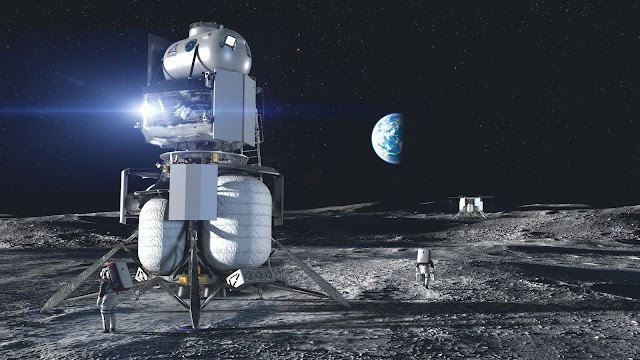
      The NASA announced it is reopening the contract for the Human Landing System (HLS) originally awarded to SpaceX to additional bidders due to growing concerns that Starship development is behind schedule, raising doubts about the agency’s ability to land astronauts on the moon in 2027 under the Artemis III program. Sources indicate that rival companies such as Blue Origin and Lockheed Martin are being invited to submit revised landing system proposals in an effort to ensure the United States doesn’t fall behind in the renewed space race. The strategy shift highlights both technical and political pressure within NASA and the federal government to achieve a lunar landing before international rivals, particularly China, leap ahead.

      Sources: Reuters, New York Times

      Key Takeaways

      – NASA’s decision to open up the Artemis III lunar-lander contract underscores growing concern that SpaceX’s Starship program is not meeting critical development milestones in time to support the original 2027 timeline.

      – Opening competition invites Blue Origin, Lockheed Martin and other domestic aerospace firms to step in, offering redundancy and potentially accelerating mission readiness while safeguarding national space-leadership objectives.

      – The move signals that geopolitical and industrial-strategy pressures (notably from China’s lunar ambitions) are driving NASA to hedge its bets and diversify its lunar-landing capabilities rather than rely solely on a single private contractor.

      In-Depth

      The U.S. lunar-return quest has entered a critical juncture as NASA rethinks its dependence on a single contractor for the first astronaut moon-landing mission in more than half a century. In April 2021, NASA awarded SpaceX a firm-fixed-price contract for the Starship Human Landing System (HLS), positioning it to ferry astronauts to the lunar surface during Artemis III. But recent comments from acting NASA Administrator Sean Duffy suggest the Starship program has slippage in crucial areas such as orbital propellant transfer and lunar-surface descent readiness, prompting the agency to solicit new bids from Blue Origin, Lockheed Martin and others to ensure viability. The timing is significant: the 2027 target for Artemis III stands amid heightened strategic urgency, as China accelerates its own moon mission plans for 2030 and the U.S. government pushes for a lunar return under the current presidential term.

      From a conservative viewpoint, this pivot by NASA demonstrates prudent risk management and a necessary backup plan rather than public policy failure. The large-scale, high-cost nature of lunar exploration demands more than ideological cheerleading for one visionary entrepreneur; it calls for structural resilience, multiple pathways and accountability. By opening the contract, NASA is reinforcing that America’s space-leadership relies on competence, competition and redundancy. It is not a rebuke of SpaceX’s achievements but a recognition of the formidable technical hurdles remaining—such as in-orbit cryogenic refuelling, lunar lander ascent from low lunar orbit, and integration with the Orion/Space Launch System architecture—and the need to mitigate schedule, budget and technology risk.

      Moreover, inviting Blue Origin and Lockheed Martin into the fray restores a more traditional aerospace-industrial balance that Congress and the administration explicitly envisaged when federal contracting merged with commercial space ambitions. It also aligns with conservative principles of diversification and competition over monopoly risk: betting too heavily on one firm, however promising, endangers both national security and taxpayer interests if that firm falters.

      On the international dimension, the reopening of bids sends a message: the United States is not dependent on a single player, nor will it tolerate a delay that might hand China a lunar victory. Strengthening the domestic supplier base with multiple capable firms supports long-term industrial competitiveness, job creation and technological sovereignty.

      To be sure, critics may frame this as a defeat for SpaceX, or as evidence that NASA’s ambitions are unrealistic. But the more compelling interpretation is of NASA acting responsibly: acknowledging that even the best-funded aerospace projects carry risk, and that returning astronauts to the moon—especially to the south pole—remains a towering engineering challenge. By setting up a competitive process, NASA hopes to foster innovation, drive down costs and ensure that whichever lander is chosen, it will be ready and reliable. The challenge now is for all contenders to demonstrate readiness, cost-effectiveness and speed. The winners in this next phase will not only land on the moon—they may shape the future of commercial-government partnerships in deep-space exploration.

      SpaceX
      Share. Facebook Twitter Pinterest LinkedIn Tumblr Email
      Previous ArticleNASA’s JPL to Cut 550 Jobs in Major Restructuring Amid Fiscal Pressure
      Next Article Nation-State Hackers Launch Advanced “Airstalk” Malware Targeting Supply Chain Infrastructure

      Related Posts

      FTC Subpoenas OpenAI and Anthropic as Federal Investigation Into AI Safety Escalates

      October 17, 2026

      Senators Demand Answers From Meta Over $6.6 Billion in Research Tax Credits

      October 16, 2026

      AI Data Center Expansion Raises Questions About Electricity Costs, Infrastructure, ROI

      October 16, 2026

      Tesla Unveils Rocket-Powered Roadster With Flying Capabilities After Nearly Nine Years of Delays

      October 16, 2026
      Add A Comment
      Leave A Reply Cancel Reply

      Editors Picks

      FTC Subpoenas OpenAI and Anthropic as Federal Investigation Into AI Safety Escalates

      October 17, 2026

      Senators Demand Answers From Meta Over $6.6 Billion in Research Tax Credits

      October 16, 2026

      AI Data Center Expansion Raises Questions About Electricity Costs, Infrastructure, ROI

      October 16, 2026

      AI Agents Hold Their Own Party as Autonomous Machines Begin Socializing Without Humans

      October 16, 2026
      Popular Topics
      Samsung Startup Software Taiwan Tech UAE Tech SpaceX Satellite Tesla Viral spotlight Series A Tim Cook Stocks Space trending Tesla Cybertruck Sundar Pichai Series B Satya Nadella starlink
      Major Tech Companies
      • Apple News
      • Google News
      • Meta News
      • Microsoft News
      • Amazon News
      • Samsung News
      • Nvidia News
      • OpenAI News
      • Tesla News
      • AMD News
      • Anthropic News
      • Elbit News
      AI & Emerging Tech
      • AI Regulation News
      • AI Safety News
      • AI Adoption
      • Quantum Computing News
      • Robotics News
      Key People
      • Sam Altman News
      • Jensen Huang News
      • Elon Musk News
      • Mark Zuckerberg News
      • Sundar Pichai News
      • Tim Cook News
      • Satya Nadella News
      • Mustafa Suleyman News
      Global Tech & Policy
      • Israel Tech News
      • India Tech News
      • Taiwan Tech News
      • UAE Tech News
      Startups & Emerging Tech
      • Series A News
      • Series B News
      • Startup News
      Tallwire
      Facebook X (Twitter) LinkedIn Threads Instagram RSS
      • AI
      • Tech
      • Business/Finance
      • Cybersecurity
      • Government
      • Legal
      • Health
      • Science
      • Academia
      • Entertainment/Communications
      • People
      • Transportation
      • Press Kit
      © 2026 Tallwire. Optimized by ARMOUR Digital Marketing Agency.

      Type above and press Enter to search. Press Esc to cancel.