

Close Menu

    Subscribe to Updates

    Get the latest creative news from FooBar about art, design and business.

    What's Hot

    Panasonic Strikes Partnership to Reclaim TV Market Share in the West

    February 26, 2026

    Large Hadron Collider Enters Third Shutdown For Major Upgrade

    February 26, 2026

    Stellantis Faces Massive Losses and Strategic Shift After Misjudging EV Market Demand

    February 26, 2026
    Facebook X (Twitter) Instagram
    • Tech
    • AI
    • Get In Touch
    Facebook X (Twitter) LinkedIn
    TallwireTallwire
    • Tech

      Large Hadron Collider Enters Third Shutdown For Major Upgrade

      February 26, 2026

      Stellantis Faces Massive Losses and Strategic Shift After Misjudging EV Market Demand

      February 26, 2026

      AI’s Persistent PDF Parsing Failure Stalls Practical Use

      February 26, 2026

      Solid-State Battery Claims Put to the Test With Record Fast Charging Results

      February 26, 2026

      Intel Signals Return To Unified Core Design, Phasing Out Performance And Efficiency Split

      February 26, 2026
    • AI

      Anthropic Raises Alarm Over Chinese AI Model Distillation Practices

      February 26, 2026

      AI’s Persistent PDF Parsing Failure Stalls Practical Use

      February 26, 2026

      Tech Firms Push “Friendlier” Robot Designs to Boost Human Acceptance

      February 26, 2026

      Samsung Expands Galaxy AI With Perplexity Integration for Upcoming S26 Series

      February 25, 2026

      Meta AI Safety Director’s Email Deletion Blunder Sparks Industry Scrutiny

      February 25, 2026
    • Security

      FBI Issues Alert on Outdated Wi-Fi Routers Vulnerable to Cyber Attacks

      February 25, 2026

      Wikipedia Blacklists Archive.Today After DDoS Abuse And Content Manipulation

      February 24, 2026

      Admissions Website Bug Exposed Children’s Personal Information

      February 23, 2026

      FBI Warns ATM Jackpotting Attacks on the Rise, Costing Hackers Millions in Stolen Cash

      February 22, 2026

      Microsoft Admits Office Bug Exposed Confidential Emails to Copilot AI

      February 22, 2026
    • Health

      Social Media Addiction Trial Draws Grieving Parents Seeking Accountability From Tech Platforms

      February 19, 2026

      Portugal’s Parliament OKs Law to Restrict Children’s Social Media Access With Parental Consent

      February 18, 2026

      Parents Paint 108 Names, Demand Snapchat Reform After Deadly Fentanyl Claims

      February 18, 2026

      UK Kids Turning to AI Chatbots and Acting on Advice at Alarming Rates

      February 16, 2026

      Landmark California Trial Sees YouTube Defend Itself, Rejects ‘Social Media’ and Addiction Claims

      February 16, 2026
    • Science

      Large Hadron Collider Enters Third Shutdown For Major Upgrade

      February 26, 2026

      Google Phases Out Android’s Built-In Weather App, Replacing It With Search-Based Forecasts

      February 25, 2026

      Microsoft’s Breakthrough Suggests Data Could Be Preserved for 10,000 Years on Glass

      February 24, 2026

      NASA Trials Autonomous, AI-Planned Driving on Mars Rover

      February 20, 2026

      XAI Publicly Unveils Elon Musk’s Interplanetary AI Vision In Rare All-Hands Release

      February 14, 2026
    • Tech

      Zuckerberg Testifies In Landmark Trial Over Alleged Teen Social Media Harms

      February 23, 2026

      Gay Tech Networks Under Spotlight In Silicon Valley Culture Debate

      February 23, 2026

      Google Co-Founder’s Epstein Contacts Reignite Scrutiny of Elite Tech Circles

      February 7, 2026

      Bill Gates Denies “Absolutely Absurd” Claims in Newly Released Epstein Files

      February 6, 2026

      Informant Claims Epstein Employed Personal Hacker With Zero-Day Skills

      February 5, 2026
    TallwireTallwire
    Home»AI»NASA Trials Autonomous, AI-Planned Driving on Mars Rover
    AI

    NASA Trials Autonomous, AI-Planned Driving on Mars Rover

    Updated:February 21, 20264 Mins Read
    Facebook Twitter Pinterest LinkedIn Tumblr Email
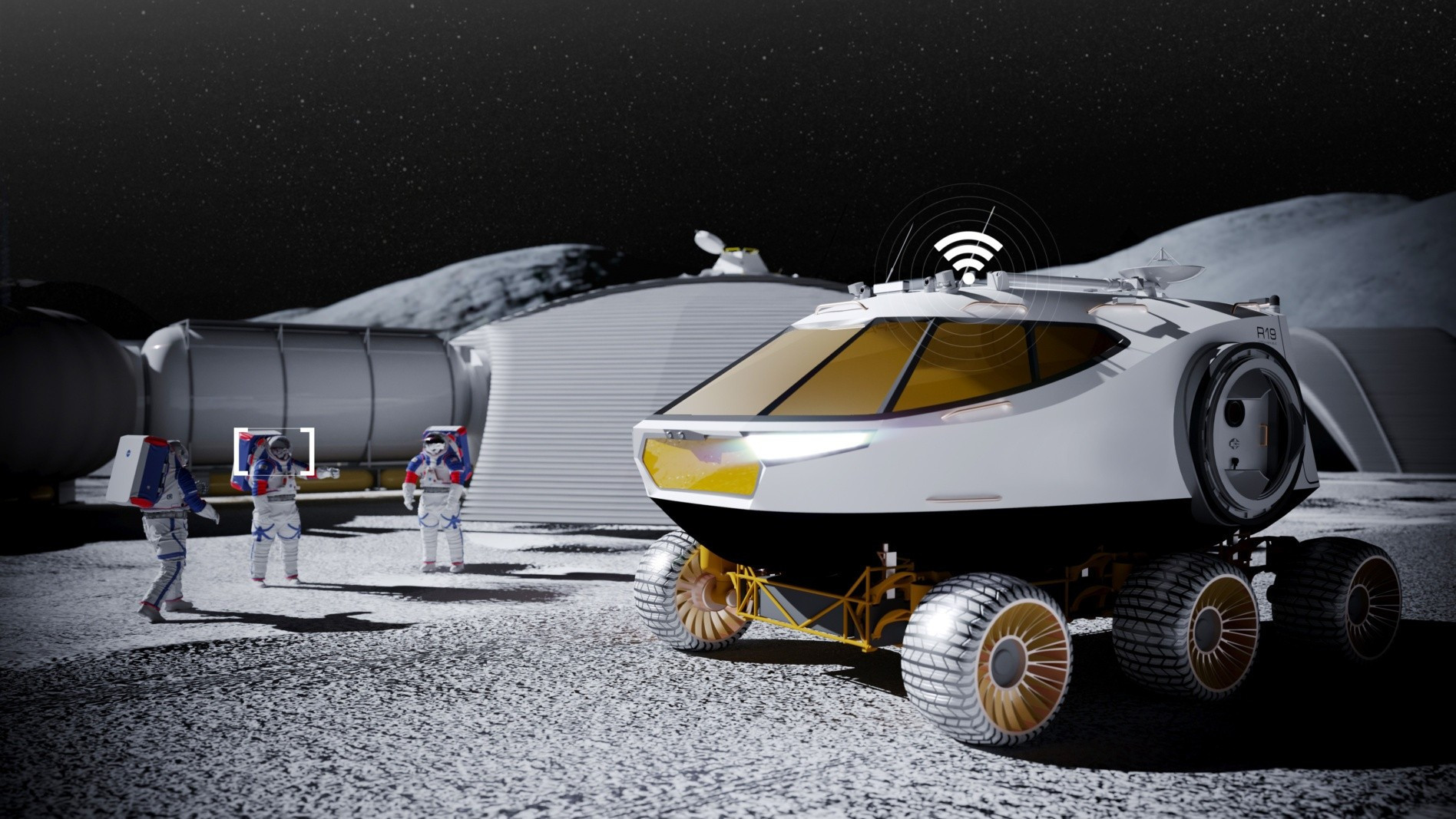
    Solstar Lands NASA Contract to Build Wi-Fi for Moon Missions
    Solstar Lands NASA Contract to Build Wi-Fi for Moon Missions
    Share
    Facebook Twitter LinkedIn Pinterest Email

    NASA has recently demonstrated a significant milestone in planetary robotics by allowing artificial intelligence to plan and execute driving maneuvers for its Perseverance Mars rover, overcoming the severe communication delays between Earth and Mars that have traditionally required human operators to chart the rover’s daily waypoints. In a controlled test conducted in late 2025 and reported in early 2026, Perseverance completed multiple AI-planned drives across the challenging terrain of Jezero Crater’s rim, marking the first time generative AI was used to autonomously analyze high-resolution imagery and terrain data to generate safe navigation routes without direct human intervention. The demonstration, led by engineers at NASA’s Jet Propulsion Laboratory and involving advanced vision-language AI models, covered hundreds of meters of Martian surface over two days and showed the potential for smarter, faster exploration without the need for lengthy delays in Earth-to-Mars communications. NASA officials see this as a stepping stone toward more autonomous exploration tools on future missions, including drones and other robotic assets that could extend scientific reach and capabilities on Mars and other worlds.

    Sources

    https://www.jpl.nasa.gov/news/nasas-perseverance-rover-completes-first-ai-planned-drive-on-mars
    https://www.universetoday.com/articles/nasa-let-ai-drive-the-perseverance-rover-for-two-days
    https://www.semafor.com/article/02/16/2026/nasa-trials-ai-powered-driving-of-mars-rover

    Key Takeaways

    • NASA’s use of generative AI to autonomously plan and execute driving routes for Perseverance marks the first time such technology has been applied in real mission operations on another planet, reducing reliance on human planners.
    • The demonstration showed autonomous AI planning over challenging Martian terrain, with the rover traveling distances that highlight its capability to operate safely and effectively despite signal delays from Earth.
    • This advancement is part of broader efforts to equip future Mars missions with smarter, faster robotic systems that can explore complex environments with greater autonomy.

    In-Depth

    NASA’s Perseverance Mars rover has taken a major step forward toward robotic autonomy with the successful demonstration of AI-planned driving on the surface of Mars. Traditionally, scoring safe routes for planetary rovers has been a painstaking process conducted by human operators on Earth, who analyze images and terrain data to plot waypoint-to-waypoint paths for each Martian day’s activities. But the vast distance between Earth and Mars means that even light signals take up to about 24 minutes one way, creating nearly a 48-minute delay for a round trip. That lag makes remote “joy-stick” control impossible and has limited how quickly or efficiently rovers can navigate complex, rocky terrain.

    In late 2025, engineers at NASA’s Jet Propulsion Laboratory (JPL) changed course by incorporating advanced artificial intelligence directly into Perseverance’s navigation workflow. Using generative AI — a vision-language model designed to understand and interpret high-resolution imagery — operators fed the system imagery captured by the rover’s navigation cameras and orbital data from Mars Reconnaissance Orbiter. The AI then processed that information to identify hazards such as boulders, sand ripples, and steep slopes, and to plot waypoints that led the rover across the rugged rim of Jezero Crater.

    The rover executed these AI-generated plans on two occasions in early December 2025, traversing several hundred meters autonomously over both days. These drives were completed without the usual real-time human waypoint input, proving that machine learning systems can take on a task that has historically been one of the most challenging and labor-intensive parts of Martian surface operations. According to NASA officials, this achievement shows that autonomous navigation has matured to the point where it can safely extend human capacity in mission operations rather than simply automate routine tasks.

    With autonomy now proven for basic traversal, NASA is looking to build upon this foundation in future missions. Engineers are already considering how similar AI techniques could be applied to drone swarms, rover scouting vehicles, or other robotic explorers that could benefit from real-time decision-making on distant worlds. Autonomous navigation will be especially valuable as human missions to Mars and deep-space exploration efforts intensify, where reduced dependence on Earth-based control could increase efficiency and science returns. Beyond the technological leap, this first successful deployment of AI-driven navigation highlights a broader shift in space exploration philosophy: empowering spacecraft to understand and respond to their environments with greater independence, ultimately enabling richer and more far-reaching investigations of our solar system.

    Robotics
    Share. Facebook Twitter Pinterest LinkedIn Tumblr Email
    Previous ArticlePalantir’s Role in Deepening Pentagon-Anthropic AI Dispute Over Military Use
    Next Article David Greene Sues Google, Alleges AI Voice Theft in NotebookLM Tool

    Related Posts

    Large Hadron Collider Enters Third Shutdown For Major Upgrade

    February 26, 2026

    Anthropic Raises Alarm Over Chinese AI Model Distillation Practices

    February 26, 2026

    AI’s Persistent PDF Parsing Failure Stalls Practical Use

    February 26, 2026

    Tech Firms Push “Friendlier” Robot Designs to Boost Human Acceptance

    February 26, 2026
    Add A Comment
    Leave A Reply Cancel Reply

    Editors Picks

    Large Hadron Collider Enters Third Shutdown For Major Upgrade

    February 26, 2026

    Stellantis Faces Massive Losses and Strategic Shift After Misjudging EV Market Demand

    February 26, 2026

    AI’s Persistent PDF Parsing Failure Stalls Practical Use

    February 26, 2026

    Solid-State Battery Claims Put to the Test With Record Fast Charging Results

    February 26, 2026
    Top Reviews
    Tallwire
    Facebook X (Twitter) LinkedIn Threads Instagram RSS
    • Tech
    • Entertainment
    • Business
    • Government
    • Academia
    • Transportation
    • Legal
    • Press Kit
    © 2026 Tallwire. Optimized by ARMOUR Digital Marketing Agency.

    Type above and press Enter to search. Press Esc to cancel.