

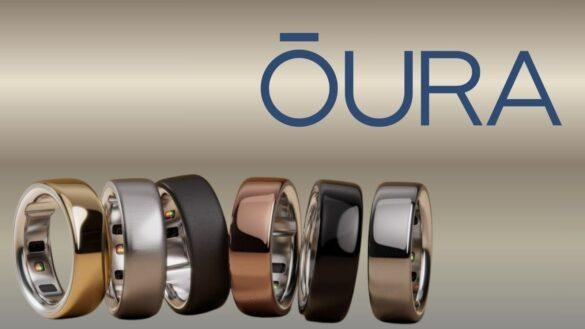
Oura Health’s CEO Tom Hale recently told The New York Times that taking the company public is “certainly an option,” noting they’ve hit the thresholds of growth and scale required for an IPO. The firm projects it will generate $1 billion in revenue this year, effectively doubling its 2024 results, while raising a new round that could value it near $11 billion. Hale also underscored that Oura will not compromise on user data protection: sharing with governments or institutions will only happen when users explicitly consent, and the company sees privacy as a core nonnegotiable principle.
Sources: TechCrunch, Bloomberg
Key Takeaways
– Oura is nearing the conditions (scale, growth, trajectory) to seriously consider an IPO, though no firm timing has been announced.
– The company expects to cross $1 billion in revenue in 2025, doubling its 2024 performance, backed by a potential funding round valuing it near $11 billion.
– Data privacy is central to Oura’s pitch: the company pledges that sharing of health data will be user-controlled and that privacy is “nonnegotiable.”
In-Depth
Oura Health has steadily matured from a niche wearable startup into a formidable player in the health technology space. Its core product, the Oura Ring, measures biometric signals—sleep stages, heart rate, stress, temperature—and packages that into actionable insights. The company is now signaling it may be ready for its next big leap: a public offering.
Tom Hale, Oura’s CEO, recently affirmed in an interview that an IPO isn’t off the table. He emphasized that the firm has met the essential criteria around scale, growth, and trajectory. That said, Hale was cautious not to commit to timing, suggesting that the decision to go public will come “when the moment is right.” Behind the scenes, Oura is reportedly in the process of raising a new funding round (~$875 million), which could peg its valuation near $11 billion—more than double from its roughly $5.2 billion valuation in last year’s funding round.
That valuation outlook rests on strong business momentum. In 2024, Oura reported over $500 million in revenue—more than double its prior year—and it now expects to double again in 2025, aiming to hit the $1 billion mark. The company also recently announced a $250 million revolving credit facility with major financial institutions to support liquidity and expansion. Meanwhile, ring shipments have topped 5.5 million units since inception, with over half sold in the past year alone.
However, an IPO in the health tech and wearable space brings inherent scrutiny—especially around how user data is handled. Hale was explicit: privacy is nonnegotiable. He rejected the notion that health data might be shared broadly with government bodies, affirming that any data sharing will be user-initiated, transparent, and subject to strict controls. This stance is especially salient in an age when health data is among the most sensitive personal information.
That said, the real test for Oura will be execution. Scaling hardware production, maintaining device reliability, achieving margins, and navigating regulatory regimes in multiple jurisdictions are all challenges. Moreover, preserving trust with users is critical: a misstep on data handling or transparency could severely damage reputation—something especially dangerous ahead of any public listing.
If Oura does proceed to IPO, its offering won’t just be about raising capital—it will be a statement about how consumer health tech can balance growth with user rights. For conservative investors or regulators watching closely, Oura’s success or failure could serve as a benchmark for how wearables handle both innovation and accountability.