

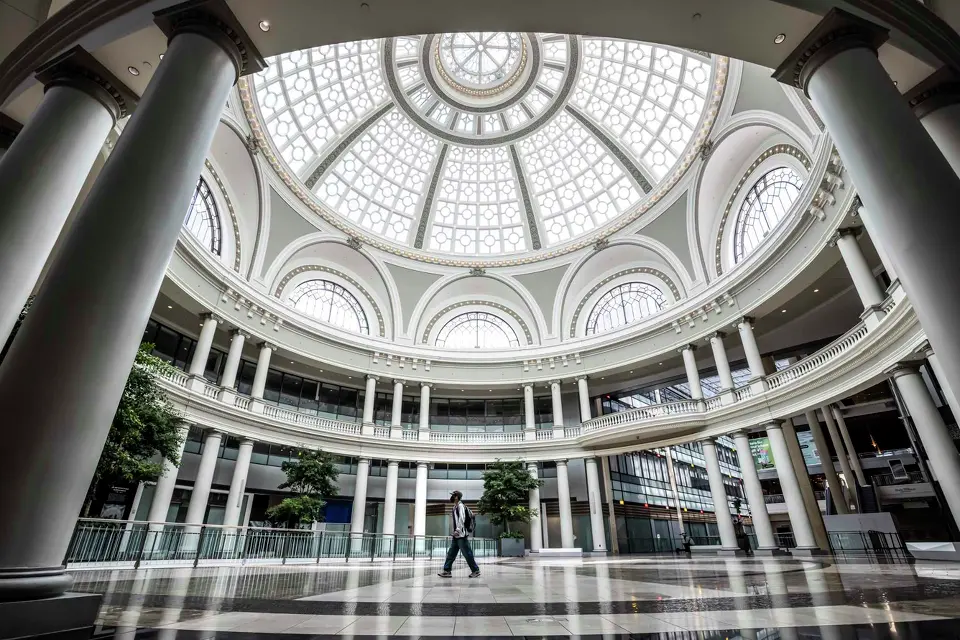
San Francisco’s shuttered downtown shopping mall, once a symbol of the city’s commercial vitality, is being considered for redevelopment into an artificial intelligence data center and mixed-use technology complex. Maryland-based KG Growth Partners, working with an unidentified AI company, has explored converting the former 350,000-square-foot Bloomingdale’s property into a facility combining computing infrastructure, offices, public attractions, and community spaces. Although no formal development application has been submitted, the proposal underscores the dramatic transformation of downtown San Francisco, where declining retail activity and persistent commercial vacancies have left major properties struggling for new purposes. The project also faces significant regulatory obstacles, including a recently imposed moratorium on new data centers, concerns about electricity consumption, and complicated property ownership arrangements.
Key Takeaways
• AI Replacing Retail: A former 350,000-square-foot department store could become an AI-focused development, reflecting the changing economics of downtown commercial real estate.
• Regulatory Obstacles: San Francisco’s 45-day data center moratorium, potential environmental restrictions, and infrastructure requirements threaten the project’s viability.
• Economic Reckoning: The proposal highlights the consequences of downtown retail decline while raising questions about whether technology infrastructure can restore economic activity and public engagement.
In-Depth
San Francisco’s troubled downtown commercial district may find an unlikely source of revival in artificial intelligence. Developers are exploring the conversion of the former Bloomingdale’s property inside the shuttered San Francisco Centre into an AI data center, potentially replacing traditional retail activity with computing infrastructure and technology-oriented businesses.
KG Growth Partners has approached municipal officials about permitting requirements for the 350,000-square-foot property. The concept reportedly includes server facilities, offices, public exhibition areas, and space for local businesses. An unidentified AI company is evaluating the opportunity, although no formal application or completed acquisition has been announced.
The proposal reflects a broader economic reality confronting American cities. Once-thriving commercial centers have struggled with changing shopping habits, remote employment, declining pedestrian traffic, and expensive vacant properties. San Francisco’s downtown mall has become an especially visible example, with previous redevelopment negotiations collapsing despite substantial interest.
However, converting abandoned retail space into AI infrastructure presents considerable challenges. Data centers require reliable electricity, cooling systems, and specialized equipment. San Francisco recently approved a temporary moratorium on new facilities, citing environmental and neighborhood concerns. Additional state regulations could complicate development.
The larger question concerns economic priorities. Private investment could restore productive use to a deteriorating property, but a data center alone may generate less street-level activity than traditional retail establishments.
Ultimately, San Francisco must determine whether regulatory restrictions will obstruct commercially viable redevelopment or whether a balanced approach can accommodate technological investment while preserving public access and neighborhood vitality.
Sources
• https://www.sfchronicle.com/sf/article/downtown-mall-data-center-ai-22480545.php
• https://www.aol.com/articles/vacant-sf-mall-could-house-222738000.html
• https://irei.com/news/former-san-francisco-mall-eyed-for-ai-data-center-conversion-2/