

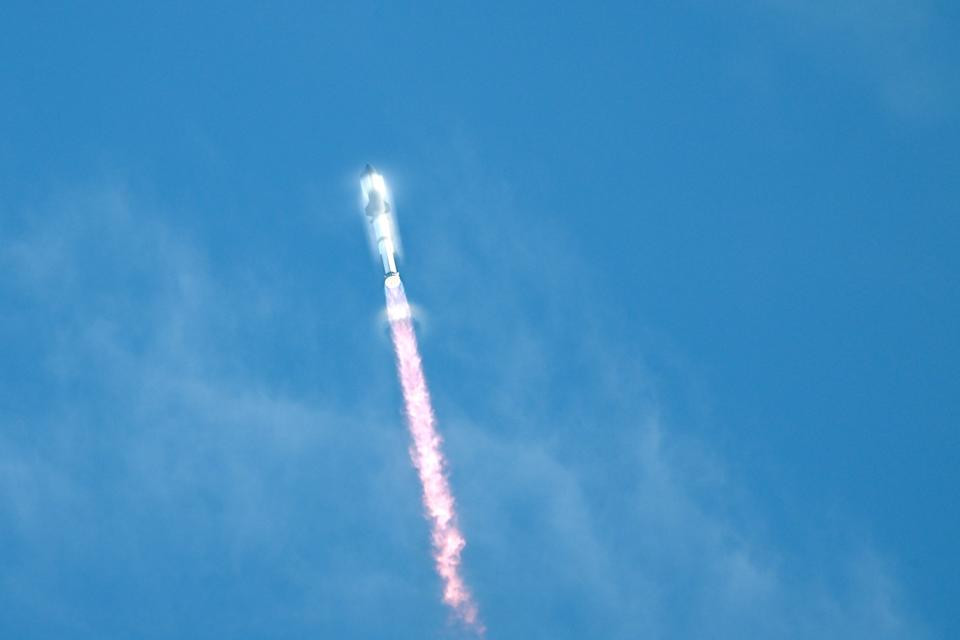
In its eleventh flight test, SpaceX‘s Starship achieved a notable success—launching from its Starbase facility in Texas and completing a splashdown in the Indian Ocean after roughly an hour in flight. Reuters reported that the mission validated upgrades in heat-shield tiles and engine relighting, while its Super Heavy booster executed a soft water landing in the Gulf of Mexico before destructing itself post-recovery. This flight marks the last for the current Block-2 design before SpaceX transitions to a more advanced version. Meanwhile, AP emphasized that this mission is central to NASA’s Artemis plans to use Starship as the crewed lunar lander, underscoring the importance of reusability and precision landing after earlier failures. Smithsonian Magazine added that the success helps stem a string of recent test disasters and supplies crucial data for the next iteration of the rocket.
Key Takeaways
– The 11th flight test validated enhancements in heat-shield durability and engine relighting under real reentry conditions.
– This marks the final launch of the current Block-2 configuration; SpaceX plans to move forward with a more capable next-gen variant.
– Success bolsters the role of Starship in NASA’s Artemis missions and supports SpaceX’s long-term ambitions of lunar and Mars missions.
In-Depth
SpaceX’s latest Starship test represents a turning point in its developmental trajectory. After earlier failures that raised concerns about the vehicle’s robustness, this flight delivered not just success but confidence. The launch from Starbase, Texas, followed a mission trajectory largely mirroring earlier tests: deploying mock satellites, executing a relight of one or more engines, and maneuvering reentry for splashdown in the Indian Ocean. The Super Heavy booster separated and performed a soft water landing in the Gulf of Mexico, before ultimately self-destructing after serving its mission profile.
What stands out is that the heat shield tiles survived reentry stresses without catastrophic damage, which is critical for future reusability — a core promise of Starship’s design ethos. The ability to relight engines midflight also shows maturation in control and propulsion management under real conditions. These are nontrivial technical hurdles, and clearing them gives SpaceX a more solid footing as it transitions toward its next version of Starship.
This flight is being billed as the last of the Block 2 architecture. The upcoming version is expected to incorporate further upgrades: stronger Raptor-class engines, modified tank structures, and systems that allow for orbital refueling. These upgrades are essential if Starship is to serve as NASA’s chosen lunar lander under the Artemis program. NASA requires dependable performance in deep-space conditions, and the agency has tied its moon mission schedules to Starship’s success.
From a strategic lens, this test victory is timely. It helps stabilize investor confidence, enhances SpaceX’s role as a key partner for NASA, and strengthens public narrative around the feasibility of returning humans to the Moon — and eventually, pushing toward Mars. That said, challenges remain: manufacturing scale, regulatory scrutiny, supply chain reliability, and safety concerns will intensify as the program transitions to more ambitious missions. But for now, Flight 11 is a positive step forward — more than just a splashdown, it’s a statement that Starship’s development is entering a new, more mature phase.