

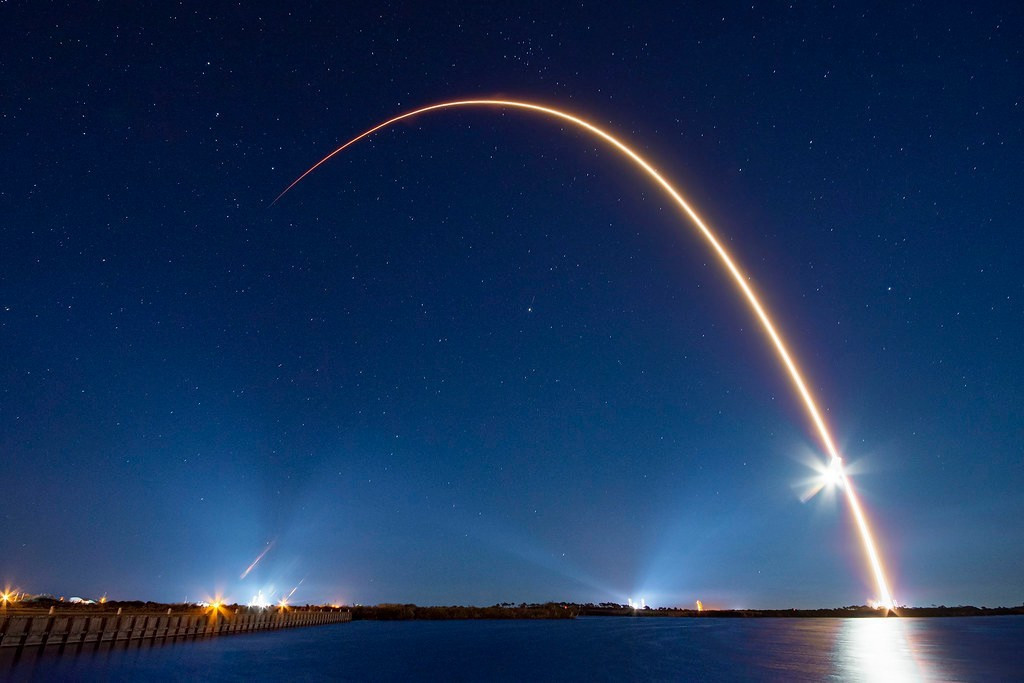
Billionaire tech founder Elon Musk has announced that SpaceX plans to transform its next-gen Starlink V3 satellite constellation into the foundation for space-based data-centers, leveraging the craft’s ~1-terabit-per-second laser-linked throughput and abundant solar energy in orbit to relieve Earth-bound data-centre constraints. Musk shared on X that “simply scaling up Starlink V3 satellites, which have high speed laser links would work. SpaceX will be doing this.” According to sources reporting on his remarks, the V3 platform is designed for capability leaps relative to prior satellites, and interest in orbit-based computing is accelerating as terrestrial data-centres face power, cooling and land-use limits. Critics counter that the economics and technical complexity of massive computing infrastructure in space remain significant unknowns, though proponents argue the freed-up terrestrial footprint and potentially lower environmental impact could be game-changing. More broadly, Musk’s statement positions SpaceX to compete with other tech-giants such as Jeff Bezos and Eric Schmidt who have made similar bets on orbit-based infrastructure.
Sources: ARS Technica, Teslarati
Key Takeaways
– The Starlink V3 satellite architecture is positioned to deliver roughly 1 Tbps throughput per unit via high-speed laser links, enabling potential orbit-based computing clusters.
– Space-based data-centres appeal for their ability to tap solar energy, eliminate large terrestrial power/cooling/land-footprint burdens and extend global infrastructure, yet face critical economic and engineering hurdles.
– Musk’s public commitment puts SpaceX in direct contest with major tech players already investing in orbital infrastructure, underscoring a shift in computing strategy from Earth-surface to near-space domains.
In-Depth
Elon Musk’s recent public statements mark a bold new frontier for SpaceX and its Starlink brand: the company intends not just to deliver global broadband, but to build cloud-scale computing infrastructures in orbit. At the centre of this strategy is the forthcoming Starlink V3 satellite platform, which is reported to achieve up to one terabit per second (1 Tbps) throughput per satellite thanks to high-speed inter-satellite laser links and enhanced payload capacity. Musk’s concise declaration—“Simply scaling up Starlink V3 satellites, which have high speed laser links would work. SpaceX will be doing this”—signals a deliberate pivot into infrastructure once reserved for terrestrial data-centres.
Why move into orbit? The pressures on Earth-based data-centres are mounting. To support today’s aggressive growth in artificial-intelligence workloads and high-throughput data processing, terrestrial sites require massive quantities of power, cooling resources (often water-based), and expansive land footprints—especially in desirable suburban or exurban locales. By contrast, orbital platforms can draw on virtually unlimited solar exposure, avoid land-use constraints and sidestep many of the environmental and zoning issues that accompany large infrastructure campuses. And when the platforms are already in orbit the latency concerns begin to converge (for many applications) with terrestrial fibre systems, especially for global access scenarios.
That said, the strategy is far from assured. Building and maintaining large-scale computing clusters in space carries a unique set of challenges: the cost of launch and orbital servicing, radiation shielding and thermal control in vacuum, orbital debris risk, the complexity of remote operations and the business case for servicing clients from space versus improving earthly infrastructure. The economics must tilt favorably toward orbit for this to scale. Critics point out that while the idea is compelling, execution may lag—and until we see prototype offerings and customer commitments the vision remains aspirational.
Nevertheless, Musk’s announcement places SpaceX squarely into the conversation with other tech-heavy hitters who are already entertaining orbital infrastructure developments. Jeff Bezos has publicly forecast that “gigawatt-scale data-centres will operate in space within two decades,” and Eric Schmidt is said to have pursued acquisitions tied to orbital computing. The field is becoming competitive, and SpaceX’s experience with massively scaled satellite deployment and inter-satellite laser networking gives it a credible head-start.
From a conservative standpoint, this shift is as much about free-market innovation and infrastructure competition as it is about technology. If SpaceX can develop the economics, it reinvigorates U.S. leadership in space-based systems, drives private investment, reduces regulatory burden, and potentially avoids the land-use and environmental regulation hurdles that large terrestrial data-centres encounter—especially in suburban and ex-urban zones of Chicago, Florida or elsewhere, where user communities like yours observe land-value and zoning impacts. It also offers a diversification of infrastructure risk, in that not all critical computing must sit on the ground in a handful of clusters; rather, it can be distributed in low Earth orbit.
For property investors, real-estate developers and municipal planners—especially those focused on exurban regions near tech hubs—this development suggests a potential shift in demand patterns. If significant computing relocates to orbit, the land-use and power-draw pressures associated with new data-centres might ease, which in turn could moderate certain infrastructure-cost escalations (power, water, local zoning burdens) that often accompany new data-centre campuses. For regional economies that worry about massive data-campuses swallowing farmland or greenbelt land, orbit-based clusters may provide a gentler alternative—assuming the technology proves economically viable.
What to watch going forward: First, the cadence of Starlink V3 satellite launches and confirmation of actual data-centre payloads (not just broadband service) will be key. Second, customer or industry partnerships—does SpaceX sign up major cloud-providers or hyperscale AI firms to orbit-based computing services? Third, regulatory and orbital-debris issues—launching computing clusters en-masse brings fresh questions around orbital licensing, space-traffic management and service sovereignty (especially for users in Illinois, Florida, and global markets). Finally, from an investment lens, how the arrival of orbit-based infrastructure influences terrestrial land-use economics—particularly in markets where data-centre demand has driven upwards pressure on suburban land and utilities.
In sum, Musk’s vision with Starlink V3 is an ambitious move that aligns with broader trends in decentralised infrastructure, private‐sector space capability and global computing demand. It raises both opportunity and risk: the opportunity to reshape where—and how—we host and access massive computing power, and the risk that the technical or business assumptions may not fully pan out. For stakeholders immersed in real-estate, zoning, infrastructure investment or regional development, it’s a development worth monitoring closely—because if computing truly shifts from Earth to orbit, the ripples will extend beyond technology into land-use, utility planning and regional economic strategy.