

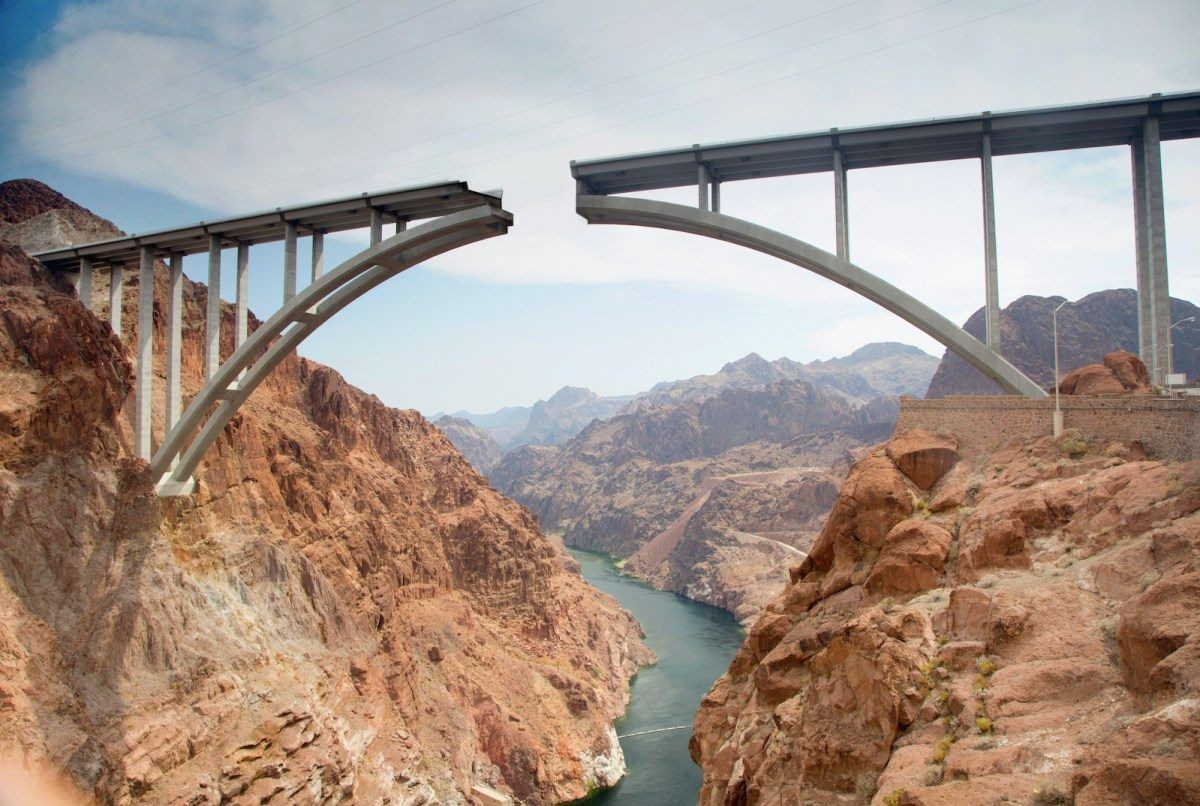
A startup called Allium Engineering is pioneering a new kind of rebar by bonding a super-thin layer of stainless steel—about 0.2 mm thick—onto conventional carbon steel bars, with the goal of making bridges that last 100 years instead of 30. The idea is to get most of the corrosion resistance of full stainless steel but at a cost comparable to (or even lower than) epoxy-coated rebar. The company has already used the stainless-clad bars in bridge deck work on U.S. Highway 101 (California) and plans to use it on Interstate 91 (Massachusetts). Allium claims its process eliminates the need for extra concrete layers meant to protect the rebar, reducing cement use by up to 20%, and opens the door to greener cement mixes because corrosion risk is much lower. Alongside that, MIT News reports Allium’s innovation could triple typical bridge lifespans, and the company is integrating its technology into standard steel mill workflows for scalable production. MIT News says over 100,000 pounds of the new rebar have already been delivered for actual projects.
Key Takeaways
– Allium’s stainless-clad rebar aims to offer corrosion resistance close to full stainless steel, but at a cost on par with or better than conventional epoxy-coated rebar.
– The approach may reduce extra “sacrificial” concrete layers around rebar (used to slow corrosion), cutting cement use and enabling lower-alkalinity “greener” cements.
– The technology has already seen real deployments and is being built into regular steel mill processes, though broad adoption still depends on long-term validation and infrastructure acceptance.
In-Depth
Bridges in the U.S. often last only a few decades before corrosion undermines their structural integrity, in large part because standard carbon-steel rebar rusts when chlorides (from salt, deicing, or sea spray) penetrate concrete and reach the steel. Salt exposure cracks the concrete, undermines the bond, and leads to maintenance-heavy repairs or premature replacement. Traditional ways to mitigate this include wrapping rebar in epoxy, or in rare cases using full stainless steel rebar—but those approaches either fail over time (epoxy coatings crack or chip) or are cost-prohibitive for most spans (full stainless steel can be many times more expensive).
Enter Allium Engineering. Their idea is elegant in its modesty: instead of making a bar entirely of stainless, they take standard steel and bond a very thin (≈ 0.2 mm) shell of stainless steel around it before the bars are rolled to size. Because the stainless outer shell is continuous and fully covers the surface, it can resist corrosion in much the same way full stainless would—but uses far less stainless material. The combined bar retains the strength and ductility of conventional steel while gaining corrosion resistance. According to TechCrunch, they claim the cost will rival—or possibly undercut—epoxy-coated rebar once installation and handling costs are accounted for (since epoxy bars require careful storage, patching, and handling).
One of the biggest indirect benefits is that engineers currently add extra concrete cover (a nonstructural “buffer” layer) to slow down chloride ingress to the rebar. With stainless-clad rebar, that buffer becomes less necessary, which could cut cement usage by as much as 20%. That not only saves materials and weight but also helps on carbon emissions, since cement production is a heavy emitter. Additionally, the reduced corrosion risk could allow the use of lower-alkalinity or “greener” cement formulations, which typically wouldn’t be acceptable where conventional rebar is exposed.
From a deployment standpoint, Allium is already integrating its cladding step into existing steel mill operations instead of requiring totally new machinery. They claim scalability is viable: over 100,000 pounds of stainless-clad rebar have already been delivered to bridge and marine projects (e.g. in California and Florida). MIT News notes that this could triple a typical bridge’s lifespan (from ~30 years to ~100 years). The model is to make the stainless-clad rebar a drop-in replacement so that bridge designers, DOTs, and contractors don’t have to redesign structures or installation methods.
Of course, real-world durability over multi-decade timescales remains the test. Bridge authorities and infrastructure agencies will want long-term performance data, clear standards and codes, and proof that bonding and field conditions (cut ends, bends, welds, cracking) won’t compromise the stainless shell. Also, adoption inertia and procurement practices in public works may pose challenges. But if the technology scales and performance holds up, it could be a material shift in how we build long-lived infrastructure rather than planning for recurring replacement cycles.