

Close Menu

    Subscribe to Updates

    Get the latest tech news from Tallwire.

      What's Hot

      George Lucas Declares AI Inevitable, Reigniting Hollywood’s Battle Over the Future of Creativity

      July 19, 2026

      Parents Fear AI Is Replacing Real Learning for America’s Children

      July 19, 2026

      The AI Pink Slip: Do Workers Have a Case Against Automation?

      July 19, 2026
      Facebook X (Twitter) Instagram
      • Tech
      • AI
      • Get In Touch
      Facebook X (Twitter) LinkedIn
      TallwireTallwire
      • Tech

        Parents Fear AI Is Replacing Real Learning for America’s Children

        July 19, 2026

        Microsoft’s Xbox Reckoning Raises Questions About a Possible Spin-Off

        July 18, 2026

        Palisades Nuclear Restart Faces Legal Victory but Operational Delays

        July 18, 2026

        Doll Head Loophole Exposes Limits of Tesla’s Driver-Monitoring Technology

        July 18, 2026

        Safely Recycling an Old PC Starts With Protecting Your Data

        July 17, 2026
      • AI

        Parents Fear AI Is Replacing Real Learning for America’s Children

        July 19, 2026

        George Lucas Declares AI Inevitable, Reigniting Hollywood’s Battle Over the Future of Creativity

        July 19, 2026

        America’s AI Boom Sparks Urgent Push to Modernize Aging Natural Gas Pipeline Network

        July 19, 2026

        Beige Book Signals Broad Economic Growth as Businesses Double Down on AI Investment

        July 19, 2026

        MIT Researchers Develop Bird-Inspired Robot That Flies, Dives, and Returns to the Air

        July 19, 2026
      • Security

        Europe Revives Controversial Chat Control Despite Majority Opposition

        July 18, 2026

        Safely Recycling an Old PC Starts With Protecting Your Data

        July 17, 2026

        U.N. Chief Renews Push for Global Ban on Autonomous AI Weapons

        July 17, 2026

        China Uses Open-Source AI Push to Expand Global Influence

        July 17, 2026

        New AI Safety Proposal Calls for U.S.-China Pause on Frontier AI Development

        July 16, 2026
      • Health

        Parents Fear AI Is Replacing Real Learning for America’s Children

        July 19, 2026

        AI Chatbots Face Growing Scrutiny as Mental Health Risks Draw Medical Alarm

        July 16, 2026

        AI Chatbots Increasingly Clash With Eating Disorder Treatment

        July 15, 2026

        Personalized UVB Device Promises Vitamin D Benefits While Raising Questions About Medicalizing Everyday Health

        July 15, 2026

        Humanoid Robots Complete First Live Surgical Procedures in Medical Milestone

        July 14, 2026
      • Science

        MIT Researchers Develop Bird-Inspired Robot That Flies, Dives, and Returns to the Air

        July 19, 2026

        Palisades Nuclear Restart Faces Legal Victory but Operational Delays

        July 18, 2026

        Trump Takes Measured Approach to Winning the Quantum Race

        July 17, 2026

        AI Chatbots Face Growing Scrutiny as Mental Health Risks Draw Medical Alarm

        July 16, 2026

        U.S. Biotechs Turn to Secrecy as China Accelerates Drug Development Race

        July 16, 2026
      • Tech

        AI Protesters March on Silicon Valley Giants Demanding Development Freeze

        July 14, 2026

        Palo Alto Networks CEO Warns AI Costs Must Plunge Before Enterprise Adoption Can Accelerate

        July 14, 2026

        DeepMind Unionization Effort Encounters Early Resistance as Labor Talks Stall

        July 11, 2026

        Always-On Workplace Culture Pushes Employees Toward the Breaking Point

        July 10, 2026

        High-Income Families Embrace AI-Driven Schools as Alternative Education Expands

        July 9, 2026
      TallwireTallwire
      Home»Opinion»The AI Pink Slip: Do Workers Have a Case Against Automation?
      Opinion

      The AI Pink Slip: Do Workers Have a Case Against Automation?

      4 Mins Read
      Facebook Twitter Pinterest LinkedIn Tumblr Email
      Share
      Facebook Twitter LinkedIn Pinterest Email

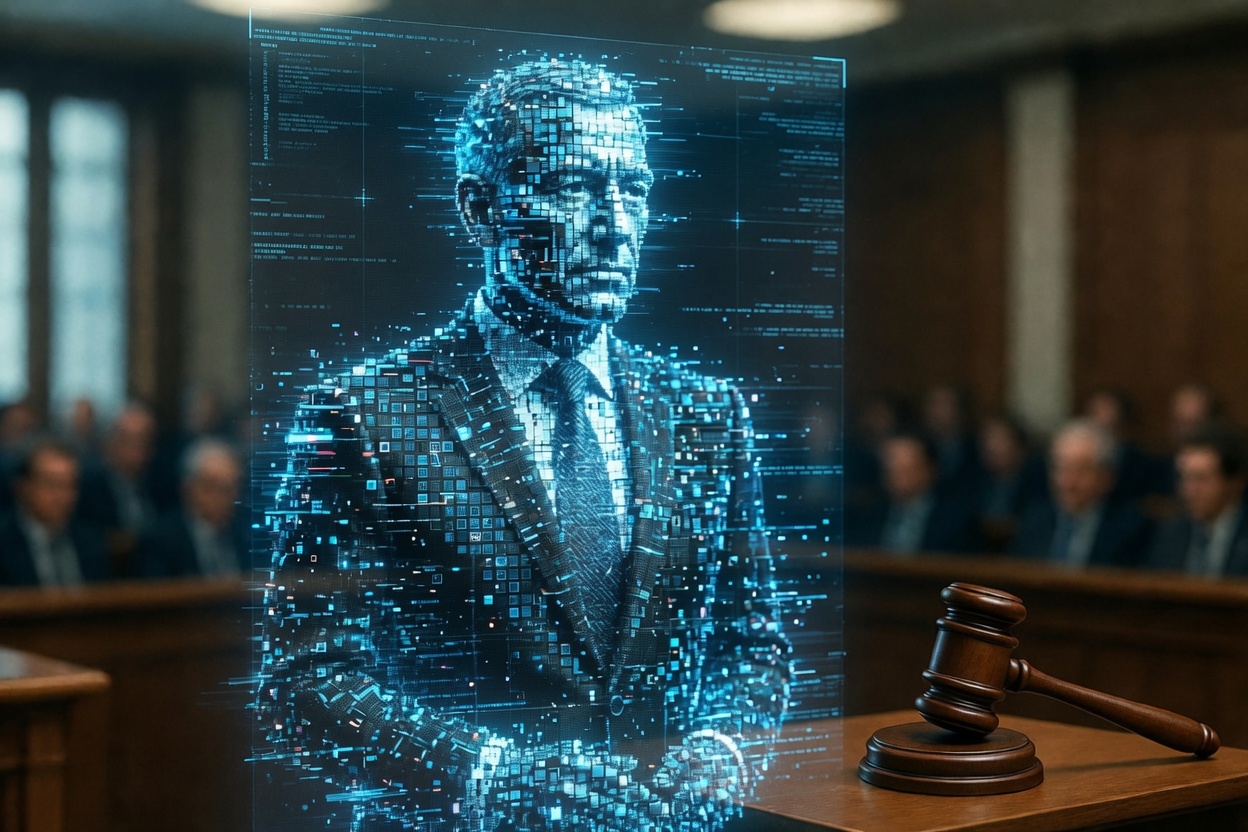
      As artificial intelligence rapidly reshapes the American workplace, a difficult and increasingly unavoidable question is emerging: should employees who are replaced by AI systems have the right to sue their employers for wrongful termination? It’s a question that cuts to the core of free markets, property rights, and the social contract between labor and capital—and one that demands a sober, principled response rather than a purely emotional one.

      At first glance, the argument for allowing such lawsuits may seem compelling. After all, a worker who has given years—or even decades—of service to a company can suddenly find himself replaced not by a more qualified human being, but by a machine. To many, that feels less like competition and more like displacement by an inanimate force, devoid of fairness or loyalty. There is a natural instinct to ask whether the law should step in to provide some remedy.

      But that instinct, while understandable, runs headlong into a foundational principle of the American economic system: employment in the private sector is generally “at will.” That means employers retain broad discretion to hire, fire, and restructure their workforce as they see fit, so long as they do not violate specific statutory protections such as discrimination laws or contractual obligations. The introduction of AI does not fundamentally alter that principle; it merely represents the latest in a long line of technological advancements that have changed the nature of work.

      History offers a useful perspective. The Industrial Revolution displaced artisans with machines. The advent of the automobile eliminated countless jobs tied to horse-drawn transportation. The computer age rendered entire categories of clerical work obsolete. In each case, the economy ultimately adapted, creating new industries and opportunities even as it destroyed old ones. Crucially, the law did not—and arguably could not—require employers to preserve outdated roles simply to avoid displacing workers.

      Allowing employees to sue for wrongful termination solely because they were replaced by AI would mark a significant departure from this tradition. It would effectively impose a legal penalty on innovation, discouraging businesses from adopting technologies that increase efficiency and productivity. In a global economy where American firms compete with rivals who are under no such constraints, that kind of policy could have serious consequences for competitiveness and economic growth.

      Moreover, drawing a clear legal line would be extraordinarily difficult. If replacing a worker with AI is grounds for a lawsuit, what about replacing a worker with a more efficient software tool? Or outsourcing a function to another company that uses automation? The distinction between “AI replacement” and other forms of cost-saving or productivity-enhancing decisions is not nearly as clean as it might appear. Attempting to regulate it through litigation would likely result in a flood of ambiguous, inconsistent cases that burden courts and create uncertainty for employers.

      That said, rejecting wrongful termination claims in this context does not mean ignoring the human cost of technological change. There is a legitimate concern that AI could accelerate job displacement at a pace faster than workers can reasonably adapt. Entire sectors—from customer service to logistics to certain white-collar professions—are already feeling the pressure. Pretending that the market alone will seamlessly absorb these disruptions is overly optimistic.

      The more constructive approach lies not in expanding liability for employers, but in strengthening the mechanisms that help workers transition. This includes policies that encourage retraining, vocational education, and workforce mobility. It also means rethinking how benefits such as healthcare and retirement savings are structured, so they are less tied to a single employer and more portable across careers. Private-sector initiatives, public-private partnerships, and targeted government programs all have a role to play here.

      Employers themselves are not without responsibility. Companies that invest in their workforce—by offering reskilling opportunities or phased transitions rather than abrupt layoffs—are more likely to maintain morale, protect their reputations, and retain valuable institutional knowledge. While the law may not compel such behavior, market forces and cultural expectations increasingly reward it.

      Ultimately, the question of whether employees replaced by AI should be able to sue for wrongful termination forces us to choose between two competing instincts: the desire to protect individuals from sudden economic harm, and the need to preserve the flexibility and dynamism that drive economic progress. However sympathetic the former may be, undermining the latter would be a costly mistake.

      The American economy has always thrived on its ability to adapt, innovate, and evolve. Artificial intelligence is simply the next chapter in that story. Rather than attempting to litigate our way backward, the better course is to prepare workers for what comes next—equipping them not just to survive in an AI-driven world, but to succeed in it.

      Intel Layoff Software
      Share. Facebook Twitter Pinterest LinkedIn Tumblr Email
      Previous ArticleBeige Book Signals Broad Economic Growth as Businesses Double Down on AI Investment
      Next Article Parents Fear AI Is Replacing Real Learning for America’s Children

      Related Posts

      Parents Fear AI Is Replacing Real Learning for America’s Children

      July 19, 2026

      George Lucas Declares AI Inevitable, Reigniting Hollywood’s Battle Over the Future of Creativity

      July 19, 2026

      America’s AI Boom Sparks Urgent Push to Modernize Aging Natural Gas Pipeline Network

      July 19, 2026

      Beige Book Signals Broad Economic Growth as Businesses Double Down on AI Investment

      July 19, 2026
      Add A Comment
      Leave A Reply Cancel Reply

      Editors Picks

      Parents Fear AI Is Replacing Real Learning for America’s Children

      July 19, 2026

      Microsoft’s Xbox Reckoning Raises Questions About a Possible Spin-Off

      July 18, 2026

      Palisades Nuclear Restart Faces Legal Victory but Operational Delays

      July 18, 2026

      Doll Head Loophole Exposes Limits of Tesla’s Driver-Monitoring Technology

      July 18, 2026
      Popular Topics
      Space starlink SpaceX Satya Nadella Taiwan Tech Tesla Tim Cook UAE Tech Stocks trending spotlight Sundar Pichai Series B Software Samsung Series A Startup Viral Tesla Cybertruck Satellite
      Major Tech Companies
      • Apple News
      • Google News
      • Meta News
      • Microsoft News
      • Amazon News
      • Samsung News
      • Nvidia News
      • OpenAI News
      • Tesla News
      • AMD News
      • Anthropic News
      • Elbit News
      AI & Emerging Tech
      • AI Regulation News
      • AI Safety News
      • AI Adoption
      • Quantum Computing News
      • Robotics News
      Key People
      • Sam Altman News
      • Jensen Huang News
      • Elon Musk News
      • Mark Zuckerberg News
      • Sundar Pichai News
      • Tim Cook News
      • Satya Nadella News
      • Mustafa Suleyman News
      Global Tech & Policy
      • Israel Tech News
      • India Tech News
      • Taiwan Tech News
      • UAE Tech News
      Startups & Emerging Tech
      • Series A News
      • Series B News
      • Startup News
      Tallwire
      Facebook X (Twitter) LinkedIn Threads Instagram RSS
      • Tech
      • Entertainment
      • Business
      • Government
      • Academia
      • Transportation
      • Legal
      • Press Kit
      © 2026 Tallwire. Optimized by ARMOUR Digital Marketing Agency.

      Type above and press Enter to search. Press Esc to cancel.