

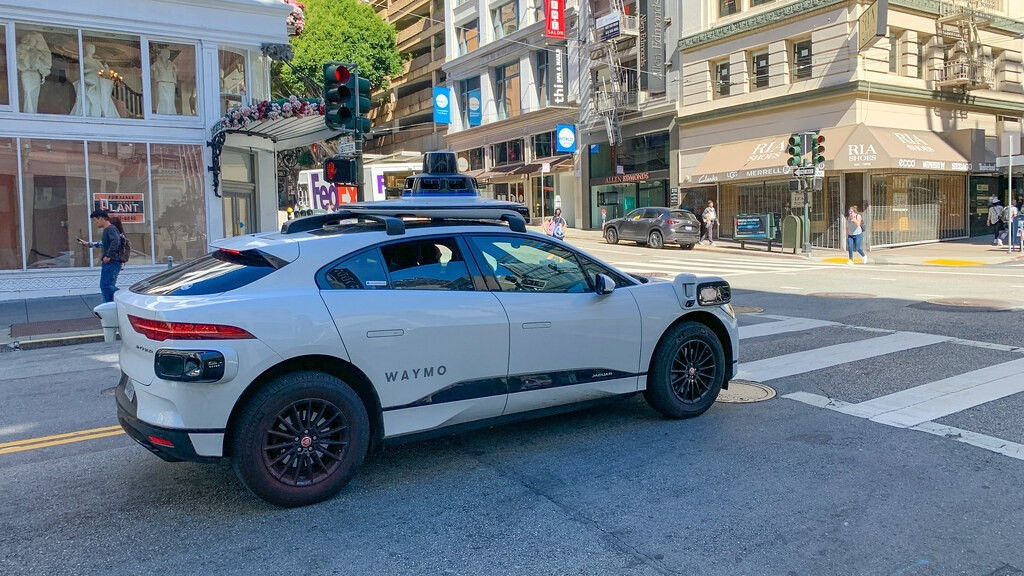
The Transportation Department is moving aggressively to establish a national framework for automated vehicles, arguing that outdated regulations should not prevent American companies from developing and commercially deploying driverless technology. The new strategy seeks to modernize federal safety standards, accelerate exemptions for vehicles designed without traditional human controls, establish objective performance standards, and reduce conflicting state-by-state requirements. Transportation Secretary Sean Duffy is framing the effort as both a public-safety initiative and a matter of American technological competitiveness, while regulators maintain that existing federal safety requirements remain enforceable during the transition. Recent developments involving purpose-built robotaxis demonstrate both sides of the policy: federal regulators have approved limited exemptions for some driverless vehicles while scrutinizing others whose manufacturers have proceeded without obtaining exemptions. The administration’s challenge will be balancing legitimate regulatory reform with sufficient oversight to ensure that faster deployment does not come at the expense of motorists, passengers, pedestrians, or public confidence.
Key Takeaways
- The administration wants a unified national automated-vehicle policy that removes regulations designed exclusively around human drivers while establishing objective federal safety standards for vehicles controlled entirely by automated driving systems.
- Federal regulators are expanding and streamlining exemptions that can permit purpose-built autonomous vehicles without steering wheels, pedals, mirrors, and other traditional equipment to enter limited commercial service while broader federal standards are rewritten.
- Deregulation does not eliminate federal enforcement: manufacturers remain responsible for complying with existing safety standards or obtaining appropriate exemptions, making the transition a test of whether Washington can encourage American innovation without weakening meaningful accountability.
In-Depth
The Transportation Department has laid out a national strategy intended to move automated vehicles from experimentation toward commercial use while preserving federal safety oversight. The plan treats autonomous transportation as both a safety opportunity and an economic competition, arguing that machines can eliminate human behaviors such as drunkenness, fatigue, and distraction that contribute to crashes.
The approach is deregulatory. Federal officials want to modernize safety rules written around human drivers, streamline exemptions for vehicles lacking steering wheels, pedals, mirrors, or other conventional equipment, and eventually replace company-by-company waivers with standards designed specifically for autonomous systems. The department is also pursuing competency standards and greater consistency across states, an important objective for companies that cannot efficiently operate nationwide under conflicting rules.
That does not mean autonomous developers are receiving a blank check. Federal regulators continue enforcing existing standards while new rules are developed. The investigation into Tesla‘s certification of its Cybercab illustrates that distinction: regulators support deployment, but manufacturers remain responsible for demonstrating compliance or obtaining exemptions where required. Zoox, by contrast, received a temporary exemption permitting limited commercial deployment of purpose-built robotaxis.
The larger policy question is whether Washington can remove obsolete regulatory barriers without allowing enthusiasm for innovation to outrun public safety. A national framework is preferable to bureaucratic paralysis and inconsistent state mandates, but durable public acceptance will depend on transparent safety data, enforceable standards, clear liability rules, and evidence that autonomous vehicles perform reliably alongside drivers. The administration is betting regulatory modernization can deliver innovation and accountability.
Sources
- https://www.transportation.gov/policy-initiatives/automated-vehicles/america-leads-dots-national-strategy-automated-vehicles
- https://www.nhtsa.gov/press-releases/cutting-red-tape-safely-fast-track-automated-vehicle
- https://www.reuters.com/business/autos-transportation/us-auto-safety-regulator-opens-probe-into-nearly-1000-tesla-cybercabs-2026-09-04/
- https://www.nhtsa.gov/press-releases/fmvss-updates-brake-pedal-requirements