

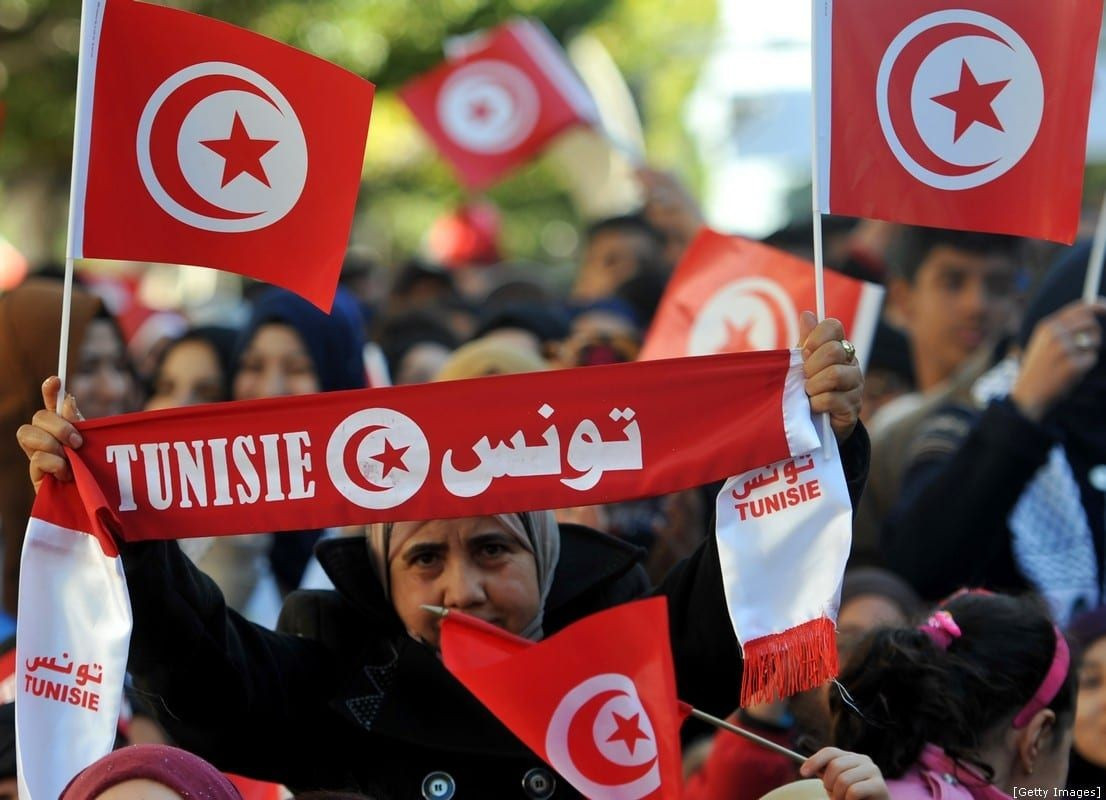
A Tunisian court has sentenced a day laborer named Saber Chouchane to death for Facebook posts deemed insulting to President Kais Saied and threatening to state security—a ruling that marks a sharp escalation in Tunisia’s crackdown on dissent. According to Reuters, this is unprecedented in the modern era, as no death sentences related to speech have been carried out in over three decades. The Associated Press adds that Chouchane was convicted under the 2022 “Decree 54,” which criminalizes spreading false information and insulting public officials; the verdict involves charges of attempting to overthrow the state, insults, and false news dissemination. Meanwhile, human rights reporting underscores that Tunisia’s government under Saied has increasingly relied on arbitrary detention and broad security charges to suppress critics, targeting lawyers, journalists, and social media users alike.
Key Takeaways
– The death sentence for speech-related Facebook posts represents a dramatic new precedent in Tunisia’s repression of free expression.
– Decree 54, adopted in 2022, is being used as a legal instrument to criminalize and penalize criticism of the regime.
– The ruling occurs against a backdrop of widening political repression, with arbitrary arrests and prosecutions increasingly common under Saied’s governance.
In-Depth
It’s hard to overstate the significance of what just happened in Tunisia: a man—poor, uneducated, voicing criticism via social media—has been sentenced to death. This isn’t some abstract case involving terrorism or violence; the charges rest largely on insulting the president and allegedly undermining state security through Facebook posts. Until now, Tunisian courts may have imposed harsh prison sentences, but this leap to capital punishment over speech is something different in kind, not just degree.
The legal foundation for this verdict lies in Decree 54, rolled out in 2022 by President Saied after he dissolved parliament and moved to rule by decree. That measure grants broad power to criminalize expressions deemed “false news,” insults toward state officials, or communications seen as endangering public order. Critics have long warned that the law’s vague wording gives the regime nearly unlimited discretion to silence detractors. In Chouchane’s case, the court charged him with distributing false information, insulting state actors, and attempting to destabilize the state. Even the social media posts he shared may have been copied or lightly engaged with, not virulent propaganda.
Human rights observers caution that this judgment is emblematic of a broader descent into illiberal rule. Since 2021, Tunisia has seen a cascade of repressive moves: the dissolution of the judiciary’s independence, mass arrests of opposition figures, and a spike in politically motivated detentions. A Human Rights Watch report from April 2025 describes how the state now routinely uses arbitrary detention to silence critics—lawyers, journalists, activists—often under the guise of national security or conspiracy. Under that system, bare allegations suffice to imprison someone, with scant transparency and minimal protections.
One more twist: while death sentences remain on the books in Tunisia, none have been executed since 1991. So this case may serve more as a symbolic threat than a concrete execution. Even if it’s appealed or reversed, the chilling effect is immediate. Opposition voices will see this—and the regime’s willingness to weaponize the judiciary—as a warning: speak softly, or face existential consequences. Indeed, this ruling appears to be less about punishing one man than about sending a message to every citizen with access to a smartphone or keyboard.
We’re left in a moment of moral and political tension. Tunisia was once praised as a post-Arab Spring success story—but that narrative is cracking. What we see now is a state reasserting control over language itself, punishing dissent with the gravest of penalties. It’s one thing to shrink civic space incrementally; it’s another to legitimize capital punishment for online criticism. And that shift may herald darker days ahead for freedom of speech—not just in Tunisia, but for anyone watching how regimes around the world respond to dissent.