

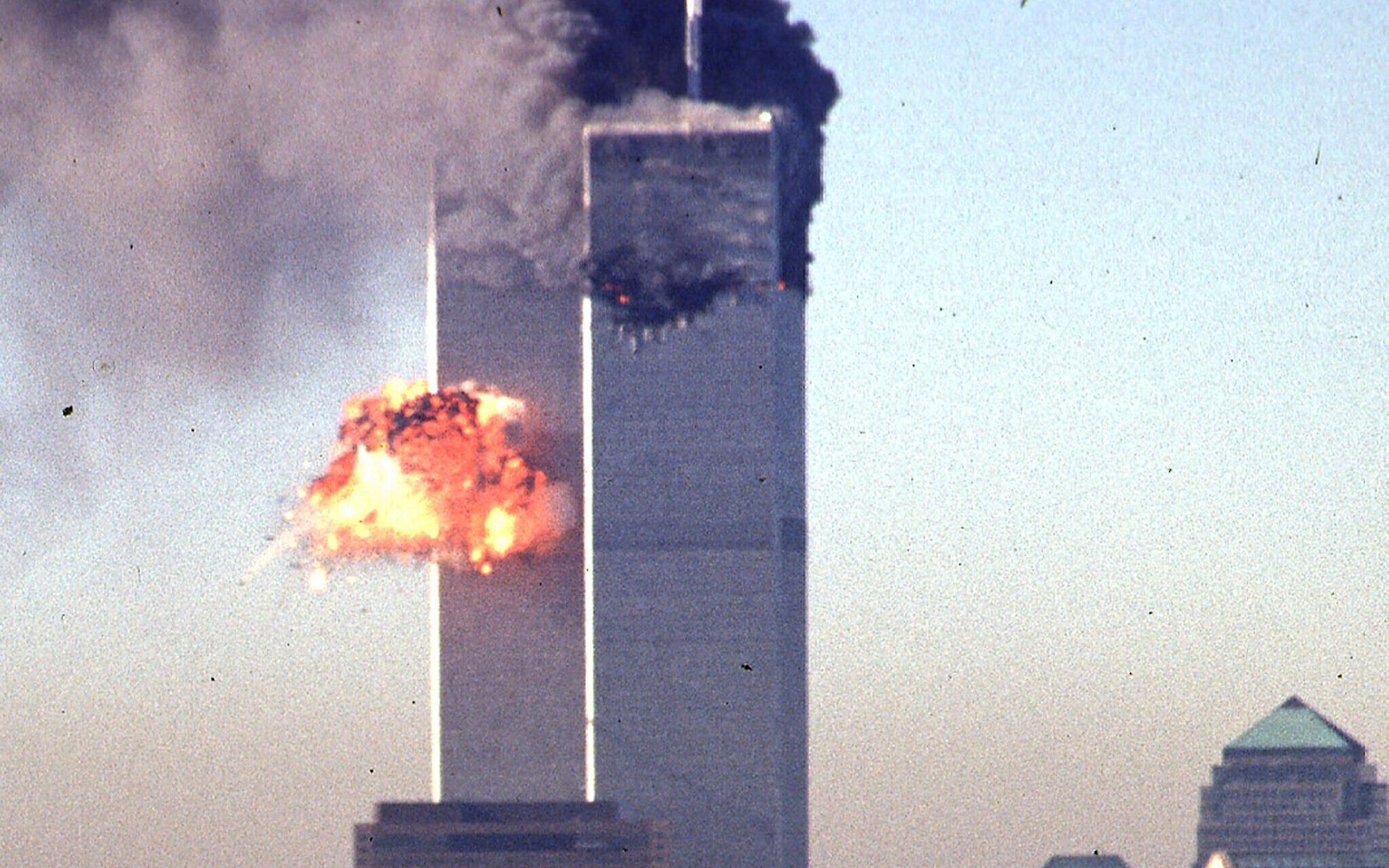
Twenty-five years ago, Americans watched the unimaginable unfold in real time.
On September 11, 2001, terrorists turned commercial airliners into weapons, murdered nearly 3,000 people, brought down the World Trade Center towers, struck the Pentagon, and would have attacked another symbol of American government had the passengers and crew of United Flight 93 not fought back.
The weapons were brutally simple. Box cutters. Airplanes. Fanaticism. Surprise.
A quarter-century later, the lesson of September 11 should not merely be that America must remember those who died. It should be that our enemies study our vulnerabilities, exploit our assumptions, and look for ways to turn the technologies and freedoms of an open society against us.
Today, artificial intelligence presents them with possibilities the architects of 9/11 could scarcely have imagined.
That does not mean the next September 11 will be planned by a machine. Nor does it justify the breathless claim that AI inevitably makes catastrophic terrorism imminent. Technology is a tool, and terrorists still require motive, organization, resources, access and opportunity.
But AI can dramatically amplify human capability.
The terrorist of 2001 needed operatives capable of blending into American society, navigating foreign countries, communicating secretly, researching targets and coordinating complicated operations. The terrorist organization of tomorrow may increasingly outsource pieces of that intellectual workload to machines.
Artificial intelligence can translate languages instantly. It can summarize enormous quantities of publicly available information. It can generate convincing photographs, voices and video. It can automate propaganda, tailor recruiting messages to particular audiences and allow a relatively small organization to communicate persuasively with thousands or millions of people.
Perhaps most troubling is what happens when those capabilities intersect with cyberwarfare, drones, biotechnology and autonomous systems.
America spent decades constructing physical defenses against the methods used on September 11. Cockpit doors were hardened. Airport screening changed. Intelligence sharing improved. Terrorist financing received greater scrutiny. Government agencies learned—sometimes painfully—to connect information that previously remained trapped inside bureaucratic silos.
Yet history suggests that adversaries rarely attack where defenses are strongest. They search for the seam nobody is watching.
Artificial intelligence creates thousands of new seams.
Imagine a terrorist organization using AI-generated identities to build networks of seemingly authentic people online. Imagine deepfake audio purporting to capture a president ordering military action during an international crisis. Imagine fabricated video of a police shooting deliberately released during civil unrest. Imagine automated cyberattacks probing hospitals, power systems, transportation networks or municipal infrastructure.
The objective might not even be mass casualties in the traditional sense.
The objective could be mass confusion.
That possibility deserves greater attention because terrorism has always been psychological warfare. The immediate victims of September 11 numbered in the thousands, but the intended audience numbered in the hundreds of millions. The terrorists wanted Americans frightened, governments destabilized and societies forced to react.
AI offers a potentially powerful instrument for manufacturing that fear.
The danger is compounded by another lesson from September 11: institutional complacency can be deadly. Before 9/11, information existed that, assembled differently, might have produced greater warning. But bureaucratic boundaries, competing priorities and assumptions about what terrorists were capable of doing prevented the government from seeing the entire picture in time.
We should not repeat that mistake by assuming tomorrow’s terrorist will resemble yesterday’s.
Washington should be asking uncomfortable questions now. How quickly could terrorist organizations adopt advanced AI systems? What safeguards exist around models capable of assisting sophisticated cyber operations? How vulnerable are critical infrastructure networks to AI-enabled attacks? Can intelligence agencies distinguish authentic communications from synthetic ones during a rapidly developing national emergency? And can the American public?
The answer cannot simply be more government regulation.
A free society should be especially cautious about granting Washington sweeping authority over artificial intelligence, communications or political speech under the banner of national security. September 11 taught us the necessity of vigilance, but the years afterward also taught us how easily emergency powers can become permanent institutions.
The challenge is to defend both security and liberty.
That means targeted intelligence, stronger critical-infrastructure defenses, serious cooperation between technology companies and national-security agencies, better authentication systems, improved digital literacy, and relentless attention to foreign terrorist organizations and their technological capabilities. It also means maintaining human judgment rather than surrendering consequential decisions to algorithms.
Most importantly, it requires remembering what September 11 actually demonstrated.
America was not attacked because it lacked technology. It was attacked because determined enemies found vulnerabilities that Americans had not sufficiently imagined.
Twenty-five years later, the technology has changed beyond recognition. Human nature has not.
As we remember the firefighters climbing the towers, the police officers running toward danger, the workers trapped above the flames, the families waiting for phone calls that never came, and the passengers of Flight 93 who chose resistance over submission, remembrance should carry an obligation.
Never assume that because yesterday’s attack cannot happen again, tomorrow’s cannot happen at all.
The next battlefield may not begin with a hijacked airplane.
It may begin with an algorithm.