

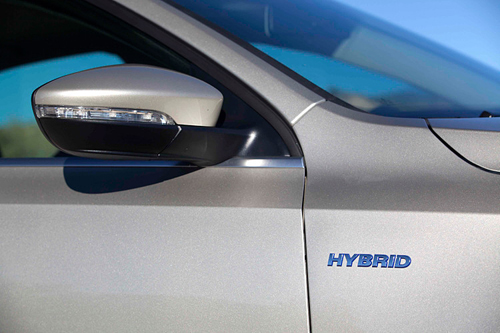
Hybrid vehicles are gaining notable traction in the United States as a practical intermediary between traditional gasoline cars and fully electric vehicles (EVs), with automakers and buyers alike shifting focus amid slowing EV sales growth and fading incentives. A January 5, 2026 article highlights how hybrids are bridging this gap, driven by expiring federal EV tax credits, range anxiety and limited charging infrastructure, prompting manufacturers like Ford and Honda to pivot toward hybrid offerings as a pragmatic balance of efficiency and familiarity. In parallel, Toyota is investing heavily in expanding hybrid production capacity across the U.S., signaling confidence in hybrid demand despite overall EV market headwinds. This trend is underscored by broader auto sales data showing a 2 percent rise in total U.S. vehicle sales in 2025, with hybrids and traditional gas models leading demand while EVs account for a smaller share following the phase-out of federal credits. Source coverage also includes projections of slower EV expansion and automaker strategic recalibration in response to market realities.
Sources:
https://www.webpronews.com/hybrid-vehicles-surge-in-us-as-practical-bridge-to-evs/
https://www.reuters.com/business/autos-transportation/us-auto-sales-defy-regulatory-uncertainty-rise-2-2025-2026-01-05/
https://www.webpronews.com/toyotas-hybrid-surge-betting-billions-on-americas-electrified-future/
Key Takeaways
• Hybrid vehicles are becoming a key transition product in the U.S., filling demand gaps left by slower EV adoption and fading federal incentives.
• Major automakers, notably Toyota, are investing heavily in U.S. hybrid production even as some competitors scale back EV ambitions.
• Broader U.S. auto sales data show hybrids and gas-powered models driving growth, while EV market share has softened amid policy changes and infrastructure limitations.
In-Depth
The U.S. automotive market is entering a transitional phase in which hybrid vehicles are playing an increasingly significant role as the bridge between internal combustion engines and pure electrification. With federal EV tax credits sunset and consumer concerns over range and charging infrastructure surfacing, hybrid vehicles — which blend gasoline engines with electric motors — offer an immediate, practical alternative that balances efficiency with familiarity. According to recent industry analysis, this dynamic has accelerated hybrid sales, with automakers such as Ford and Honda realigning their product strategies to emphasize hybrids in model lineups rather than committing exclusively to battery-only EVs.
Toyota’s substantial investments in hybrid manufacturing capacity across multiple U.S. facilities underscore this trend, reflecting confidence that hybrid demand will continue even as EV growth softens. Toyota’s hybrid models have consistently captured a higher share of the market compared with broader EV figures, and the company’s multi-billion dollar investment strategy suggests long-term commitment beyond short-term tax credit effects.
Meanwhile, broader industry data indicate that overall U.S. auto sales rose modestly in 2025, with hybrids contributing significantly to that growth while fully electric models saw weaker retail performance after incentive changes. This interplay of consumer preference, regulatory environment, and manufacturer strategy demonstrates that hybrids are not merely a stopgap but a substantial component of the near-term automotive landscape in the United States.