

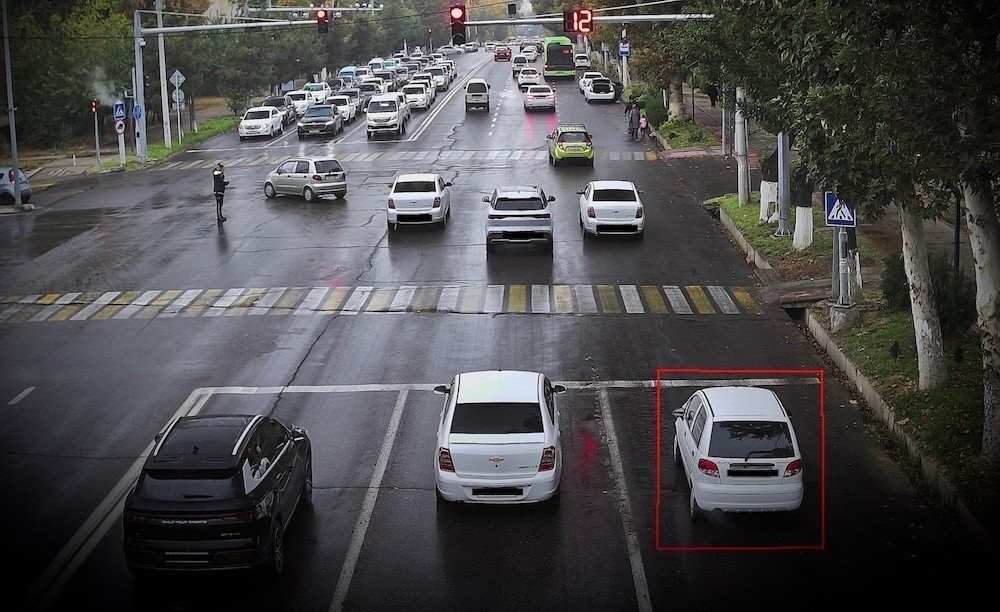
A sprawling national license-plate surveillance network in Uzbekistan — comprised of roughly 100 high-resolution roadside cameras scanning vehicle plates and occupants and tracking movements, violations, and behavior across the country — was discovered exposed on the open internet without password protection, allowing anyone to access sensitive data and footage; the system’s database was reportedly established in late 2024 with monitoring beginning in mid-2025, and the exposure underscores significant privacy and cybersecurity vulnerabilities in state-run mass-surveillance infrastructure.
Sources: Mezha.net, TechCrunch
Key Takeaways
• Uzbekistan’s national license-plate recognition system was found publicly accessible without basic security protections, exposing millions of records and high-resolution camera feeds.
• The surveillance network operates continuously across major cities and rural routes, scanning traffic violations and individual movement patterns, raising privacy concerns.
• The incident highlights broader risks associated with mass surveillance systems when cybersecurity measures lag behind deployment, with implications for both domestic monitoring and international norms.
In-Depth
The recent revelation that Uzbekistan’s government license-plate reading network was left exposed on the open web provides a stark example of how even sophisticated national surveillance systems can suffer from basic operational security failures. According to reporting by TechCrunch, a network of approximately one hundred roadside nodes equipped with high-definition cameras — capable of reading plates, capturing stills and video, and logging traffic violations — has been operational since mid-2025, with its underlying database initially created in late 2024. This network, intended to assist law enforcement in identifying red-light runners, seatbelt violations, and other infractions, was found without password protection, meaning that anyone with a web connection could access the interface and data. This was confirmed by local media coverage from Kursiv, which emphasized the security lapse and the ease with which the system could be accessed, and by independent reporting aggregated by Mezha, which detailed the volume and sensitivity of the imagery and logs.
From a conservative perspective, the incident underscores a fundamental tension inherent in modern public safety initiatives: the advancement of technology must be matched by equal emphasis on robust cybersecurity and respect for individual privacy. Surveillance systems like automatic license plate recognition (ALPR) do have legitimate applications in law enforcement and road safety, and in nations confronting real public-order challenges, these tools can be part of an effective strategy to enforce laws and protect communities. However, the exposure of such a system to the public internet without basic access controls reflects a failure of management and oversight that should concern not only civil liberties advocates but also security professionals and policymakers.
The Uzbek case demonstrates that without stringent protections, extensive data collection infrastructure — whether in a republic of 35 million or in U.S. municipalities contemplating expanded plate scanning — risks not only undermining public trust but creating exploitable vulnerabilities. Data on vehicle movements and driver identities can be misused, whether by foreign actors, criminal enterprises, or simply by individuals with bad intent. In the broader global context, where governments are increasingly leveraging surveillance technologies for both public safety and regulatory enforcement, the Uzbekistan breach is a cautionary moment: invest as much in safeguarding the data as in collecting it, and ensure transparent governance frameworks that protect citizens’ rights while upholding security.