

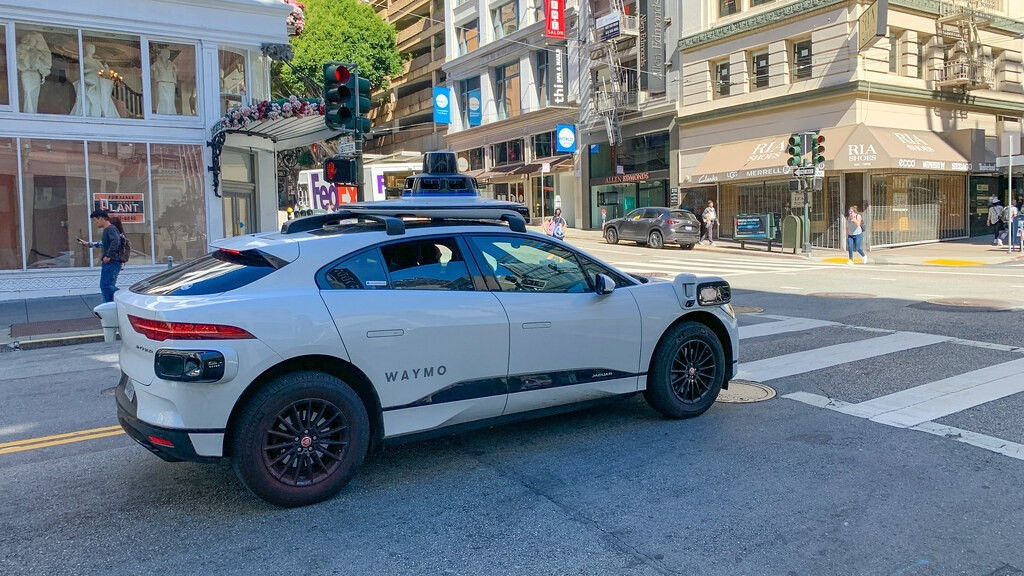
New York City regulators have extended Waymo’s permit to test up to eight autonomous Jaguar I-Pace robotaxis in Manhattan and Downtown Brooklyn through the end of 2025, maintaining the condition that each vehicle have a human safety operator behind the wheel. The permit, first granted earlier this year and subsequently extended, allows Waymo to continue collecting data on autonomous navigation in one of the nation’s most challenging driving environments, though the company still must secure separate licensing to carry passengers. Waymo’s ambitions in NYC reflect its broader push into dense urban markets where traffic, pedestrians, and regulation make deployment more complex.
Sources: AP News, TechCrunch
Key Takeaways
– The permit extension means Waymo can continue testing robotaxis in New York City through all of 2025, maintaining operational limits such as a safety operator in the driver’s seat.
– While testing is authorized, Waymo still cannot pick up paying passengers in NYC without securing separate licensing from the city’s Taxi & Limousine Commission.
– The extension signals a cautious but deliberate move toward deploying autonomous mobility in dense urban settings, as Waymo balances innovation with regulatory and safety constraints.
In-Depth
Waymo has long been a front-runner in the autonomous vehicle space, with operating services in cities like San Francisco, Phoenix, Austin, and Los Angeles. Now, New York City — a notoriously complex and chaotic urban environment — has become its next testbed. Earlier in 2025, Waymo was granted its first permit to begin testing robotaxis in Manhattan and Downtown Brooklyn, allowing up to eight vehicles to operate with human safety drivers. The city’s Department of Transportation characterized the rules for these tests as among the nation’s strictest. As of October 2025, that permit has formally been extended through the end of the year.
The extension doesn’t change the fundamental conditions: Waymo must still deploy human safety operators in each vehicle and abide by the limitation of eight test units. While the tests can continue, they remain purely developmental — passenger service in NYC is still off the table, pending approval from the city’s Taxi & Limousine Commission (TLC). The company declined to comment publicly about whether it’s already in conversation with the TLC.
This unfolding scenario reflects the push-and-pull between innovation and regulation. On one hand, Waymo sees NYC as a proving ground: if autonomous systems can navigate Manhattan’s dense traffic, delivery vehicles, cyclists, pedestrians, and erratic drivers, that success could accelerate acceptance elsewhere. On the other hand, city and state authorities must weigh safety, urban equity, and public confidence. Local taxi and livery drivers have also expressed concern, with protests hinting at the political pressure surrounding autonomous displacement of traditional driver jobs.
Moreover, while Waymo has cleared the local permit hurdle, state law still constrains fully driverless operation. Under New York law, autonomous vehicles must operate with a trained operator present. To move toward a driverless future in NYC, Waymo will need legislative changes or targeted exemptions. Their expansion in other cities—plus their willingness to continue testing under human-supervised conditions in NYC—underscores a broader strategy: prove the technology’s safety, build public trust, and gradually push regulatory boundaries.
In short: New York’s extension gives Waymo breathing room to experiment longer, refine its systems under extreme conditions, and position itself for eventual commercial deployment. But it is still a long road to full robotaxi service in the city.