

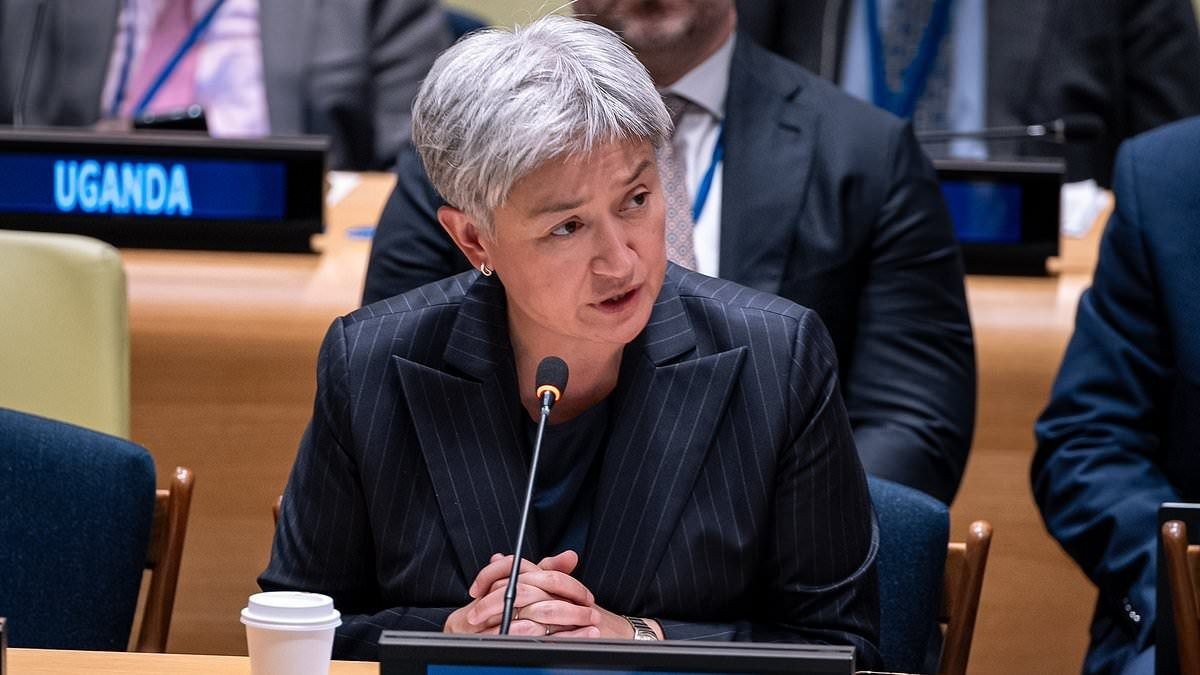
Australia’s Foreign Minister Penny Wong addressed the U.N. Security Council, advocating that although artificial intelligence holds great promise in domains like health, climate, and education, its unchecked deployment in warfare—or for spreading disinformation—poses existential risks. She warned that AI-driven systems wielding nuclear or unmanned weapons could lead to sudden escalation and catastrophe, arguing life-and-death decisions must always remain under human control. Simultaneously, she cautioned that AI-generated content is eroding truth, as “false voices, fabricated images, manufactured narratives” increasingly masquerade as reality, thereby threatening societal cohesion. Her remarks align with global concern at U.N. forums about the dual potential and hazards of AI in geopolitical and information spaces.
Sources: Epoch Times, AP News
Key Takeaways
– The crux of Wong’s warning is that AI in military systems—especially autonomous weapons or AI-aided nuclear control—can bypass human judgment, risking sudden escalation beyond oversight.
– AI’s role in disinformation is increasingly systemic: algorithms can amplify falsehood so effectively that distinguishing fact from fiction becomes deeply unstable.
– Global voices at the U.N. are now converging on the need for enforceable international norms around AI governance, especially in warfare and information operations.
In-Depth
When Penny Wong spoke to the U.N. Security Council, she was walking a complex tightrope between optimism about AI’s capacity for societal good and apprehension about its latent dangers. Wong acknowledged that AI has the potential to transform sectors like education, climate science, and health. But the deeper urgency in her message focused on domains where failure is catastrophic: war and truth.
She argued that granting machines authority over nuclear weapon systems or unmanned war machines removes vital layers of human judgment and moral responsibility. Unlike human commanders, AI has no conscience, no ability—or obligation—to account for nuance, context, or unpredictable human variables. If AI-driven systems are allowed to decide when to strike, when to escalate, or when to detonate, we risk setting off chain reactions we cannot later reverse.
On the disinformation front, Wong painted a bleak picture: the collapse of truth. AI now allows the creation and amplification of voices, images, and narratives that are engineered to deceive. The line between reality and fiction fractures when algorithms can magnify falsehoods faster than fact-checkers can respond. Societal trust, democratic norms, public cohesion—all become vulnerable.
Wong’s remarks come amid broader U.N. debates on AI oversight. U.N. Secretary-General António Guterres echoed concern about manipulated audio and video fueling polarization and crises. Elsewhere, global leaders have emphasized the need for “red lines” in AI usage, particularly in military and information domains. The global community is now facing a race: can institutions set enforceable guardrails ahead of the technology’s runaway evolution?
The challenge is profound. Unlike traditional weapons, AI tools evolve, adapt, and propagate across borders without constraint. In warfare, autonomous systems can lower the barrier to conflict, making it easier to deploy force without immediate human cost—and thereby raising the risk of unchecked escalation. In the informational realm, malicious AI swarms now threaten democratic systems by manufacturing consensus, suppressing dissent, or undermining belief in shared reality.
Wong’s message is a call to action. She insists decisions of life and death must remain human, and that AI must be governed by robust, ethical frameworks. Whether the international system is agile enough to implement these safeguards before disaster strikes is the central question now facing our era.