

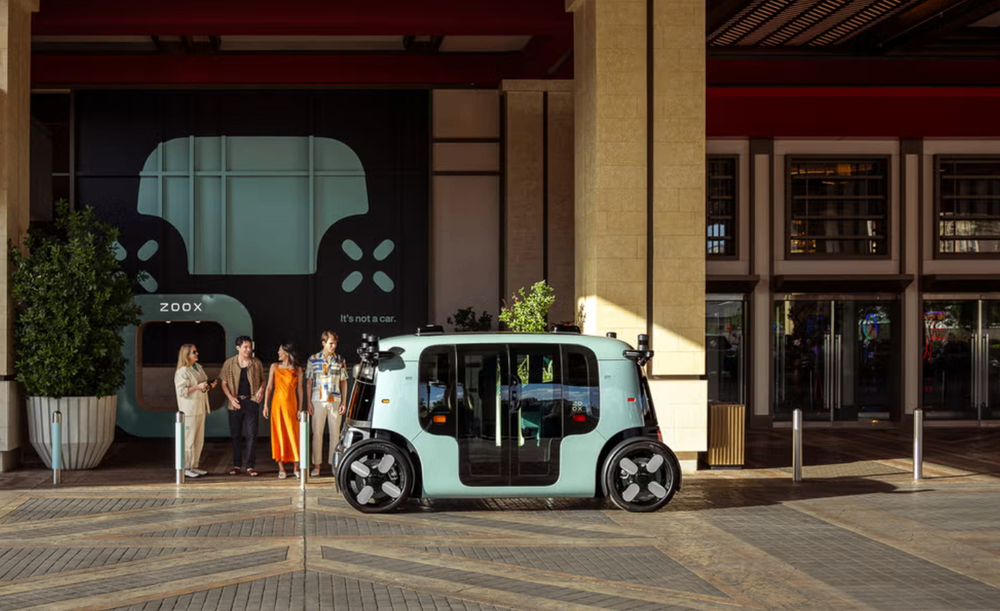
Amazon-owned Zoox has chosen Washington, D.C. as its next U.S. autonomous vehicle testbed, beginning with manual mapping in modified Toyota Highlanders before moving to driverless testing later this year. Meanwhile, the National Highway Traffic Safety Administration (NHTSA) has granted Zoox a landmark exemption that allows its purpose-built robotaxis—vehicles without steering wheels or pedals—to operate on public roads for demonstration purposes. At the same time, Zoox has petitioned regulators for a broader “555 exemption” to deploy up to 2,500 robotaxis commercially, signaling its ambition to scale beyond demos.
Sources: NHTSA.gov, TechCrunch
Key Takeaways
– Zoox is expanding testing to Washington, D.C., starting with sensor mapping and plans to transition to autonomous driving with safety operators onboard.
– NHTSA has issued its first-ever exemption for U.S.-built autonomous vehicles, allowing Zoox’s steering-wheel-free robotaxis to operate publicly in demonstration mode.
– Zoox is pressing forward by applying for a broader commercial-use exemption (555 exemption) to deploy as many as 2,500 robotaxis on U.S. roads.
In-Depth
Zoox is making a bold move by selecting the nation’s capital as a new proving ground. D.C. presents a dense, complex driving environment — with heavy traffic, pedestrians, buses, tight turns, and myriad signals — so it’s a logical choice for stress-testing autonomous systems. Initially, Zoox will map the streets using Toyota Highlanders retrofitted with its sensor suite and software, but driven manually. Later this year, the plan is to bring in its driverless hardware, albeit with human safety operators onboard to intervene if needed.
This isn’t just a technical expansion — it’s deeply regulatory. Zoox has already secured a milestone from the federal government: the NHTSA granted it a first-of-its-kind demonstration exemption that lets the company run its purpose-built robotaxis (lacking pedals, steering, mirrors) publicly without full compliance with some Federal Motor Vehicle Safety Standards. Under that exemption, Zoox must remove or cover statements claiming its vehicles fully comply with those safety standards. Simultaneously, the NHTSA is closing an investigation into whether Zoox’s self-certification of its vehicles had violated safety rules in the past.
But demonstration mode isn’t the endgame. Zoox is pushing for commercial deployment. It has applied for a so-called “555 exemption” — a pathway for up to 2,500 vehicles annually — which would let it scale from demos to full service. The exemption request covers standards relating to controls, mirrors, windshield wipers, defogging, and occupant protection systems. If granted, Zoox could legally operate robotaxis without any human manual controls in everyday service.
That said, risks remain. Demonstration exemptions don’t erase concerns about safety, public trust, and incidents. Zoox has had to issue software recalls in past months over perception and braking issues. A single high-profile crash or misjudgment in a dense environment like D.C. could reverberate. The regulatory landscape is evolving rapidly, and companies like Zoox are walking a fine line: pushing innovation while trying not to outrun legal and public acceptance.
If Zoox succeeds, it could shift the paradigm toward robotaxi fleets that look nothing like traditional cars. But the road from demonstration to fully autonomous service is still strewn with technical, legal, and societal hurdles.