

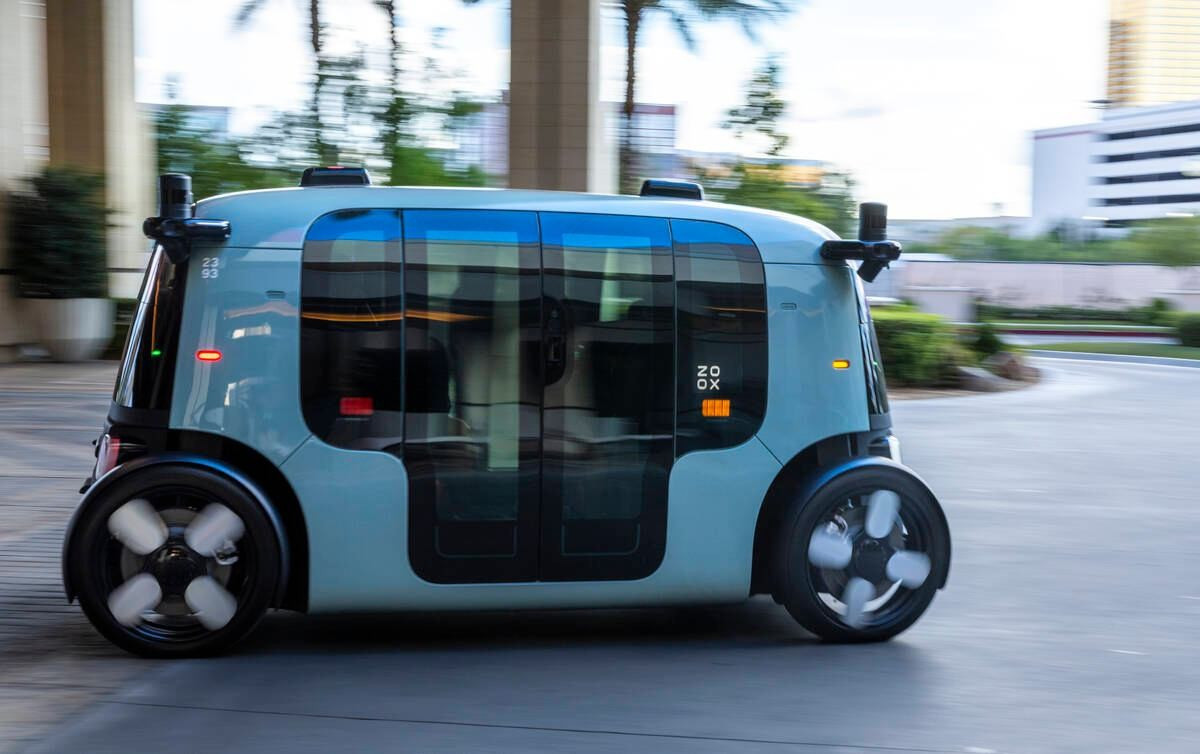
Zoox, the autonomous vehicle company owned by Amazon, has filed a petition with U.S. regulators requesting a “555 exemption” that would permit its custom driverless robotaxi vehicles—designed without steering wheels, pedals, or traditional controls—to operate commercially and carry paying passengers. The move follows a prior NHTSA exemption granted in August that allowed Zoox to conduct research and demonstration runs, and a recent public robotaxi trial in Las Vegas. If approved, the exemption would exempt the firm from eight standard Federal Motor Vehicle Safety Standards that assume human driver controls, potentially opening the door for full deployment in urban environments.
Sources: Detroit News, Reuters
Key Takeaways
– Zoox seeks a regulatory waiver to sidestep existing safety rules rooted in human-driven vehicles, aiming to commercialize its fully autonomous robotaxi design.
– The company already holds a demonstration-only exemption from NHTSA, but this new petition would allow fare-based operations and broader deployment.
– Approval would set a high-stakes precedent for purpose-built autonomous vehicle designs and could hasten commercialization of driverless urban transit.
In-Depth
Autonomous vehicle development has long been restrained by legacy safety regulations that presuppose human drivers. Zoox’s latest petition signals a bold shift—rather than adapting conventional cars, it wants regulators to accept a new vehicle model entirely. Its newly filed “555 exemption” application targets eight specific Federal Motor Vehicle Safety Standards, those that assume the presence of pedals, steering controls, mirrors, and other features irrelevant to a fully autonomous architecture.
Zoox isn’t entering this from zero. In August, it secured a research-mode exemption that allowed demonstration runs on public roads. That earlier approval signaled growing regulatory flexibility, but only for noncommercial testing. More recently, Zoox has already launched a free robotaxi service in Las Vegas to collect data, test operations, and refine user experience—though still without charging fares. The new petition aims to convert that testbed into a scalable, revenue-producing system.
Regulators will scrutinize this petition closely. They’ll demand robust evidence that Zoox’s autonomous stack—its sensor arrays, redundancy protocols, software validation, cybersecurity, and fallback logic—can match or exceed safety standards designed for human-driven cars. Without manual controls, emergency egress, failure modes, and corner-case reactions become especially critical. The public comment and review process will give stakeholders—from safety advocates to municipal planners—an opportunity to weigh in.
If accepted, Zoox’s approach could redefine what legal self-driving vehicles look like. Rather than retrofitting familiar platforms, purpose-built robotaxis could be optimized for cost, energy efficiency, interior layout, and simplified maintenance. The decision would also provide a precedent and roadmap for other autonomous vehicle firms pushing radical designs. However, failure is not trivial: a rejection could force Zoox to retrofit manual controls or slow its timeline, while safety mishaps remain a looming risk.
In sum, Zoox’s exemption petition isn’t just about one company—it’s a test of whether regulatory frameworks can evolve fast enough to safely accommodate the next generation of autonomous transit.