

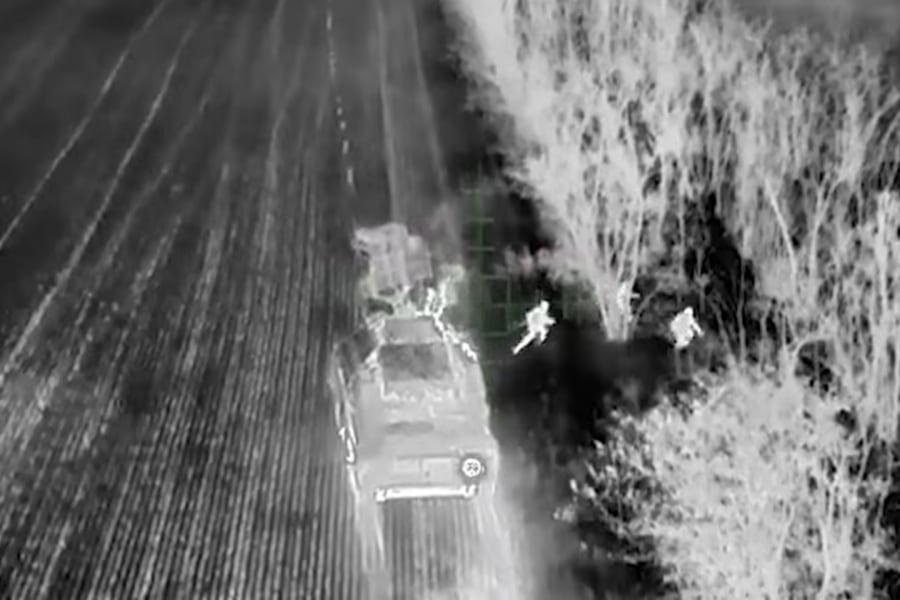
Artificial intelligence is rapidly transforming the war in Ukraine from a conflict driven primarily by manpower and conventional weapons into one increasingly defined by data, automation, and machine-speed decision-making. Recent reporting indicates that AI-enabled systems are shortening the time between identifying a target and striking it, while advanced drone networks, commercial satellite intelligence, and battlefield analytics are giving Ukrainian forces new tools to offset Russia’s larger population and military resources. The conflict is becoming a real-world laboratory for the future of warfare, where technological superiority may prove as important as troop strength. From a conservative perspective, Ukraine’s experience underscores a broader reality: nations that lead in AI development and military innovation will possess decisive advantages in future conflicts, while those that fall behind risk strategic irrelevance.
Sources
- https://www.wsj.com/world/europe/real-time-satellite-intel-is-making-ukraines-drone-strikes-deadlier-than-ever-8c2c909c
- https://www.wsj.com/world/ai-powered-drone-swarms-have-now-entered-the-battlefield-2cab0f05
- https://www.reuters.com/business/aerospace-defense/ukraines-defence-ai-chief-predicts-new-paradigm-warfare-2026-06-12
Key Takeaways
- AI-enabled intelligence systems are dramatically accelerating battlefield decision-making, reducing the time required to locate, identify, and strike targets.
- Autonomous and semi-autonomous drone swarms are moving from experimentation to operational deployment, creating a new model of warfare that relies on coordination between machines rather than large formations of troops.
- The war in Ukraine is becoming a proving ground for military AI technologies that are likely to shape future conflicts involving major powers, including the United States, China, and Russia.
In-Depth
Ukraine’s war against Russia is increasingly demonstrating that the future of combat will belong to those who can gather, process, and act on information faster than their adversaries. What began as a conflict characterized by artillery duels and trench warfare has evolved into a technological contest where artificial intelligence is becoming a force multiplier capable of changing the battlefield in real time.
Recent developments show that AI-powered systems are helping Ukrainian forces compress the so-called “kill chain,” allowing intelligence gathered from satellites, sensors, and drones to be translated into actionable targeting data with unprecedented speed. Commercial satellite imagery that once required lengthy analysis cycles can now be delivered directly to operators in the field, enabling faster and more precise strikes against Russian positions.
At the same time, drone technology is advancing beyond simple remote-controlled aircraft. Ukrainian forces have deployed increasingly sophisticated systems capable of coordinating actions among multiple drones, allowing them to adapt to changing battlefield conditions and execute attacks with limited human intervention. These developments point toward a future in which autonomous systems play a central role in combat operations.
For policymakers in the West, the lesson should be unmistakable. Military dominance in the twenty-first century will depend not only on industrial capacity and conventional firepower but also on leadership in artificial intelligence. Nations that embrace innovation, invest aggressively in advanced technologies, and integrate AI into military planning will hold the advantage. Those that hesitate risk finding themselves outmatched by adversaries willing to exploit the full potential of machine-driven warfare. Ukraine is showing the world what that future looks like today.