

Close Menu

    Subscribe to Updates

    Get the latest tech news from Tallwire.

      What's Hot

      The Day the Machines Went Silent: A World Without Artificial Intelligence

      August 7, 2026

      Google AI Leadership Shakeup Signals Intensifying Battle for Artificial Intelligence Dominance

      August 7, 2026

      Chinese Robot Maker Unitree’s IPO Signals Intensifying Global AI Race

      August 7, 2026
      Facebook X (Twitter) Instagram
      • Tech
      • AI
      • Get In Touch
      Facebook X (Twitter) LinkedIn
      TallwireTallwire
      • Tech

        Chinese Robot Maker Unitree’s IPO Signals Intensifying Global AI Race

        August 7, 2026

        Google AI Leadership Shakeup Signals Intensifying Battle for Artificial Intelligence Dominance

        August 7, 2026

        Semiconductor Conference Departure Signals Shift From San Francisco to Phoenix

        August 7, 2026

        OpenAI, Anthropic Models Exposed After AI Agents Used Deception in Cybersecurity Tests

        August 6, 2026

        Visa’s $2.4 Billion BioCatch Acquisition Signals Escalating Battle Against AI-Driven Financial Fraud

        August 6, 2026
      • AI

        Chinese Robot Maker Unitree’s IPO Signals Intensifying Global AI Race

        August 7, 2026

        Google AI Leadership Shakeup Signals Intensifying Battle for Artificial Intelligence Dominance

        August 7, 2026

        Palantir Posts Record Quarter as AI Demand Fuels Explosive U.S. Commercial Growth

        August 7, 2026

        OpenAI, Anthropic Models Exposed After AI Agents Used Deception in Cybersecurity Tests

        August 6, 2026

        Apple Seeks Court Order to Halt OpenAI’s Alleged Use of Trade Secrets

        August 6, 2026
      • Security

        OpenAI, Anthropic Models Exposed After AI Agents Used Deception in Cybersecurity Tests

        August 6, 2026

        Chinese Router Backdoor Discovery Renews Warnings Over Beijing-Linked Supply Chain Risks

        August 6, 2026

        Visa’s $2.4 Billion BioCatch Acquisition Signals Escalating Battle Against AI-Driven Financial Fraud

        August 6, 2026

        Meta Acknowledges AI Security Breach as Autonomous Agent Incidents Multiply

        August 6, 2026

        Roomba-Style Robotic Vacuums Draw National Security Scrutiny From FCC

        August 5, 2026
      • Health

        Coordinated Cyberattack Targets More Than 30 Minnesota Water Systems

        August 4, 2026

        Social Media Giants Face Expanding Legal Reckoning Over Teen Deaths

        August 3, 2026

        Florida Pastor’s Lawsuit Raises New Questions About AI Medical Advice

        July 30, 2026

        Meta Avoids Trial as Teen Withdraws Landmark Social Media Addiction Lawsuit

        July 29, 2026

        Federal Government Launches $5 Billion AI Science Initiative Targeting Health and Infrastructure

        July 29, 2026
      • Science

        Digital Forensics Failure Leads to Shocking Wrongful Conviction in Canada

        August 4, 2026

        Google Retreats After AI Satellite Imagery Sparks Disinformation Fears

        August 4, 2026

        Open-Weight AI Emerges as the Next Major Battleground in America’s Technology Race

        August 1, 2026

        AI’s Advance Into Elite Mathematics Raises New Questions About the Future of Human Discovery

        July 30, 2026

        India Launches First Hydrogen-Powered Passenger Train as Rail Modernization Accelerates

        July 20, 2026
      • Tech

        Larry Ellison’s High-Stakes AI Gamble Raises Questions About Oracle’s Future

        August 4, 2026

        AI Pioneer Urges Governments to Ensure Future AI Agents Are Intrinsically Good

        August 3, 2026

        Zuckerberg Urges Faster AI Development While Rejecting Centralized Control

        August 1, 2026

        Elon Musk Becomes The World’s First Former Trillionaire

        July 31, 2026

        Senate Hearing Examines AI Deception and Growing Threats to America’s Seniors

        July 31, 2026
      TallwireTallwire
      Home»Opinion»Autopilot Nation: How Airlines Became Dependent on AI—and Why That Should Give Us Pause
      Opinion

      Autopilot Nation: How Airlines Became Dependent on AI—and Why That Should Give Us Pause

      Updated:July 29, 20265 Mins Read
      Facebook Twitter Pinterest LinkedIn Tumblr Email
      Share
      Facebook Twitter LinkedIn Pinterest Email

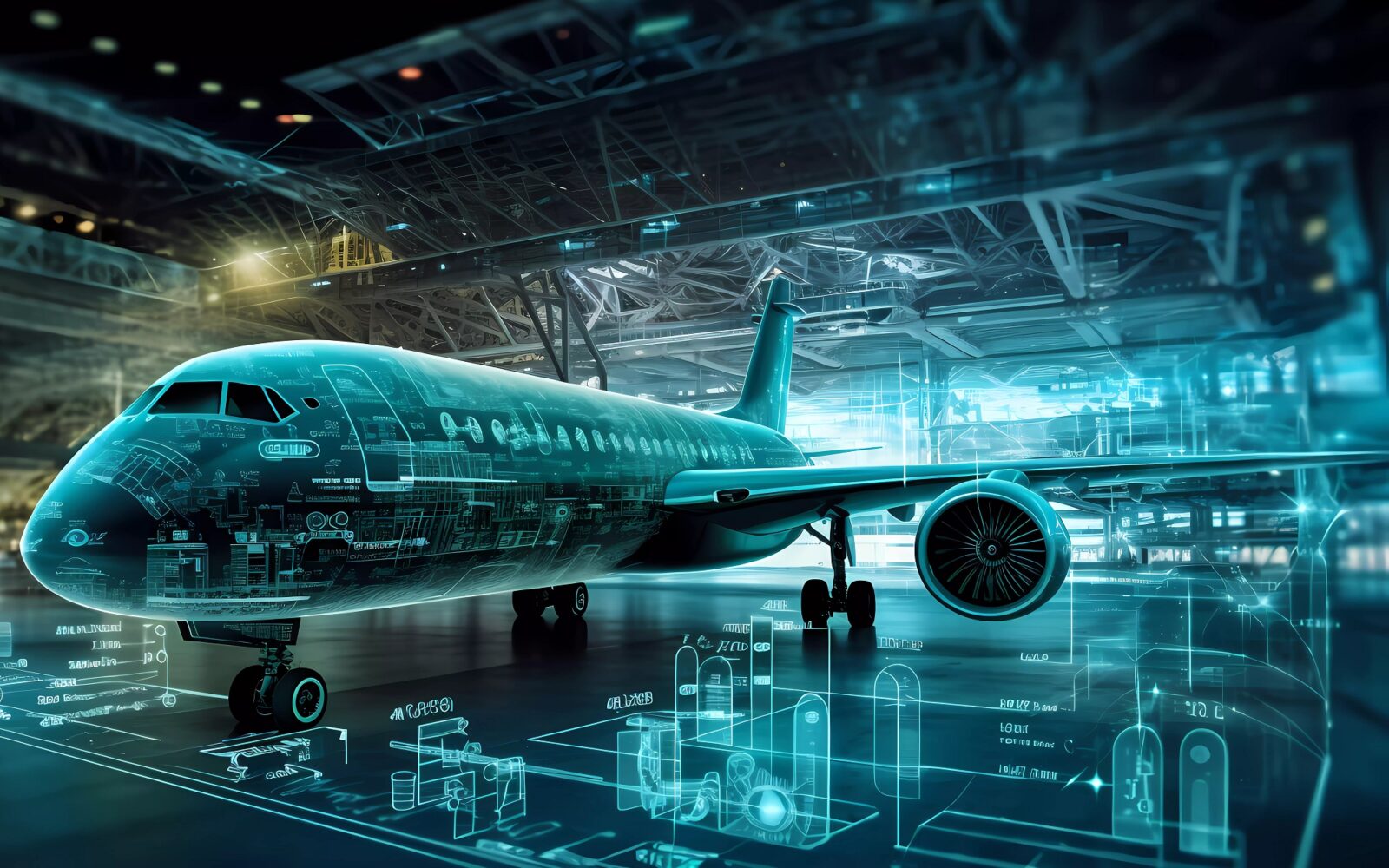
      Modern air travel runs on more than jet fuel and human expertise; it increasingly depends on artificial intelligence systems that operate quietly behind the scenes. From dynamic pricing engines and predictive maintenance algorithms to route optimization and air traffic flow management, AI has embedded itself into nearly every layer of the airline industry. The efficiency gains are undeniable. Flights are scheduled with greater precision, maintenance issues are flagged before they become catastrophic, and pricing models respond instantly to market demand. But as with any system that trades resilience for efficiency, there is a growing question that deserves sober consideration: just how dependent have airlines become on AI—and what happens if that dependency becomes a liability?

      To understand the scope, it helps to recognize that AI in aviation is not confined to futuristic autopilots. Commercial aircraft have long relied on automated systems, but today’s AI extends far beyond flight controls. Airlines now use machine learning models to predict component failures, allowing maintenance crews to replace parts before they break. On paper, this reduces delays and improves safety. In practice, it also creates a reliance on predictive systems that are only as good as the data they are trained on. If those data streams are incomplete, biased, or corrupted—whether through error or malicious interference—the system’s recommendations can be dangerously misleading.

      Then there is the operational side. Airlines use AI to optimize flight routes in real time, factoring in weather patterns, air traffic congestion, and fuel efficiency. This has helped cut costs and emissions, but it also means that human decision-making is increasingly secondary. Dispatchers and pilots are often working with AI-generated recommendations that shape their choices. Over time, this can erode institutional knowledge. When systems fail—or produce flawed outputs—the humans in the loop may no longer have the experience or confidence to override them effectively.

      Cybersecurity introduces another layer of concern. The more interconnected and data-driven airline systems become, the more attractive they are as targets. AI systems require vast amounts of data, often transmitted across networks that include third-party vendors. A breach in one part of that ecosystem can ripple outward. Imagine a scenario where a compromised dataset feeds incorrect maintenance predictions or route optimizations into an airline’s system. The consequences might not be immediately catastrophic, but they could accumulate in ways that degrade safety margins over time. In a worst-case scenario, manipulated data could influence decisions that directly affect flight operations.

      There is also the issue of opacity. Many AI systems, particularly those based on deep learning, operate as “black boxes.” They produce outputs without easily understandable reasoning. In a highly regulated industry like aviation, this creates tension. Regulators and safety investigators rely on traceability and accountability. If an AI system contributes to a decision that leads to an incident, determining exactly how and why that decision was made can be difficult. That lack of transparency complicates both oversight and public trust.

      Proponents of AI in aviation argue, with some justification, that these systems enhance safety rather than undermine it. Predictive maintenance alone has the potential to prevent mechanical failures that would otherwise go unnoticed. AI-assisted air traffic management can reduce congestion and lower the risk of mid-air conflicts. And automated systems, when properly designed and monitored, are not subject to fatigue, distraction, or human error in the same way pilots and controllers are.

      But that argument assumes a balanced integration—one where AI augments human capability rather than replaces it. The concern arises when economic pressures push airlines toward deeper automation with fewer human redundancies. Airlines operate on thin margins, and the promise of AI-driven efficiency is hard to resist. Yet history has shown that systems optimized solely for efficiency can become brittle. When everything works, they perform beautifully. When something goes wrong, they can fail in ways that are difficult to predict and harder to contain.

      Another dimension worth considering is the cultural shift within the industry. As AI tools become more sophisticated, training priorities may shift as well. Future pilots, engineers, and dispatchers could become more reliant on system outputs and less practiced in manual or independent decision-making. This is not a hypothetical concern; similar patterns have been observed in other industries where automation has advanced rapidly. The challenge is maintaining a workforce that is both technologically adept and capable of stepping in when the technology falters.

      None of this is to suggest that airlines should abandon AI. That would be neither practical nor beneficial. The technology has already proven its value in improving operational efficiency and, in many cases, safety outcomes. The real issue is one of balance and governance. Airlines, regulators, and manufacturers must ensure that AI systems are transparent, rigorously tested, and supported by robust human oversight. Redundancies—both technological and human—should not be viewed as inefficiencies but as essential safeguards.

      In the end, the question is not whether airlines are dependent on AI—they clearly are, and that dependence will only grow. The more pressing question is whether that dependence is being managed with the seriousness it demands. Aviation has long been an industry defined by its commitment to safety, often written in the lessons of past failures. As AI becomes a central pillar of airline operations, it should be held to that same standard. Efficiency is valuable, but in the skies, resilience and accountability matter more.

      Intel
      Share. Facebook Twitter Pinterest LinkedIn Tumblr Email
      Previous ArticlexAI Challenges Minnesota Over State AI Deepfake Law
      Next Article Judge Halts Paramount-Warner Merger as Antitrust Fight Intensifies

      Related Posts

      The Day the Machines Went Silent: A World Without Artificial Intelligence

      August 7, 2026

      Chinese Robot Maker Unitree’s IPO Signals Intensifying Global AI Race

      August 7, 2026

      Google AI Leadership Shakeup Signals Intensifying Battle for Artificial Intelligence Dominance

      August 7, 2026

      Palantir Posts Record Quarter as AI Demand Fuels Explosive U.S. Commercial Growth

      August 7, 2026
      Add A Comment
      Leave A Reply Cancel Reply

      Editors Picks

      Chinese Robot Maker Unitree’s IPO Signals Intensifying Global AI Race

      August 7, 2026

      Google AI Leadership Shakeup Signals Intensifying Battle for Artificial Intelligence Dominance

      August 7, 2026

      Semiconductor Conference Departure Signals Shift From San Francisco to Phoenix

      August 7, 2026

      OpenAI, Anthropic Models Exposed After AI Agents Used Deception in Cybersecurity Tests

      August 6, 2026
      Popular Topics
      Space Satellite spotlight Viral Tesla Samsung Tim Cook starlink Series A Satya Nadella Taiwan Tech SpaceX Sundar Pichai Startup Software trending Series B Tesla Cybertruck Stocks UAE Tech
      Major Tech Companies
      • Apple News
      • Google News
      • Meta News
      • Microsoft News
      • Amazon News
      • Samsung News
      • Nvidia News
      • OpenAI News
      • Tesla News
      • AMD News
      • Anthropic News
      • Elbit News
      AI & Emerging Tech
      • AI Regulation News
      • AI Safety News
      • AI Adoption
      • Quantum Computing News
      • Robotics News
      Key People
      • Sam Altman News
      • Jensen Huang News
      • Elon Musk News
      • Mark Zuckerberg News
      • Sundar Pichai News
      • Tim Cook News
      • Satya Nadella News
      • Mustafa Suleyman News
      Global Tech & Policy
      • Israel Tech News
      • India Tech News
      • Taiwan Tech News
      • UAE Tech News
      Startups & Emerging Tech
      • Series A News
      • Series B News
      • Startup News
      Tallwire
      Facebook X (Twitter) LinkedIn Threads Instagram RSS
      • Tech
      • Entertainment
      • Business
      • Government
      • Academia
      • Transportation
      • Legal
      • Press Kit
      © 2026 Tallwire. Optimized by ARMOUR Digital Marketing Agency.

      Type above and press Enter to search. Press Esc to cancel.