

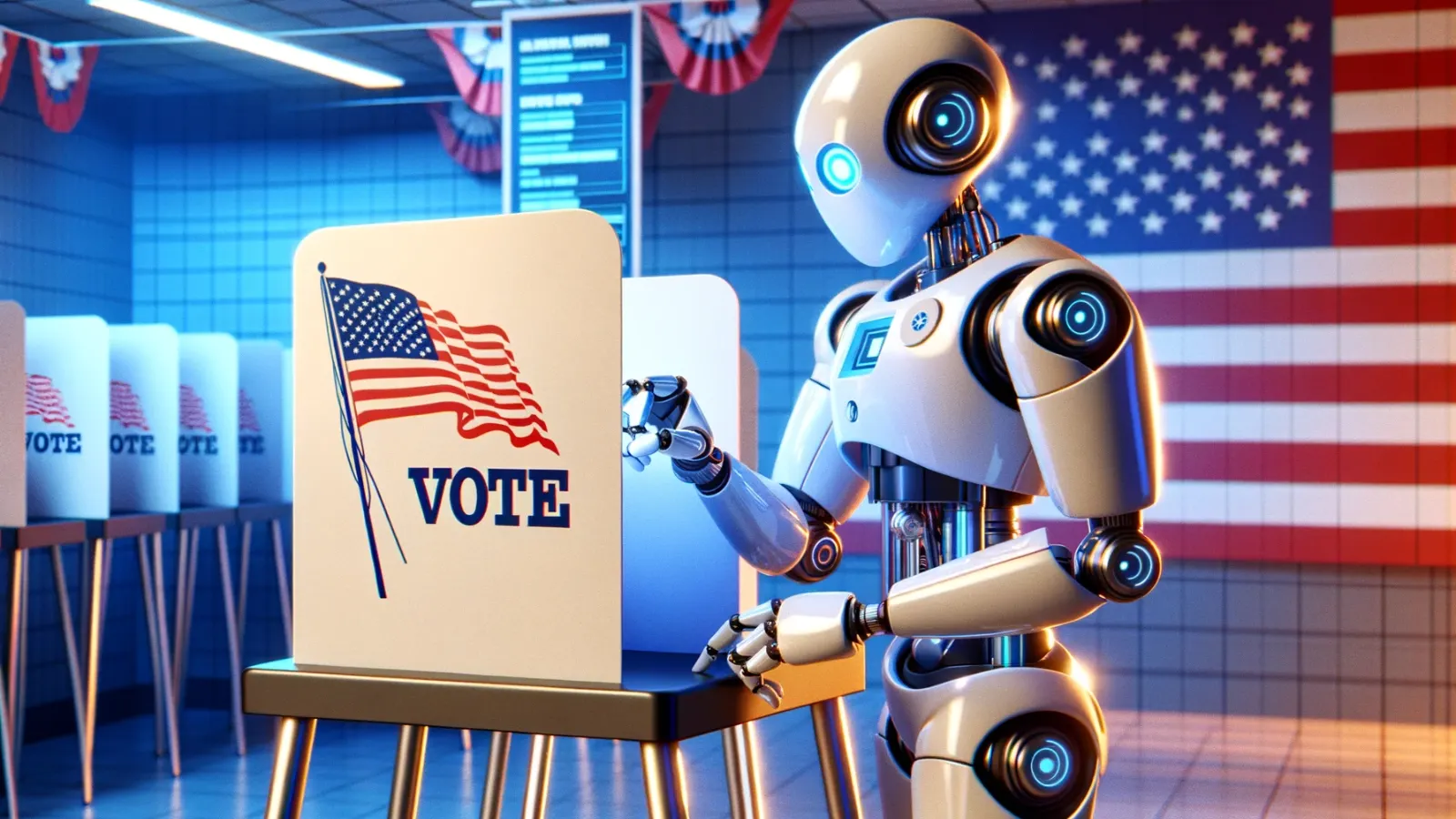
The push to modernize elections through technology has an understandable appeal. Faster tabulation, reduced human error, and streamlined administration all sound like responsible improvements in a world that increasingly relies on digital infrastructure. Yet when the conversation turns to integrating artificial intelligence into machine-based voting systems, the stakes rise dramatically. Elections are not merely logistical exercises—they are the foundational mechanism by which citizens confer legitimacy on their government. Introducing opaque, adaptive algorithms into that process risks undermining public trust, eroding transparency, and opening doors to vulnerabilities that are far more difficult to detect and correct than traditional forms of election fraud.
One of the core concerns with AI in voting systems is the issue of transparency. Traditional paper ballots, while imperfect, provide a tangible record that can be audited and recounted. Even basic electronic voting machines, when paired with paper trails, offer a level of verifiability that citizens and observers can understand. Artificial intelligence, by contrast, often operates as a “black box.” Machine learning models make decisions based on patterns in data, but the reasoning behind those decisions can be difficult—even for their creators—to fully explain. When applied to vote tabulation, error detection, or even voter verification, this lack of clarity becomes deeply problematic. A system that cannot clearly explain how it arrived at a result is not one that should be entrusted with determining political power.
Beyond transparency lies the issue of accountability. In a traditional election system, responsibility is distributed among election officials, poll workers, and established procedures. If something goes wrong, there are identifiable points of failure. With AI-driven systems, accountability becomes diffuse. If an algorithm misclassifies ballots, flags legitimate votes as invalid, or fails to detect anomalies, who is responsible? The software developer? The election authority? The vendor supplying the system? This ambiguity creates a dangerous gap in oversight, where errors can be blamed on the system itself rather than addressed with clear corrective action.
Security concerns also take on a new dimension when AI enters the equation. Cybersecurity is already one of the most pressing challenges facing election infrastructure. Adding AI introduces additional attack surfaces. Adversaries could attempt to manipulate training data, exploit weaknesses in algorithmic decision-making, or introduce subtle biases that skew outcomes in ways that are difficult to detect. Unlike a straightforward hack that alters vote totals, these forms of interference could operate quietly, influencing results without triggering obvious alarms. The more complex the system, the harder it becomes to secure—and the more catastrophic the consequences if it is compromised.
Another critical issue is the potential for bias. AI systems are only as good as the data they are trained on. If that data contains biases—whether intentional or inadvertent—the system will reflect and potentially amplify them. In the context of voting, this could manifest in voter identification processes, ballot interpretation, or fraud detection mechanisms. Even a small bias, applied at scale, could affect thousands or millions of votes. The idea that an unelected, unaccountable algorithm could introduce systemic bias into elections should give any serious observer pause.
Public confidence is perhaps the most fragile and essential component of any election system. Even the perception of unfairness can be as damaging as actual misconduct. The introduction of AI, with its complexity and opacity, risks alienating voters who may already be skeptical of institutional processes. If citizens believe that elections are being decided by machines they do not understand and cannot verify, the legitimacy of those elections comes into question. Restoring trust after it has been lost is far more difficult than preserving it in the first place.
Proponents of AI in voting systems often argue that technology can reduce human error and increase efficiency. While there is some truth to this, efficiency should never come at the expense of integrity. Elections are not a business process to be optimized; they are a civic ritual that must prioritize accuracy, transparency, and trust above all else. Any technological advancement must be judged against those criteria, not simply on its ability to process data more quickly.
There is also a broader philosophical concern at play. The act of voting is one of the most direct expressions of individual sovereignty in a democratic system. Delegating any part of that process to autonomous or semi-autonomous systems raises questions about the role of human judgment and oversight. Technology should serve the democratic process, not redefine it in ways that distance citizens from the mechanisms of governance.
None of this is to suggest that technology has no place in elections. On the contrary, carefully implemented systems can improve accessibility, streamline administration, and enhance security when used responsibly. However, the integration of artificial intelligence into core voting functions crosses a line that demands extreme caution. The potential benefits are incremental, but the risks are systemic.
In the end, the question is not whether AI can be used in voting systems, but whether it should be. Given the current state of the technology—and the fundamental importance of public trust in elections—the prudent answer is to proceed with skepticism, restraint, and a firm commitment to preserving the transparency and accountability that underpin a functioning democracy.