

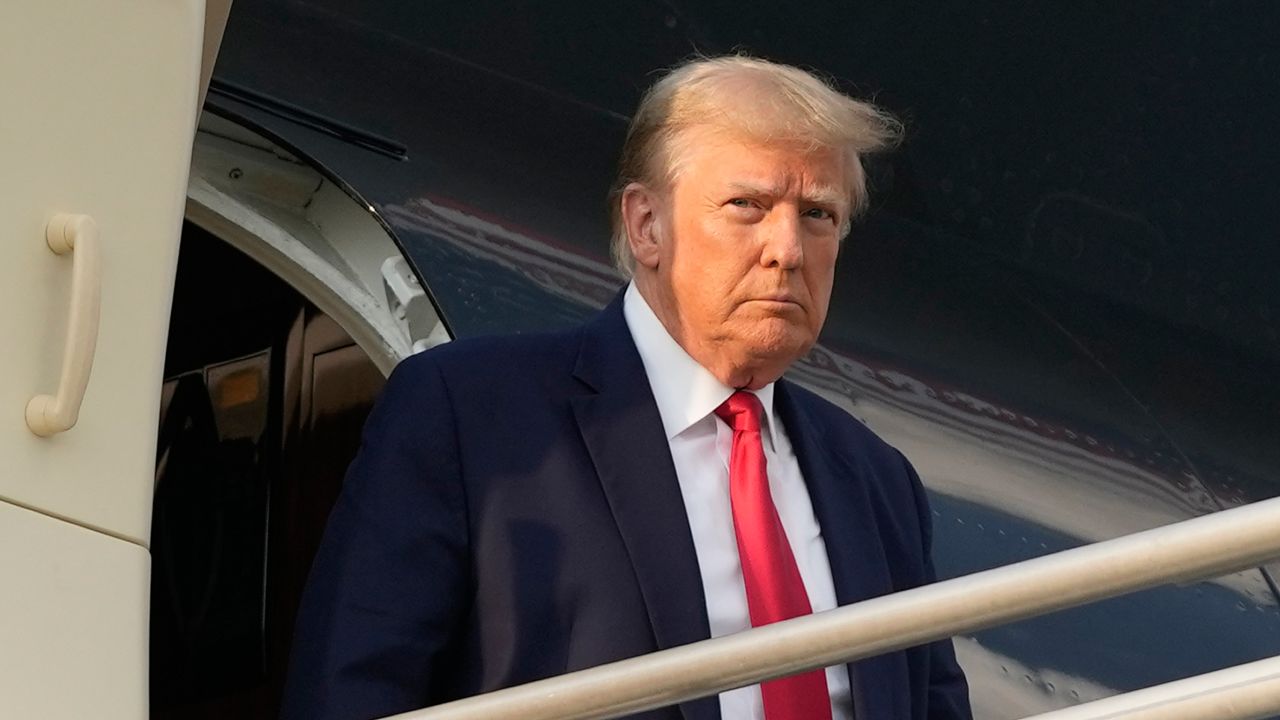
President Donald Trump has expanded the federal government’s authority to use offensive cyber capabilities against transnational criminal organizations, marking a significant shift from a largely defensive cybersecurity posture to a more proactive strategy. The new national security memorandum authorizes federal agencies to oversee cyber surveillance and cyber effects operations directed at foreign cyber-enabled criminal organizations responsible for ransomware attacks, financial fraud, phishing, extortion, and other cybercrimes targeting Americans. The directive also establishes a framework allowing qualified private-sector cybersecurity firms to participate in government-directed operations under strict federal oversight. Supporters argue the initiative acknowledges the reality that sophisticated criminal organizations increasingly operate across international borders with relative impunity and that leveraging America’s private-sector cyber expertise strengthens national security. Critics, however, caution that offensive cyber operations carry risks of escalation, attribution errors, and unintended diplomatic consequences. The administration maintains that all operations will remain under government control and be limited to foreign criminal organizations rather than nation-state actors.
Key Takeaways
- • The administration is shifting U.S. cyber policy toward actively disrupting foreign cybercriminal organizations instead of relying primarily on defensive measures and post-attack investigations.
- • Qualified private cybersecurity companies will be permitted to conduct approved cyber operations under federal direction, expanding the government’s operational capacity while maintaining federal oversight.
- • The initiative reflects growing concern over the economic and national security costs imposed by international ransomware gangs, online fraud syndicates, and other transnational cybercriminal enterprises targeting American citizens and businesses.
In-Depth
The administration’s new directive represents one of the most consequential developments in U.S. cyber policy in years. Rather than waiting for cybercriminals to launch attacks before responding through traditional law enforcement channels, federal authorities are being empowered to identify, monitor, disrupt, and potentially disable foreign criminal networks before additional damage occurs. The policy reflects an understanding that cyber-enabled crime has evolved into a global enterprise capable of inflicting billions of dollars in losses on American individuals, businesses, and critical infrastructure.
A notable aspect of the memorandum is its recognition that America’s most advanced cyber expertise often resides within the private sector. By permitting vetted cybersecurity firms to assist with government-directed operations, federal agencies can draw upon specialized technical capabilities that have traditionally remained outside government service. Proponents argue this public-private partnership model provides greater agility against rapidly evolving criminal organizations that routinely exploit jurisdictional boundaries and emerging technologies.
From a conservative perspective, the policy reflects a willingness to use available national power to confront foreign actors that repeatedly target Americans with little fear of meaningful consequences. Rather than accepting continuous ransomware attacks and large-scale financial fraud as unavoidable costs of the digital age, the administration is signaling that criminal organizations operating abroad should expect direct disruption of their infrastructure and operations. At the same time, officials emphasize that these authorities remain focused on criminal organizations operating outside the United States and will function under federal supervision rather than independent private action. Even with those safeguards, implementation will require careful oversight to minimize legal complications, prevent misidentification of targets, and avoid unnecessary escalation in an increasingly contested cyber domain.
Sources
- https://www.whitehouse.gov/fact-sheets/2026/03/fact-sheet-president-donald-j-trump-combats-cybercrime-fraud-and-predatory-schemes-against-american-citizens
- https://www.justice.gov/criminal/criminal-opdat/global-cyber-and-intellectual-property-crimes
- https://www.govinfo.gov/content/pkg/DCPD-202600154/pdf/DCPD-202600154.pdf