

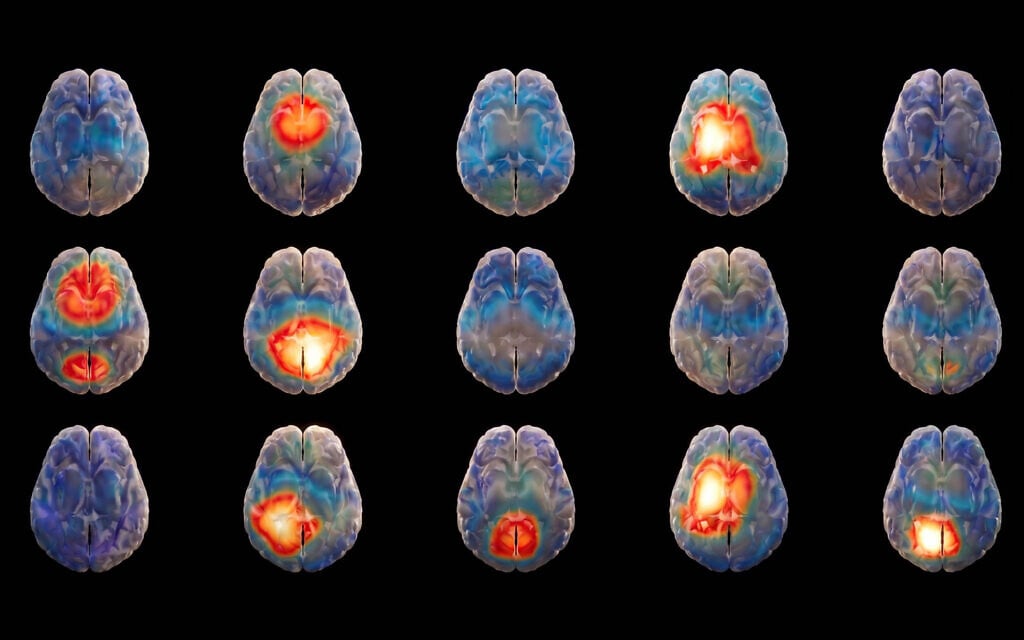
An Israeli startup, Hemispheric, is pursuing an ambitious effort to use artificial intelligence to translate the brain’s electrical activity into meaningful clinical insights, with the long-term goal of improving diagnosis and treatment for neurological and psychiatric disorders. The company says it has trained its AI on EEG data collected from approximately 100,000 individuals, allowing it to identify electrical patterns that may correspond with conditions such as post-traumatic stress disorder, depression, epilepsy, and other brain-related illnesses. Rather than relying solely on traditional imaging or subjective symptom reporting, Hemispheric hopes to establish a scalable system that can interpret the brain’s own electrical “language.” While the concept reflects the rapid convergence of neuroscience and artificial intelligence, outside experts caution that translating complex neural activity into reliable diagnostic conclusions remains scientifically challenging and will require extensive clinical validation before it becomes part of mainstream medical practice.
Key Takeaways
- • Hemispheric is developing an AI platform trained on a massive EEG database to identify neurological and psychiatric conditions by recognizing subtle electrical activity patterns in the brain rather than depending solely on conventional diagnostic methods.
- • Advances in AI-driven brain decoding are expanding beyond diagnosis toward future brain-computer interfaces that could eventually restore communication for patients suffering from paralysis, ALS, stroke, or other severe neurological disorders.
- • While the technology holds considerable promise, researchers emphasize that scientific validation, reproducibility, patient privacy, and regulatory oversight remain essential before AI-generated brain interpretations can be widely trusted in clinical practice.
In-Depth
Artificial intelligence continues to move beyond conventional data analysis into one of medicine’s most difficult frontiers: understanding the human brain. Hemispheric’s effort represents a significant attempt to use machine learning to recognize meaningful patterns hidden within electroencephalogram recordings, potentially allowing physicians to detect neurological disorders earlier and with greater precision. If successful, such technology could supplement existing diagnostic tools by providing objective measurements of brain function instead of relying primarily on clinical observation and patient-reported symptoms.
The broader scientific community has been pursuing similar goals for several years. Researchers have already demonstrated that AI systems can decode limited speech-related neural activity and, in carefully controlled settings, translate certain brain signals into words or simple communications. Those advances have generated optimism that patients suffering from conditions such as ALS, brainstem stroke, or severe paralysis may eventually regain the ability to communicate through brain-computer interfaces that interpret intended speech directly from neural activity.
Even so, considerable hurdles remain. The brain’s electrical activity varies significantly among individuals, making generalized interpretation exceptionally difficult. Clinical researchers continue to stress that large datasets, rigorous peer-reviewed validation, and reproducible results are necessary before AI-generated diagnoses become standard medical practice. Questions surrounding patient privacy, data security, informed consent, and potential misuse of highly sensitive neural information will also require careful attention as the technology matures. Conservative skepticism is warranted: promising laboratory results should not be mistaken for established clinical capability. If companies like Hemispheric ultimately demonstrate consistent accuracy through independent validation, AI-assisted brain decoding could become one of the most consequential medical advances of the coming decade, offering physicians an entirely new window into neurological disease while improving care for patients whose conditions are currently difficult to diagnose or treat.