

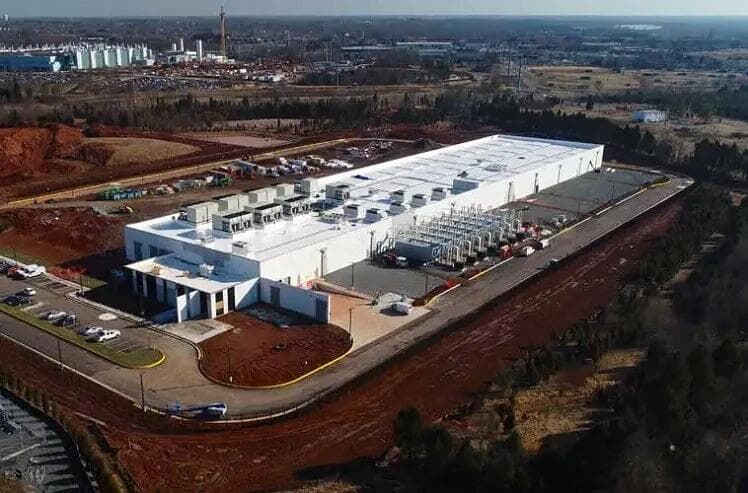
A leaked internal Republican campaign memo has revealed growing concern that public opposition to large-scale AI data centers has become a significant political liability in Ohio’s closely contested U.S. Senate race. According to the memo, Democratic candidate Sherrod Brown has successfully centered his campaign against Republican Sen. Jon Husted on the expansion of data centers, arguing they burden communities while benefiting large technology companies. Rather than recommending policy changes, the memo reportedly urges AI companies to improve public perception through messaging campaigns, warning that a Republican defeat in Ohio could discourage elected officials nationwide from supporting future data center projects. The controversy reflects broader voter concerns over rising electricity demand, water consumption, tax incentives, land use, and local control as artificial intelligence infrastructure rapidly expands across the country.
Key Takeaways
- • A leaked National Republican Senatorial Committee memo warns that opposition to AI data centers has become one of the most politically damaging issues in Ohio’s Senate race, placing Republican Jon Husted in a highly competitive contest.
- • Rather than advocating changes to data center policy, the memo reportedly encourages AI companies to invest in persuading voters that the projects provide sufficient economic and community benefits despite growing public resistance.
- • The Ohio race is increasingly viewed as a national test case, with strategists warning that a successful anti-data-center campaign could influence infrastructure policy and political messaging in other states pursuing AI development.
In-Depth
The leaked memorandum offers an unusually candid look at how rapidly the politics surrounding artificial intelligence infrastructure have shifted. Once promoted almost exclusively as engines of economic growth and technological leadership, large data centers have become lightning rods in many communities that are increasingly questioning who ultimately benefits from these massive projects.
In Ohio, those concerns have become central to the Senate campaign. Public debate has expanded beyond traditional economic development arguments to include electricity demand, water consumption, tax incentives, property impacts, and whether local communities retain meaningful control over projects that can permanently reshape their regions. Republican strategists reportedly acknowledge that Democratic messaging has proven unusually effective because it taps into anxieties voters already hold rather than attempting to create new issues.
From a conservative perspective, the memo also highlights a broader governing challenge. Voters generally support technological innovation and American competitiveness against China, but many are increasingly skeptical when development appears driven by government incentives, corporate influence, or decisions made without meaningful local consent. That tension places elected officials in the difficult position of balancing national strategic priorities with the interests of their constituents.
Whether the political fallout extends beyond Ohio remains uncertain, but the memo suggests Republican strategists believe the issue could reshape future campaigns. If opposition to data centers continues to resonate with voters, candidates in both parties may face growing pressure to support stricter local approval requirements, greater transparency regarding utility costs, and stronger assurances that communities—not just technology companies—share in the benefits of AI infrastructure.
Sources
- https://www.axios.com/2026/08/19/gop-data-center-memo-ai-election
- https://abcnews.com/Politics/backlash-data-centers-cost-gop-senate-seat-ohio/story?id=135782050
- https://apnews.com/article/cd2cfd73e3d41e2baf65bf82702a589b
- https://www.washingtonpost.com/politics/2026/08/19/gop-memo-warns-ohio-sen-john-husted-is-being-dragged-down-by-data-centers/